
Ash scale
Hemiberlesia fraxini
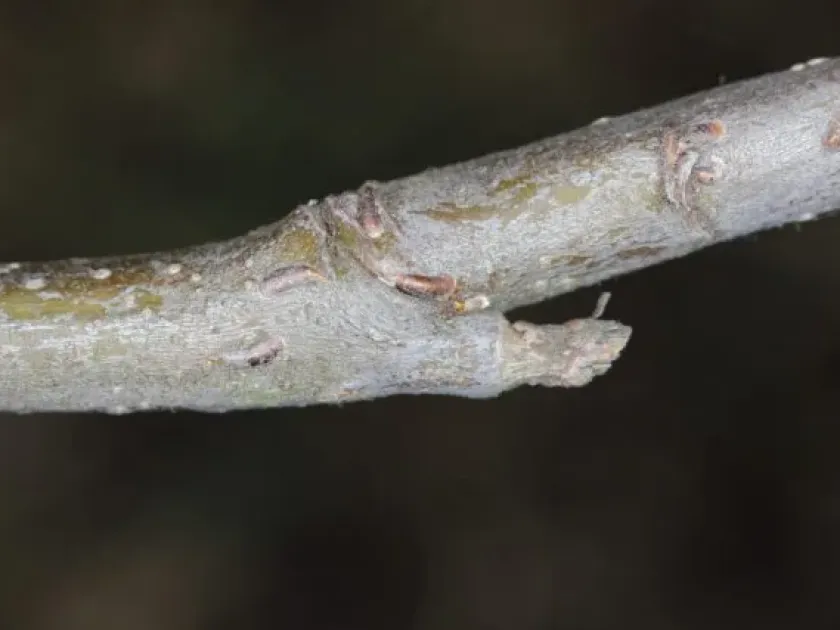
Description
How to identify
Ash scale (Hemiberlesia fraxini) is a member of the Diaspididae family within the order Hemiptera. This armored scale insect is characterized by a protective waxy covering that allows it to survive in various environmental conditions.
Adult females are sessile, protected by a circular or oval scale which varies in color from pale gray to dark brown, blending in with the texture of the tree bark.
Males are significantly smaller, winged, and short-lived, serving the primary purpose of finding and fertilizing females to continue the population growth.
The first instar nymphs, known as crawlers, are the only mobile stage in the life cycle and are responsible for spreading the infestation to new branches of the tree.
Identification often relies on close inspection of the bark, as the insects are frequently mistaken for natural bark growths due to their small size and cryptic coloration.
What it damages
The primary host for this pest is the ash tree (Fraxinus spp.). The insects use their piercing-sucking mouthparts to feed on the plant sap, depriving the tree of essential nutrients.
High population densities lead to severe stress for the host tree, interfering with the vascular system and potentially leading to localized tissue death or bark cracking.
Weakened trees exhibit reduced vigor, characterized by stunted shoot growth, thinning crowns, and off-color foliage that may drop prematurely during the growing season.
The honeydew excreted by some scale species can encourage the growth of sooty mold, which blocks sunlight from reaching the leaves and reduces photosynthetic efficiency.
Prolonged infestation weakens the tree's natural defense mechanisms, making it increasingly susceptible to secondary infestations by wood-boring insects or fungal pathogens.
When it appears
The life cycle of the ash scale is closely aligned with the phenology of the ash tree, with overwintering occurring in the nymphal or adult female stage under protective scales.
As temperatures rise in the spring, the insects become active, initiating the process of feeding and development that coincides with the tree's new growth.
Crawlers usually emerge during the warmer months, and this stage is the critical window for management, as the insects are most susceptible to chemical treatments.
Depending on the climatic zone, the pest may complete one or several generations within a single season, significantly increasing the population pressure on the host.
By late autumn, the scale insects settle into a dormant state, remaining fixed on the bark to survive the winter temperatures before beginning the cycle again.
Signs of infestation
Visible signs of infestation include the presence of numerous small, scale-like bumps on the bark of twigs, branches, or the main trunk of the tree.
Heavily infested trees may show signs of dieback, starting from the tips of the branches and progressing inward toward the center of the crown.
Yellowing or chlorotic foliage is a common symptom of sap depletion, indicating that the tree is struggling to maintain proper hydration and nutrient distribution.
The presence of sticky honeydew on the bark or the development of dark, sooty mold patches on the tree surface are clear indicators of a major pest issue.
- Abnormal bumps or encrustations on bark.
- Thinning canopy and sparse leaf cover.
- Premature leaf drop in summer.
- Dieback of terminal twigs and branches.
Control measures
Integrated pest management strategies are essential, involving cultural practices and timely chemical applications to minimize damage to the trees.
Dormant oil sprays applied in late winter or early spring can effectively smother overwintering nymphs before they start their active feeding season.
Systemic insecticides, applied either via soil drench or bark injection, are highly effective against scale insects because they transport the toxin directly into the sap.
Pruning and destroying severely infested branches can physically reduce the population of the pest, helping the tree to recover faster and preventing further spread.
Maintaining tree health through proper fertilization and watering helps the tree resist scale attacks and improves its ability to recover from existing damage.
Taxonomy
- Latin name
- Hemiberlesia fraxini
- Order
- Hemiptera (bugs, aphids, leafhoppers)
- Family
- Diaspididae
- EPPO code
- HEBEFR
Discussion
No discussions yet — be the first.