
Harrisina
Harrisina
Description
How to identify
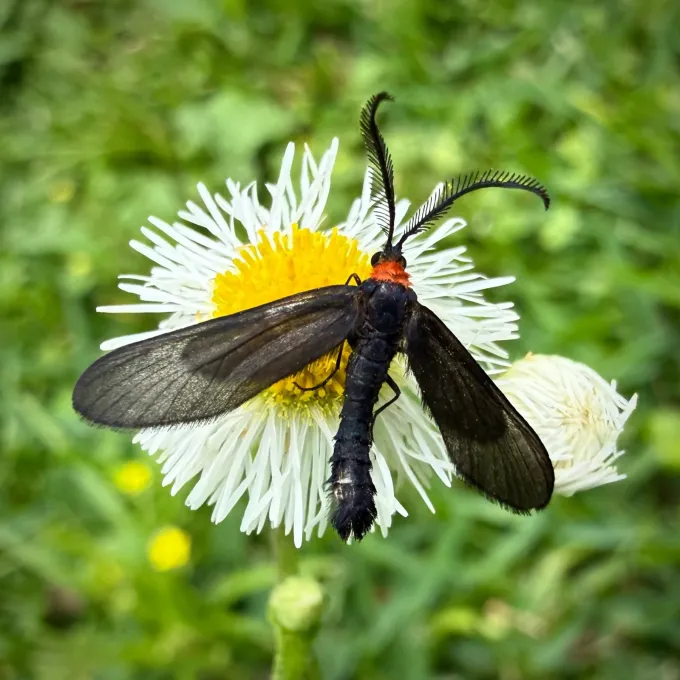
Harrisina (genus Harrisina) belongs to the family Zygaenidae, commonly known as the smoky moths or leaf skeletonizers. These insects are small with dark, often metallic-colored bodies.
The adults are characterized by a slender appearance and narrow wings, which they hold folded against their bodies when at rest, creating a triangular profile.
The larvae, or caterpillars, are distinct in their appearance; they are typically yellow or pale green, often marked with rows of dark spots or stripes along the body.
Their bodies are covered in fine, short hairs, which is a common trait for this family of moths that feed on the vegetative parts of host plants.
The lifecycle follows complete metamorphosis, progressing through the egg, larva, pupa, and adult stages, with the larval stage causing the most significant impact on agriculture.
What it damages
Harrisina primarily attacks plants within the Vitaceae family, showing a strong preference for cultivated grapevines (Vitis vinifera).
The larvae feed on the leaf tissue, specifically skeletonizing the leaves by consuming the soft mesophyll while leaving the tougher veins intact.
Severe infestations lead to a significant loss of leaf surface area, which directly impairs the plant's photosynthetic capacity and reduces sugar accumulation in the grapes.
In addition to leaf damage, larvae may also feed on young shoots, which can stunt the growth of the vine and affect future fruit production potential.
Constant defoliation by the pest weakens the vine, making it more susceptible to environmental stress and secondary infections or other pests.
When it appears
The appearance of adult Harrisina is closely tied to the onset of the grapevine growing season and rising spring temperatures.
The pest can complete multiple generations in a single season, depending on the climatic conditions of the region where the grapes are grown.
Larval activity peaks during the mid-summer months when the vines provide the most abundant and nutritious foliage for the developing caterpillars.
The pupal stage serves as the overwintering phase, during which the insect resides in a tough, silken cocoon tucked under bark or in plant debris.
Effective monitoring involves the use of pheromone traps to detect the flight of adult moths early in the season, allowing for timely intervention.
Signs of infestation
The most diagnostic sign of Harrisina activity is the presence of skeletonized leaves, where only the leaf veins remain after the larvae have fed.
Young larvae are often found feeding in organized groups on the underside of leaves, which makes them visible during routine vineyard scouting.
Frass (larval excrement) appearing on the foliage or on the ground beneath the canopy is a strong indicator of an active feeding population.
Affected leaves will eventually turn yellow, wither, and drop prematurely, leading to noticeable thinning of the canopy and reduced vine health.
- Skeletonized leaf patterns;
- Groups of larvae feeding on the lower leaf surface;
- Presence of protective cocoons in bark crevices;
- Premature leaf drop and canopy thinning.
Control measures
Cultural control is a primary defense; removing leaf litter and cleaning vine trunks helps destroy overwintering pupae and reduces early-season populations.
Biological control agents, particularly microbial insecticides based on Bacillus thuringiensis, are highly effective against young larvae without harming beneficial insects.
Chemical control involving systemic or contact insecticides may be necessary during peak larval emergence to protect the vine canopy and fruit quality.
Integrated Pest Management (IPM) practices, including the rotation of insecticide modes of action, are essential to prevent the development of resistance.
Regular monitoring and scouting programs allow viticulturists to identify outbreaks early and implement spot treatments rather than broad-spectrum applications.
Taxonomy
- Latin name
- Harrisina
- Order
- Lepidoptera (butterflies)
- Family
- Zygaenidae
- EPPO code
- HARRSP
Discussion
No discussions yet — be the first.