
Green shield bug
Halyomorpha viridescens
Description
How to identify
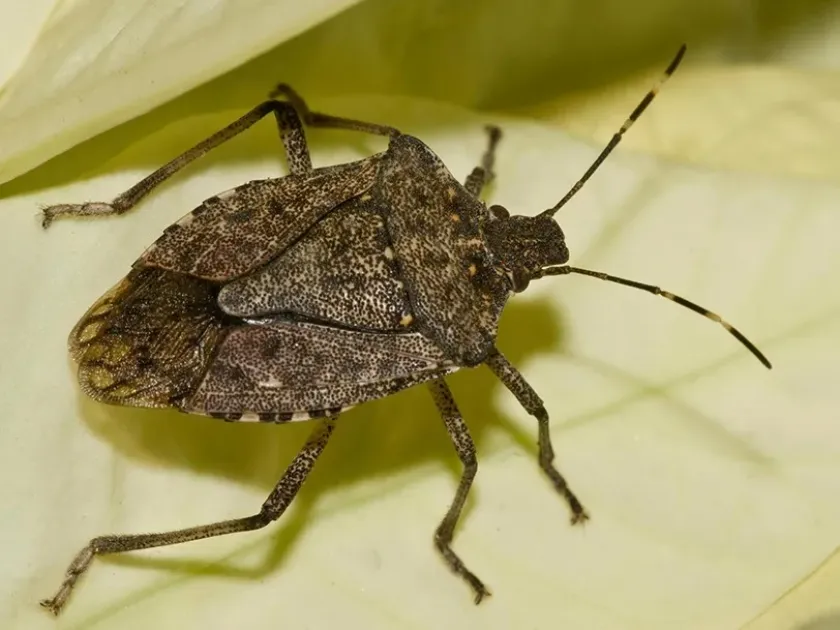
The green shield bug (Halyomorpha viridescens) is a member of the Hemiptera order and the Pentatomidae family. These insects are known for their distinct shield-shaped bodies.
Adults are typically bright green, which helps them camouflage within the foliage. However, their coloration may shift to brownish-green as temperatures drop in late autumn.
They generally measure between 10 and 15 millimeters in length. Their head is flat, and they possess five-segmented antennae, a key feature for identifying true shield bugs.
Nymphs resemble smaller, wingless versions of adults. Throughout their developmental stages, they often exhibit variegated patterns of yellow, black, or red on their bodies.
Eggs are barrel-shaped and are usually deposited in neat clusters of 20 to 30 on the undersides of leaves, often appearing pearlescent or light yellow in color.
What it damages
This pest is a polyphagous insect, meaning it feeds on a wide variety of plants, including many common vegetables, fruits, and ornamental species.
It causes significant damage to solanaceous crops like tomatoes, peppers, and eggplants by piercing the plant tissues and extracting essential sap.
Berry crops such as raspberries and blackberries are particularly susceptible to feeding damage, which can render the fruit unmarketable and unattractive.
Beyond physical damage, the bugs secrete a foul-smelling substance during feeding, which ruins the flavor and quality of vegetables and berries, making them inedible.
Feeding on young shoots and buds can lead to stunted growth, wilting, and the distortion of developing leaves and flowers, causing systemic plant stress.
When it appears
The activity of the green shield bug typically begins in late spring, as temperatures rise consistently above 12–15 degrees Celsius.
After emerging from hibernation in leaf litter or bark, adults begin searching for host plants to feed and mate, setting the stage for the first generation of the season.
Mid-summer marks the peak of their population density, as nymphs from the first and second generations become active and require large amounts of nutrients for growth.
As the season nears its end in late summer and early autumn, the bugs look for protected overwintering sites, often congregating in protected outdoor areas.
The developmental cycle from egg to adult is relatively fast, taking about 30 to 45 days, allowing for multiple generations in warmer climatic regions.
Signs of infestation
The most common sign of infestation is the appearance of chlorotic, pale, or necrotic spots on leaves where the bugs have pierced the tissue to feed.
Affected fruits often develop a "mottled" or pitted appearance, with hard, corky spots occurring just beneath the skin, making them soft and prone to secondary rot.
A noticeable, sharp, and unpleasant odor around the garden, especially when plants are disturbed, is a strong indicator of the presence of shield bugs.
Deformed growth patterns in young shoots and buds, along with early flower drop, can indicate that nymphs have been feeding on the most succulent parts of the plant.
- Small white or yellow spots on leaves.
- Pitted or deformed fruit surfaces.
- Egg clusters on leaf undersides.
- Unpleasant smell near the foliage.
- Wilting and stunted growth of terminals.
Control measures
Cultural control involves maintaining a clean garden by removing weeds and plant debris, which often serve as breeding grounds for shield bugs during the early season.
Hand-picking nymphs and adults during the early morning hours, when they are sluggish and less likely to fly away, is effective for small-scale gardening.
Biological control options, such as the use of beneficial insects or entomopathogenic fungi, can help manage populations without relying on harsh chemical inputs.
If chemical intervention is necessary, targeted application of soft pesticides or insecticidal soaps can be used during the nymphal stages for better results.
Installing floating row covers on susceptible vegetable crops early in the season can physically prevent the adult bugs from landing and laying eggs on the plants.
Taxonomy
- Latin name
- Halyomorpha viridescens
- Order
- Hemiptera (bugs, aphids, leafhoppers)
- Family
- Pentatomidae
- EPPO code
- HALYVI
Discussion
No discussions yet — be the first.