
Brown marmorated stink bug
Halyomorpha picus
Description
How to identify
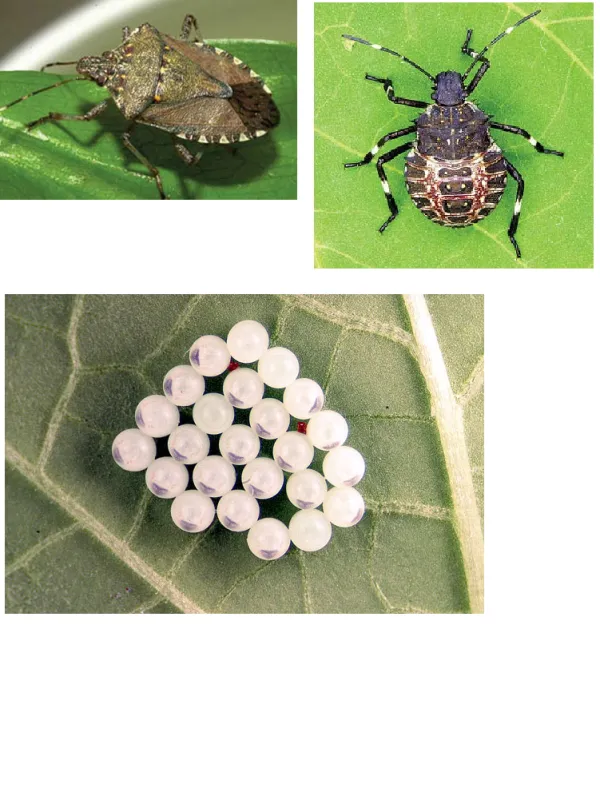
The brown marmorated stink bug (Halyomorpha halys) is an invasive insect belonging to the family Pentatomidae. Adults are approximately 12–17 mm long and have a distinct mottled brown and grey appearance.
Key identification features include white bands on the antennae and alternating dark and light markings on the abdominal margins. The body has a characteristic shield shape, making it easily distinguishable from native bug species.
These insects are secretive and often hide within tree canopies or under bark. During the winter months, they seek shelter in man-made structures, entering a state of diapause until spring temperatures rise.
The life cycle progresses through the egg stage, five nymphal instars, and the adult stage. A single female can lay up to 400 eggs in a season, usually on the underside of leaves, facilitating rapid population growth.
Nymphs change appearance as they grow, with earlier stages often showing vibrant red or orange colors combined with black stripes, requiring careful observation for accurate identification throughout the season.
What it damages
This species is a highly polyphagous pest that attacks over 300 plant types, including fruit trees, vegetables, and field crops such as corn, peaches, apples, and tomatoes.
The bug uses its piercing-sucking mouthparts to penetrate plant tissues, injecting saliva that breaks down cells. This results in the formation of necrotic areas, stunted growth, and physical deformation of fruits.
Fruits, such as apples and pears, often become pitted, distorted, and develop a "corky" texture, rendering them commercially unviable. The damage significantly impacts quality and shelf life.
On vegetable crops like peppers and tomatoes, feeding results in discolored spots, abscission of buds, and overall poor plant health. The lesions caused by feeding often serve as entry points for secondary pathogens.
Field crops like maize suffer from grain loss when the bug feeds on kernels, leading to empty or poorly developed ears. Infestations can cause severe economic losses, sometimes destroying the majority of a harvest.
When it appears
Overwintering adults typically emerge in late spring when temperatures exceed 15°C (60°F). They immediately start feeding and mating, marking the beginning of the seasonal cycle.
Depending on the climatic zone, the pest may complete one to three generations per year. Peak activity and crop damage usually occur during the summer months, from July through August.
As autumn approaches, the bugs begin to aggregate and migrate in search of overwintering sites, often moving from agricultural fields into residential or storage buildings.
Monitoring using pheromone traps is critical starting early in the spring to detect the first arrivals and determine the timing for necessary protective measures.
Warm autumns can extend the activity period, forcing growers to remain vigilant against late-season damage and continued migration toward shelters.
Signs of infestation
Visible feeding damage includes small, hardened punctures on the fruit surface, often surrounded by depressed or discolored tissue. When sliced, the internal tissue often shows brown, necrotic spots.
Clusters of barrel-shaped eggs, usually found on the underside of leaves, are a definitive sign of infestation. They are typically laid in groups of 20 to 30, appearing pale white or light green.
The presence of nymphs in varying stages of development indicates that the population is actively breeding in the area. They are often seen feeding in groups, making them easier to spot during scouting.
The distinct, pungent odor released by the bug's scent glands when disturbed is a common indicator, especially when large numbers of bugs are present in an orchard or building.
Widespread leaf yellowing and sudden fruit drop, occurring without other clear pathological causes, often point to a heavy infestation of these sap-sucking insects.
Control measures
Successful management requires an integrated pest management (IPM) strategy that combines mechanical, biological, and chemical control methods to maintain low population densities.
- Use pheromone-based traps for both monitoring and population suppression.
- Apply registered insecticides according to local agricultural guidelines, rotating classes to prevent resistance.
- Install exclusion netting over high-value fruit crops to physically block the pests.
- Promote natural enemies, such as parasitic wasps (e.g., Trissolcus species), to regulate the bug population biologically.
- Maintain sanitation by removing debris and weeds that harbor the pests during the growing season.
When using chemical treatments, always observe pre-harvest intervals. Targeted applications are most effective when timed to coincide with the most vulnerable nymphal stages.
In autumn, sealing entry points to buildings and sheds can prevent the insects from finding safe overwintering sites, which significantly reduces the number of pests emerging the following spring.
Taxonomy
- Latin name
- Halyomorpha picus
- Order
- Hemiptera (bugs, aphids, leafhoppers)
- Family
- Pentatomidae
- EPPO code
- HALYPI
Discussion
No discussions yet — be the first.