
Brown marmorated stink bug
Halyomorpha
Description
How to identify
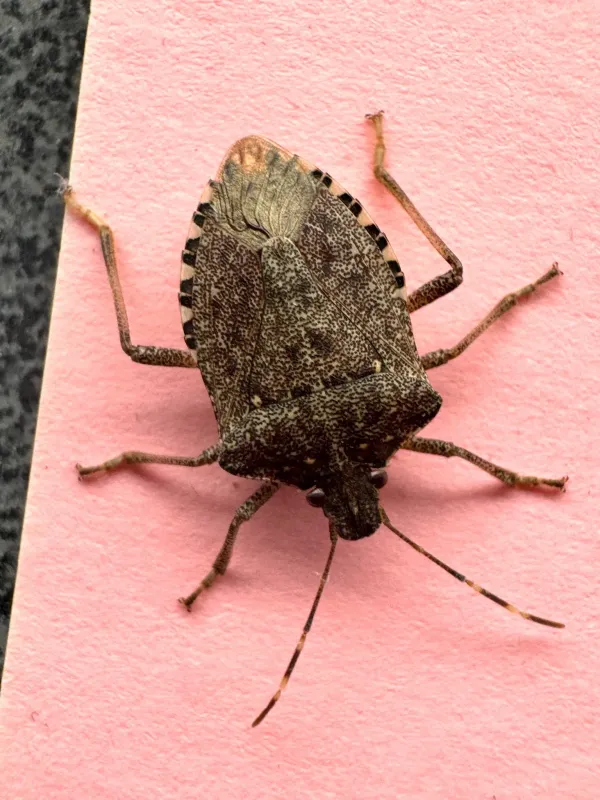
The brown marmorated stink bug (Halyomorpha halys) is a member of the Pentatomidae family, characterized by its mottled brown, shield-shaped body that typically reaches 12–17 mm in length.
Key identification features include alternating light and dark bands on the antennae and the edges of the abdomen, which differentiate it from native stink bug species.
The life cycle involves an egg stage, five nymphal instars, and the adult phase. Eggs are laid in clusters of about 20–30 on the undersides of leaves and appear as small, barrel-shaped, pearly-white structures.
Nymphs change in appearance throughout their development, transitioning from orange-black patterned juveniles to darker, more mature forms that resemble the adults.
These insects are highly mobile and are known for their ability to fly long distances, making them difficult to contain once they establish a presence in an agricultural area.
What it damages
This polyphagous pest attacks over 300 plant species, posing a severe threat to orchards, vegetable farms, and various field crops like corn and soybeans.
The damage is caused by the bug piercing the plant tissue with its straw-like mouthparts and injecting digestive enzymes, which creates necrotic spots and lesions.
On fruits such as peaches, apples, and pears, this feeding causes significant pitting, deformation, and hard, woody spots within the fruit pulp, rendering the crop unmarketable.
In addition to physical damage, the punctures provide entry points for fungal and bacterial infections, which can lead to rapid fruit rot and total harvest loss.
Vegetable crops, particularly tomatoes and peppers, often suffer from stunted growth and shriveled fruit, causing significant economic damage to producers.
When it appears
Adult bugs typically overwinter in protected structures, such as homes or sheds, before emerging in early spring as temperatures begin to rise consistently.
During the spring, they migrate to host plants to feed and lay eggs, beginning the first generation of the season as temperatures reach optimal levels.
Summer months are characterized by the rapid development of multiple generations, leading to high population density and increased damage levels in orchard environments.
As daylight hours shorten in autumn, the bugs aggregate on trees and structures, preparing to seek out overwintering sites, often moving in large numbers at once.
Climate variables significantly influence their activity patterns, with warmer regions experiencing longer seasons and higher frequency of reproduction cycles.
Signs of infestation
The most visible sign of an infestation is the appearance of small, circular depressions or necrotic spots on the skin of ripening fruits.
Leaves may show chlorotic stippling or necrosis where the bugs have pierced the veins to extract plant sap, affecting the overall health of the plant.
Farmers can identify the presence of the pest by observing discarded egg clusters or shed nymphal skins on the undersides of foliage in infested fields.
A distinct, pungent odor, released by the bugs when disturbed or crushed, serves as a strong biological indicator that they are present in the crop canopy.
Observing high numbers of adult bugs on fruit surfaces or building exteriors during late summer and early autumn is a classic sign of a population peak.
Control measures
Integrated Pest Management (IPM) is essential for controlling this pest, combining physical, biological, and chemical strategies for the best results.
The use of pheromone-based traps is a standard practice for monitoring population levels, allowing farmers to time their insecticide applications effectively.
Chemical control usually involves the application of broad-spectrum insecticides, although resistance can become an issue if the same active ingredients are used repeatedly.
Physical barriers, such as netting and orchard covers, can protect high-value crops from migration events, significantly reducing the need for chemical spraying.
Sanitation practices, including the removal of weeds and debris in and around the orchard, help reduce local nesting sites and limit the bug's overwintering success.
Taxonomy
- Latin name
- Halyomorpha
- Order
- Hemiptera (bugs, aphids, leafhoppers)
- Family
- Pentatomidae
- EPPO code
- HALYSP
Discussion
No discussions yet — be the first.