
Griffon vulture
Gyps fulvus
Description
How to identify
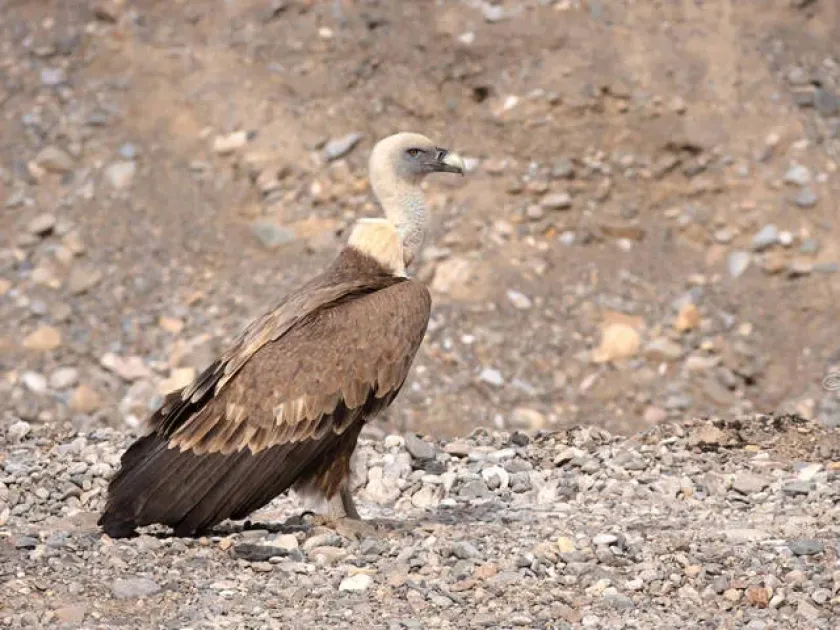
The Griffon vulture (Gyps fulvus) is a large bird of prey belonging to the order Accipitriformes and the family Accipitridae. It is characterized by its impressive wingspan, which can exceed 2.5 meters, and a distinctive white downy collar at the base of its long, bare neck.
These birds possess a buff or sandy-brown plumage, enabling them to blend seamlessly into rocky and mountain landscapes. They have a powerful, sharp-edged beak designed for feeding on carrion, which is their exclusive food source in the wild.
Griffon vultures are highly social creatures that typically nest in colonies on cliff faces. They are masterful gliders, utilizing thermal air currents to soar over vast areas of land while searching for food.
As obligate scavengers, they play a critical role in the natural environment by consuming animal remains. This behavior is essential for maintaining hygiene in natural habitats and preventing the transmission of diseases within livestock populations.
This species is protected under international and national environmental laws. Killing, disturbing, or capturing these birds is strictly prohibited and carries significant legal consequences globally.
What it damages
The Griffon vulture is not a plant pest. It does not feed on crops, vegetables, fruits, or any form of plant life. Therefore, it causes no economic loss to the agricultural sector or plant production.
There is no evidence of this species damaging agricultural infrastructure or crops. The vulture is completely herbivorously neutral, meaning it has zero impact on the health or growth of agricultural vegetation.
Some farmers may express concerns about the presence of large birds near their fields; however, these birds are not predators of living livestock, and they certainly never feed on crops.
The ecological benefit provided by these birds outweighs any perceived inconvenience, as they naturally remove carcasses from pastures, which helps maintain cleaner grazing environments for livestock.
Labeling the Griffon vulture as a pest is scientifically inaccurate and environmentally detrimental. Protecting these birds supports a healthier balance in the ecosystem surrounding agricultural enterprises.
Control measures
Since the Griffon vulture is not an agricultural pest, no control measures should ever be applied against them. The use of traps, pesticides, or deterrents that may harm these raptors is illegal and harmful to the environment.
Agricultural managers should promote awareness among staff regarding the ecological importance of vultures. Ensuring these birds remain undisturbed is a standard practice in environmentally conscious farming.
If a sick or injured bird is found on agricultural property, it is recommended to contact local wildlife rescue organizations or ornithological societies. They are equipped to provide the necessary care and rehabilitation.
By respecting the habitat of the Griffon vulture, farmers contribute to the preservation of biodiversity. This is a key aspect of sustainable land management that aligns agricultural productivity with ecological responsibility.
In conclusion, the focus for farmers should be on conservation and peaceful coexistence with this species, which serves as a valuable natural cleaner in the wider ecosystem.
Taxonomy
- Latin name
- Gyps fulvus
- Family
- Accipitridae
- EPPO code
- GYPXFU
Discussion
No discussions yet — be the first.