
Striped bug
Graphosoma lineatum
Description
How to identify
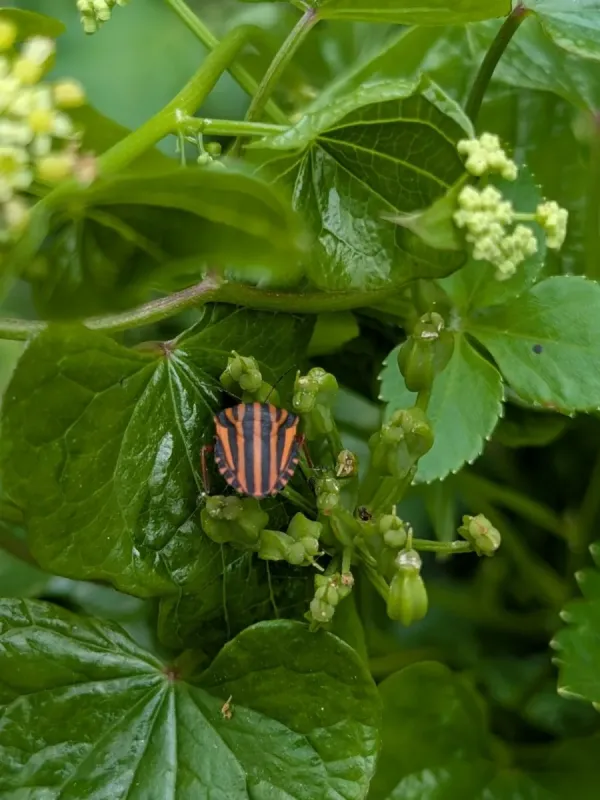
The striped bug, scientifically known as Graphosoma lineatum, is a member of the Pentatomidae family within the order Hemiptera. It is easily recognized by its striking longitudinal red and black stripes, which serve as a warning to predators.
Adult bugs typically measure between 8 and 12 millimeters in length. Their body is oval-shaped, and the scutellum covers the entire abdomen, a feature typical of shield bugs. They have a small head and prominent eyes located at the sides.
The nymphs go through five developmental stages, progressively growing in size and changing their color patterns. Unlike adults, nymphs lack fully developed wings, but they are highly active and often congregate in large groups on host plants.
These insects possess specialized glands located on the underside of the thorax that secrete a foul-smelling substance when the bug is threatened. This defense mechanism makes them unpalatable to birds and many other insectivorous predators.
Adults overwinter in protected areas such as leaf litter, dried grass, or loose bark. As soon as temperatures rise in the spring, they emerge from hibernation, seeking out host plants to begin their reproductive cycle.
What it damages
The primary hosts for the striped bug are plants in the Apiaceae (Umbelliferae) family. This includes both wild weeds and essential garden vegetables, making them a common sight in vegetable patches.
Garden crops such as carrots, dill, parsley, parsnips, and fennel are most frequently targeted. The bug uses its rostrum to pierce plant tissues and extract vital fluids from stems, leaves, and flower umbels.
Significant damage occurs when these bugs infest seed-bearing umbels. By sucking nutrients from the developing seeds, they hinder seed formation, reduce the quality of the harvest, and lower overall seed germination rates.
In addition to cultivated vegetables, the striped bug thrives on weeds like poison hemlock, wild carrot, and ground elder. These weed populations provide a continuous food source and breeding ground throughout the season.
While a few bugs may not cause fatal damage to an established plant, large aggregations can severely weaken host plants. This stress makes the plants more susceptible to secondary diseases and further pest infestations.
When it appears
The activity of the striped bug begins in late spring, coinciding with the flowering of early umbelliferous plants. Once temperatures reach a stable level, the bugs congregate on flowers to feed and mate.
Egg-laying typically occurs throughout June and July. Females lay their eggs in neat clusters, usually on the undersides of leaves, providing nymphs with immediate access to food sources upon hatching.
The development from egg to adult takes approximately one month, depending on environmental conditions. Peak population densities are generally observed during the warmer months of mid-summer, specifically July and August.
As summer draws to a close, adults begin to migrate from their host plants in search of suitable wintering spots. By early autumn, their presence on garden crops significantly diminishes as they prepare for dormancy.
In most regions, there is a single generation per year. However, in warmer southern climates with longer growing seasons, partial second generations may occasionally occur if environmental conditions remain favorable.
Signs of infestation
The most visible sign of an infestation is the presence of the distinctively colored striped bugs on the umbels of carrots or dill. They are social insects and are often found in clusters, making them easy to spot.
Close inspection of stems and petioles reveals small puncture marks, which may darken into necrotic spots over time. The foliage surrounding these points of damage may wilt or yellow due to the loss of sap.
Egg clusters, which look like rows of small, barrel-shaped light-colored beads, can often be found on the undersides of leaves or along the stalks. These are early indicators of future pest pressure.
Distorted flower heads or prematurely drying umbels are clear indicators of severe feeding damage. If a large number of bugs are present, the loss of seed viability becomes noticeable during harvest.
A lingering unpleasant odor in the garden, particularly when plants are disturbed, often indicates the presence of a shield bug colony. The scent is a defensive release triggered by movement or touch.
Control measures
Cultural control is the most effective approach, starting with the removal of host weeds like wild carrot and ground elder near the garden. Keeping the garden perimeter clear reduces the bug population significantly.
Manual collection is a simple and effective method for small gardens. Because they are relatively sluggish in the early morning, bugs can be easily collected by shaking them into a container filled with soapy water.
Natural repellents, such as sprays made from wormwood, mustard, or garlic, can deter bugs from settling on sensitive crops like dill. These should be applied regularly to maintain efficacy.
Chemical control should be reserved for severe infestations and applied before the flowering stage. This is crucial to prevent harm to bees and other essential pollinators visiting the umbelliferous flowers.
Fall garden cleanup is essential to destroy overwintering sites. Deep tillage of the soil and the removal of all plant debris help to minimize the number of adults that survive until the next growing season.
Taxonomy
- Latin name
- Graphosoma lineatum
- Order
- Hemiptera (bugs, aphids, leafhoppers)
- Family
- Pentatomidae
- EPPO code
- GRASLI
Discussion
No discussions yet — be the first.