
Striped shield bug
Graphosoma
Description
How to identify
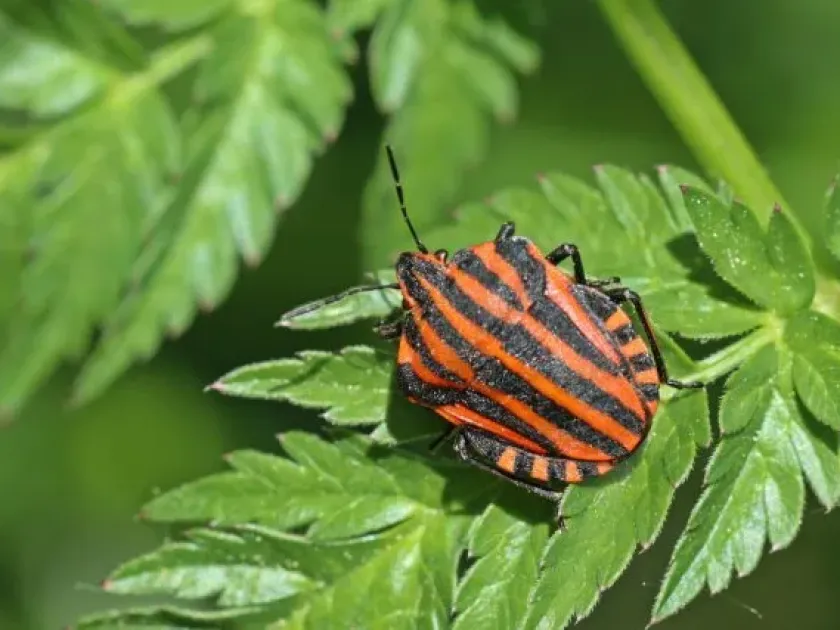
The striped shield bug, scientifically known as Graphosoma lineatum, belongs to the family Pentatomidae. This distinctive insect is easily identified by its striking coloration, featuring six longitudinal black stripes on a bright red background.
Adult bugs typically measure between 8 and 12 mm in length and have a classic shield-like body shape. The underside of the bug also displays characteristic black spots, making them highly visible when they congregate on host plants during the summer months.
The life cycle includes five nymphal stages (instars). As the nymphs grow and molt, they transition from a pale yellow or greyish color to a reddish-brown hue, gradually developing wing pads as they approach the adult stage.
This species is univoltine, meaning it produces one generation per year. Adults overwinter in protected areas, such as leaf litter, plant debris, or soil crevices, emerging in the spring once temperatures consistently rise.
Females lay eggs in barrel-shaped batches, usually found on the underside of host plant leaves. A typical clutch consists of several dozen eggs arranged in two tidy rows, which is a key diagnostic feature for identification in the field.
What it damages
The striped shield bug is primarily associated with plants in the Apiaceae family. It poses a significant threat to various crops, including carrots, parsnips, parsley, celery, dill, fennel, and coriander.
In addition to commercial crops, the bugs thrive on wild Apiaceae species like hogweed and wild carrot, which act as reservoirs and support their population throughout the surrounding landscape.
Both adults and nymphs cause damage by using their piercing-sucking mouthparts to feed on plant tissues. They inject digestive enzymes that break down the plant cells, allowing them to extract essential sap.
The most severe damage is observed in seed production fields. The bugs feed directly on developing seed heads, leading to stunted seeds, reduced germination rates, and in severe cases, complete crop failure.
On vegetative parts, their feeding causes chlorosis, leaf deformation, and wilting. While rarely lethal to the entire plant, their presence significantly degrades the quality and market value of the harvested produce.
Signs of infestation
The most obvious sign of infestation is the presence of adult bugs gathered on the tops of flower heads. They are gregarious and often form dense clusters, particularly during sunny, warm weather.
Damaged flower heads often show signs of premature drying or failure to develop properly. Close inspection of the stems and umbels will reveal tiny dark punctures where the bugs have fed.
If seeds are harvested from infested plants, they often appear shriveled, discolored, or hollow. These seeds are typically non-viable and indicate a significant loss of productivity in the field.
Nymphs are more difficult to detect as they tend to hide within the dense floral structures. Early indicators of their activity include localized yellowing of leaves and a general decline in the plant's vigor.
In areas of high infestation, a distinct, unpleasant odor may be detected near the crop. This is a chemical secretion produced by the bugs' scent glands, used primarily for defense against predators.
Control measures
Integrated pest management starts with cultural practices. Removing weeds from the Apiaceae family in and around fields significantly reduces the primary food sources that support the bug population.
Deep autumn tillage is a highly effective method to disrupt the overwintering success of the population. By burying plant debris, the soil conditions become less favorable for the bugs to survive the winter.
In home gardens or small-scale plots, manual collection is a viable option. Shaking the bugs into a container of soapy water during the cool early morning hours is effective, as the insects are less active then.
Chemical control is required when population levels exceed the economic threshold. Producers should select insecticides authorized for use on their specific crops, ensuring compliance with local regulations and safety guidelines.
To preserve biodiversity and protect beneficial insects like bees, insecticide applications should be avoided during the peak flowering period. If spraying is necessary, it is best done early or late in the day to minimize the impact on pollinators.
Taxonomy
- Latin name
- Graphosoma
- Order
- Hemiptera (bugs, aphids, leafhoppers)
- Family
- Pentatomidae
- EPPO code
- GRASSP
Discussion
No discussions yet — be the first.