
Gomphocerus rufus
Gomphocerus rufus
Description
How to identify
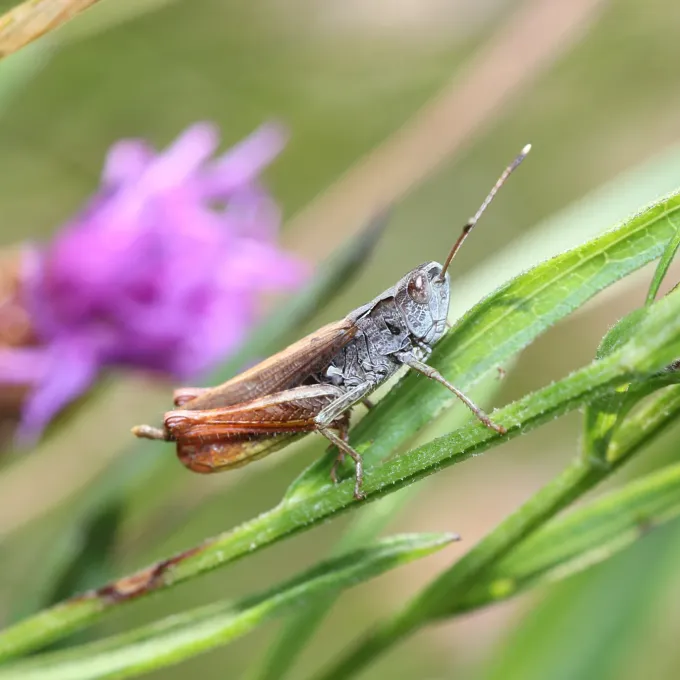
Gomphocerus rufus is a species of grasshopper belonging to the family Acrididae. It is recognized by its distinct morphology, particularly the club-shaped tips on the antennae of the males, which is a key identification feature for this species.
The coloration of these insects is highly variable, ranging from shades of brown and grey to vibrant reddish or green hues. This polymorphism allows them to blend into their natural environment, such as grasslands, meadows, and the edges of agricultural fields.
What it damages
This insect is a polyphagous pest that primarily targets grasses and cereal crops. Its preferred food sources include wheat, barley, rye, and oats, as well as various wild meadow grasses found in pastures.
Feeding damage involves the consumption of leaf blades, which can significantly reduce the photosynthetic capacity of the plant. In extreme cases of infestation, the yield potential of cereal crops is severely compromised, and forage quality is degraded.
When it appears
The life cycle of Gomphocerus rufus consists of an egg stage that overwinters in the soil. Nymphs emerge in the spring, typically starting in May, and undergo five molts before reaching the adult stage.
Adult grasshoppers become active during the summer months, with peak populations occurring in July and August. During this period, the adults feed intensely, mate, and subsequently lay their eggs in the soil, ensuring the continuity of the next generation.
Signs of infestation
Signs of infestation include irregular holes or chewed edges on the leaves of cereal plants. Severe feeding damage can lead to the wilting and browning of leaves, causing the entire plant to weaken over time.
- Increased presence of adult grasshoppers in the field.
- Visible leaf defoliation on cereal crops.
- Presence of patchy areas where foliage has been thinned out.
Control measures
Effective management includes agricultural practices such as deep tillage (plowing) in the autumn or spring, which physically disturbs and destroys the egg pods deposited in the soil.
For chemical control, if population thresholds are exceeded, the application of registered insecticides is necessary. Targeting the nymph stages early in the season is generally the most effective strategy for preventing widespread damage to crops.
Taxonomy
- Latin name
- Gomphocerus rufus
- Order
- Orthoptera (locusts)
- Family
- Acrididae
- EPPO code
- GOMPRU
Discussion
No discussions yet — be the first.