
Gudgeon
Gobio gobio
Description
How to identify
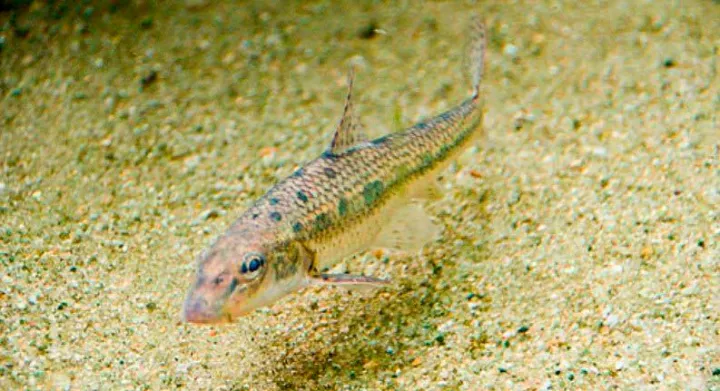
The gudgeon (Gobio gobio) is a small freshwater fish belonging to the family Cyprinidae. It is characterized by an elongated body, relatively large scales, and a pair of small barbels at the corners of its mouth.
Its coloration is typically greenish-grey or brown, featuring a series of dark spots along the sides. This pattern provides excellent camouflage against the sandy or gravelly bottoms where it resides.
Adult gudgeons generally measure between 15 and 20 centimeters. They are bottom-dwellers, well-adapted to life in flowing and stagnant waters, and are known for their tolerance to varying oxygen levels.
In managed fish farms, the gudgeon is often viewed as a nuisance. Its ability to thrive in poor conditions makes it a persistent presence if it manages to infiltrate controlled ponds.
Identifying this fish is straightforward due to its distinctive barbels, lower-positioned mouth for bottom feeding, and mottled appearance that helps it blend into the aquatic substrate.
What it damages
The primary concern regarding gudgeons in aquaculture is food competition. Being active bottom feeders, they consume benthic invertebrates and zooplankton, essential food for juvenile commercial fish like carp.
High population densities of gudgeon result in reduced growth rates of target fish species. By depleting the natural food supply, they impose significant economic costs on fish farm operators.
Gudgeons are also known to prey upon the eggs of other fish species. This interference with the reproduction cycle of more valuable stock can lead to decreased recruitment and productivity.
Furthermore, gudgeons can act as intermediate hosts for various parasites. Their presence increases the risk of spreading fish diseases within the pond system, requiring additional veterinary management.
The accumulation of this weed fish disrupts the pond's ecological balance, potentially leading to increased waste and altered water quality, which complicates overall management efforts.
When it appears
Gudgeon activity is closely linked to water temperature, peaking from late spring through autumn. During these months, the fish engages in intense feeding, which increases its competitive impact.
The spawning season occurs between May and June. During this timeframe, the pressure on natural resources increases as gudgeons concentrate in shallower areas of the pond.
Summer remains the critical season for resource competition. While temperature-sensitive fish might reduce activity, gudgeons remain active, maximizing their access to available benthic food.
As autumn arrives and temperatures drop, gudgeon activity slows down. The fish begins to prepare for winter, typically seeking deeper, more stable areas within the pond environment.
Winter is characterized by a state of relative dormancy, with fish buried in the bottom sediment. Despite this low activity, their survival rate remains high, ensuring potential population resurgence in spring.
Control measures
Preventative measures are the most effective. This includes installing fine-mesh screens on all water inlets to prevent the entry of gudgeon eggs, larvae, and adults from external natural water bodies.
Annual drainage and drying of the pond bottom are essential practices. Applying lime to the pond bed helps eliminate potential habitats and eradicate remaining fish populations during the off-season.
Introducing predatory fish, such as pike or perch, acts as a biological control method. These predators effectively predate on smaller gudgeons, naturally regulating their numbers within the pond.
Regular monitoring and selective netting of weeds and small fish provide additional control. Consistent effort during the season keeps the population from reaching levels that could damage production.
Finally, maintaining the integrity of pond infrastructure, such as sluice gates and levees, is crucial to prevent unexpected water exchanges that could reintroduce the pest to the aquaculture facility.
Taxonomy
- Latin name
- Gobio gobio
- Family
- Cyprinidae
- EPPO code
- GOBIGO
Discussion
No discussions yet — be the first.