
Desert termite
Gnathamitermes perplexus
Description
How to identify
The desert termite, Gnathamitermes perplexus, is a species belonging to the Termitidae family. These insects live in highly organized colonies consisting of workers, soldiers, and reproductive castes.
Soldiers are characterized by their distinct, serrated mandibles used to defend the colony against predators, primarily ants. The body is soft and pale, making the termites highly sensitive to desiccation in dry environments.
The swarming reproductive adults are dark-colored and possess two pairs of wings. They emerge during the rainy season to mate and establish new colonies in the arid landscape.
This species is famous for constructing protective mud tubes over the surface of food sources or soil, allowing them to traverse open areas while remaining shielded from the sun.
The life cycle involves incomplete metamorphosis, with individuals progressing through several nymphal stages. The social structure ensures that each caste performs specific duties, from foraging to tunnel maintenance.
What it damages
The primary diet of this species consists of cellulose-rich materials, including dead wood, dry grass, crop residues, and the decaying organic matter found in arid soils.
In agriculture, they can damage crops by feeding on the root systems of weakened plants, particularly in areas where soil moisture is restricted due to drought.
Orchard trees and shrubs may suffer from bark damage at the base, which, if severe enough, can disrupt the plant's vascular system and lead to stunted growth or eventual death.
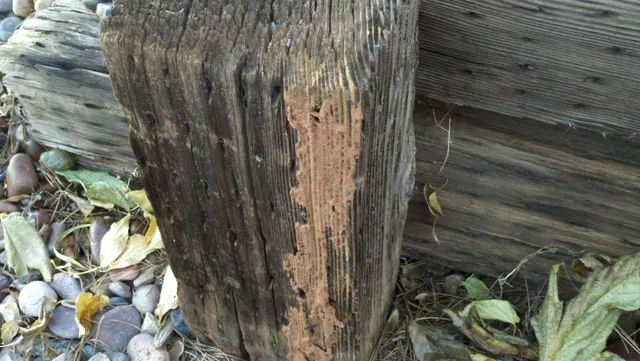
Infrastructure damage is a significant concern, as these termites frequently attack wooden fences, trellis posts, and other agricultural wood structures that touch the soil.
While they generally prefer dead organic material, a large enough colony can become opportunistic, causing harm to live vegetation that is already struggling with environmental stress.
Signs of infestation
The most prominent indicator of their presence is the appearance of earthen tubes or galleries on the soil surface, tree trunks, or wooden debris.
Visible trails of soil and fecal matter covering surfaces are classic signs of foraging activity. If these tunnels are broken, workers can often be seen retreating inside.
Sudden wilting of a plant, despite sufficient watering, often suggests that the root system or the root crown has been compromised by termite feeding.
The occurrence of swarming events, where thousands of winged termites appear after rain, indicates a large, mature colony is present in the immediate vicinity.
Fine wood particles or sawdust-like debris accumulated at the base of plants or wooden structures often signal that termites have been actively consuming the material.
Control measures
Effective prevention centers on physical barriers; ensuring that wood-to-ground contact is eliminated using concrete or metal supports is the most reliable strategy.
Maintaining a clean field or garden by removing dead branches, stumps, and unnecessary cellulose debris reduces the overall attractiveness of the area to foragers.
Chemical control involving non-repellent insecticides applied to the soil perimeter can provide an effective barrier, preventing termites from accessing treated crops.
Biological control methods, including the use of entomopathogenic nematodes or fungi, can be effective in reducing colony populations when soil moisture levels are appropriate.
- Regular inspection of wooden agricultural structures.
- Proper irrigation management to avoid localized moisture stress.
- Deployment of baiting stations with slow-acting insect growth regulators.
Taxonomy
- Latin name
- Gnathamitermes perplexus
- Family
- Termitidae
- EPPO code
- GNTTPE
Discussion
No discussions yet — be the first.