
Eucalyptus red gum lerp psyllid
Glycaspis brimblecombei
Description
How to identify
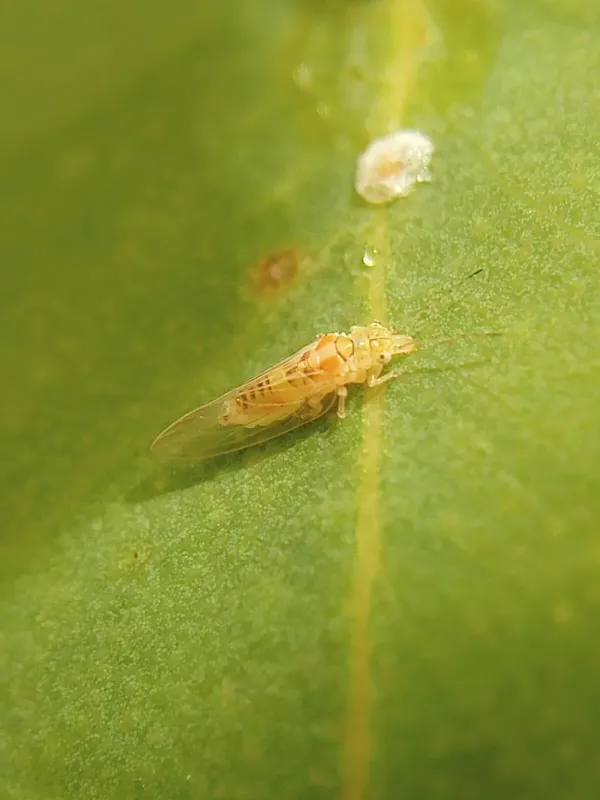
The Eucalyptus red gum lerp psyllid (Glycaspis brimblecombei) is a small insect belonging to the family Aphalaridae, order Hemiptera. It is a sap-sucking pest known for damaging eucalyptus trees.
Adult psyllids are roughly 3 millimeters long with a pale green to brownish color. They are winged and highly mobile, allowing them to disperse quickly across eucalyptus plantations.
The most recognizable life stage is the nymph, which constructs a protective, white, cone-shaped cover called a "lerp." This structure is made of the nymph's sugary waste products and wax.
The life cycle involves incomplete metamorphosis. Females lay clusters of eggs on the leaf surface, which hatch into nymphs that begin building their lerps almost immediately.
The rate of reproduction is largely dependent on climate, with warmer, humid conditions significantly accelerating the maturation cycle of the population.
What it damages
The primary hosts of this pest are various species of the Eucalyptus genus. It feeds by extracting fluids from the phloem of young leaves and soft shoots.
In cases of heavy infestation, the psyllid can severely compromise the health of entire eucalyptus stands, often leading to stunted growth or tree decline.
By removing significant amounts of sap, the psyllid disrupts the plant's photosynthetic efficiency, causing the tree to lose its vigor and ability to grow normally.
Severe infestations often result in canopy thinning, branch dieback, and increased susceptibility to other environmental stressors or opportunistic pests.
In forestry and nursery settings, the damage caused by Glycaspis brimblecombei can have substantial economic impacts by reducing wood production and timber quality.
Signs of infestation
The hallmark sign of an infestation is the presence of white, crystalline lerps on the underside of leaves. These white cones are easily visible upon close inspection.
Infested foliage often exhibits yellowing (chlorosis), curling, and eventually premature leaf drop. Leaves may also appear shiny due to the presence of honeydew.
Honeydew secretion leads to the growth of sooty mold, a dark fungal layer that covers the leaves and hinders the tree’s ability to conduct photosynthesis properly.
Overall, the canopy appears sparse and unhealthy. Stressed trees might show excessive leaf fall, making them look thin and gray compared to healthy specimens.
During warm months, large numbers of adult psyllids may be observed taking flight when tree branches are disturbed, indicating a high level of population density.
Control measures
Biological control is the gold standard for managing this pest. The parasitic wasp Psyllaephagus bliteus has been highly successful in reducing psyllid populations.
Chemical control, while effective with systemic insecticides, should be used judiciously to avoid harming beneficial predators and the local pollinator population.
Improving tree health through proper irrigation and soil management can enhance the tree's natural resilience against infestation pressures.
Regular monitoring of young plantations is crucial. Detecting the pest early allows for localized management before it spreads across a larger landscape.
- Introduction of Psyllaephagus bliteus for long-term population suppression.
- Pruning and removal of heavily infested plant materials to lower insect count.
- Applying systemic insecticides such as imidacloprid for severe cases in nursery settings.
Taxonomy
- Latin name
- Glycaspis brimblecombei
- Order
- Hemiptera (bugs, aphids, leafhoppers)
- Family
- Aphalaridae
- EPPO code
- GLYSBR
Discussion
No discussions yet — be the first.