
Red gum lerp psyllid
Glycaspis
Description
How to identify
The Red gum lerp psyllid (Glycaspis brimblecombei) is a small sap-sucking insect belonging to the family Aphalaridae. It is a major pest specifically targeting trees within the Eucalyptus genus.
Adult psyllids are roughly 3–4 mm long, often featuring distinct red or orange coloration on their heads, which helps in identifying them in the field.
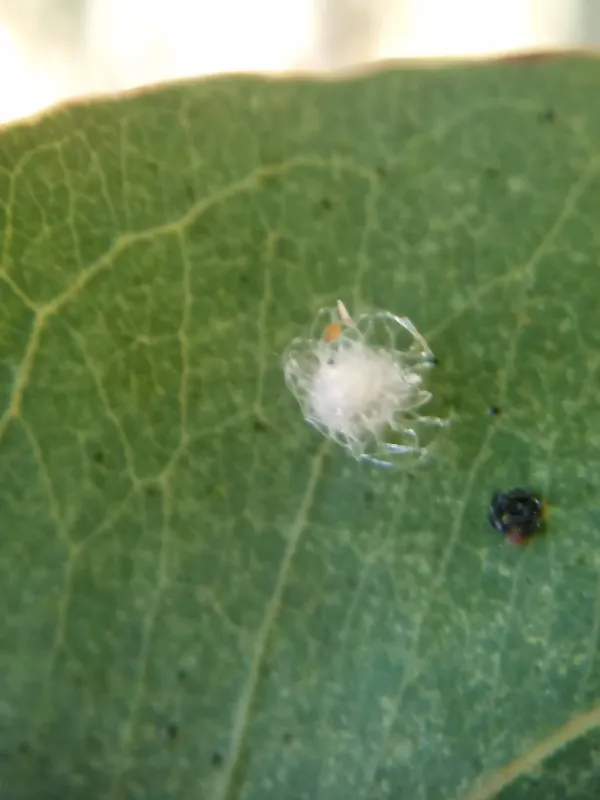
The nymphal stage is the most stationary part of the lifecycle. Nymphs construct distinctive white, cone-shaped covers known as "lerps" using their own sugary secretions and wax.
These lerps serve as protective armor, hiding the immature insects from predators and adverse weather conditions while they feed on leaf tissues.
This species is highly prolific and has spread globally, often causing significant damage in regions where eucalypts are grown as ornamentals or for industrial timber.
What it damages
This pest feeds by inserting its stylet into the leaf tissue to extract sap, causing direct nutrient loss to the host tree. This process disrupts the plant's physiological functions.
Severe infestations lead to chlorosis, premature leaf drop, and overall reduction in tree vitality, which can eventually result in tree death if not managed properly.
The accumulation of honeydew secreted by the nymphs promotes the growth of sooty mold, which coats the foliage and severely hinders the process of photosynthesis.
Young, succulent leaves are preferred by the insects, leading to stunted growth of new shoots and a distorted canopy appearance.
In large-scale forest or plantation settings, an outbreak can significantly reduce annual wood volume increments, representing a major economic impact.
When it appears
The lifecycle of the Red gum lerp psyllid is highly temperature-dependent. In warmer regions, breeding cycles are continuous throughout the year.
Development from egg to adult is rapid, often taking just a few weeks under optimal conditions, leading to overlapping generations within a single season.
Peak activity generally coincides with periods of new leaf flush, as nymphs have a strong preference for young, nutrient-rich foliage.
Although they can survive cooler temperatures, their population density usually explodes during warm spring and summer months.
Monitoring for the presence of the insect should be constant, especially in areas with a history of past infestations.
Signs of infestation
The presence of white, crystalline cone-shaped lerps on the underside of leaves is the most definitive diagnostic sign of an infestation.
Leaves will start showing signs of yellowing or spotting, which often progresses into full chlorosis as the insect colony grows in size.
A shiny, sticky layer of honeydew covering the leaves and branches is a common secondary symptom that often attracts ants and other insects.
Heavy infestations are easily visible from the ground due to the distinct discoloration of the canopy and the accumulation of shed leaves below the tree.
In advanced cases, the tree may show signs of branch dieback, particularly in the lower and middle portions of the crown where the colony density is highest.
Control measures
Biological control is considered the most effective long-term solution. The introduction of the parasitoid wasp Psyllaephagus bliteus has shown success in many parts of the world.
For high-value ornamental trees, systemic insecticides applied as soil drenches or trunk injections can provide effective control for several months.
Foliar sprays are possible but often difficult due to the height of mature eucalypts and the protective nature of the lerps covering the nymphs.
Proper forest management, including maintaining tree vigor through appropriate water and nutrient management, helps trees better tolerate psyllid feeding.
Strict quarantine protocols for moving nursery stock are essential to prevent the spread of the psyllid into non-infested regions.
Taxonomy
- Latin name
- Glycaspis
- Order
- Hemiptera (bugs, aphids, leafhoppers)
- Family
- Aphalaridae
- EPPO code
- GLYSSP
Discussion
No discussions yet — be the first.