
Yarrow cyst nematode
Globodera millefolii
Description
How to identify
The yarrow cyst nematode (Globodera millefolii) is a microscopic worm within the Heteroderidae family. It is a specialized phytoparasite that primarily infects the roots of its host plants.
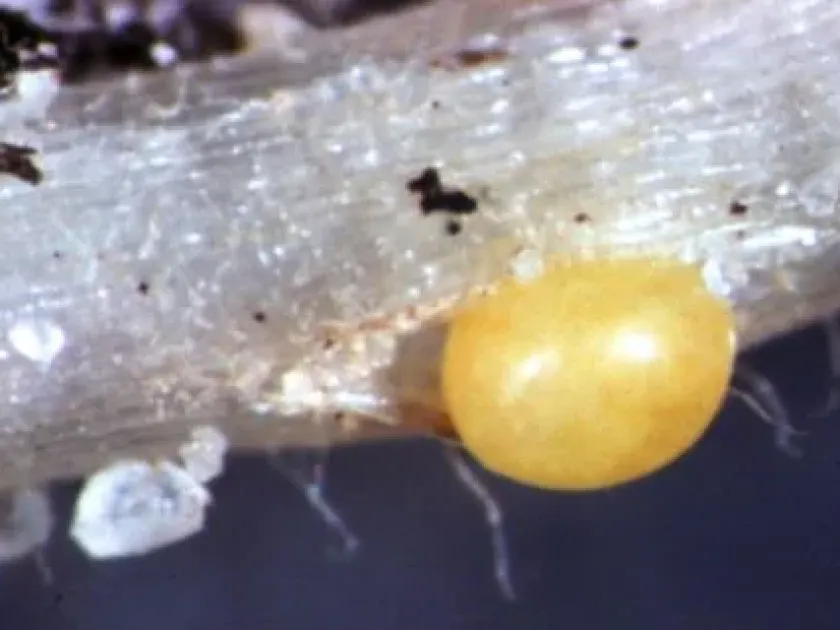
The adult females transform into spherical, brown cysts that remain in the soil. These cysts serve as protective vessels for eggs and larvae, ensuring the survival of the species during adverse conditions.
Its biological cycle is triggered by root exudates, which signal the larvae to emerge from the cysts in search of a suitable root system to penetrate.
Unlike some other nematode species, Globodera millefolii has specific host requirements, making its identification crucial for implementing targeted management strategies.
Detection is generally performed through soil sampling and laboratory processing, as the cysts are too small to be easily identified in the field without expertise.
What it damages
This nematode specifically targets the family Asteraceae, particularly species of the genus Achillea (yarrow). It interferes with the nutrient uptake of the host plant.
By feeding on the roots, the nematode causes physiological disruption, leading to reduced growth, stunted stems, and poor overall plant health.
The damage to the vascular tissues of the root system limits the plant's ability to transport water and minerals, making it highly susceptible to wilting.
In ornamental or medicinal cultivation, the presence of this pest can cause significant financial losses by reducing the quality and quantity of the harvest.
Prolonged infestation can lead to root system degradation, which invites various soil-borne secondary infections, further weakening the plant.
Signs of infestation
Early symptoms of infestation include patchy growth patterns across the field, where plants appear significantly smaller than their healthy counterparts.
Foliar symptoms include chlorosis and reduced leaf size, often mistaken for nutrient deficiencies by inexperienced growers.
Severe infestation causes noticeable wilting during the peak of the growing season when water demand is high and the damaged roots cannot cope with the pressure.
Close observation of the root system often reveals the presence of tiny, pinhead-sized cysts, which are usually brown in color.
The presence of these cysts, particularly in patches, is a definitive sign of nematode activity that requires immediate management action.
Control measures
The primary control measure is the strict implementation of quarantine practices to prevent the introduction of cysts into non-infested soil.
Crop rotation is the most sustainable management tool, as excluding host plants for several seasons forces the population to decline due to lack of food.
Biological control agents, such as specific soil fungi, can be used to parasitize and reduce the viability of the cysts within the soil profile.
Sanitation of agricultural machinery and tools is vital to prevent the spread of soil particles contaminated with dormant nematode cysts.
Regular laboratory testing of soil samples from the field provides the necessary data to make informed decisions regarding the use of nematocides or changes in crop cycles.
Taxonomy
- Latin name
- Globodera millefolii
- Order
- Nematodes
- Family
- Heteroderidae
- EPPO code
- GLOBMI
Discussion
No discussions yet — be the first.