
Globitermes sulphureus
Globitermes sulphureus
Description
How to identify
Globitermes sulphureus belongs to the Termitidae family and represents a highly social group of insects. These termites live in complex colonies characterized by distinct castes: workers, soldiers, and reproductives, each fulfilling specific duties.
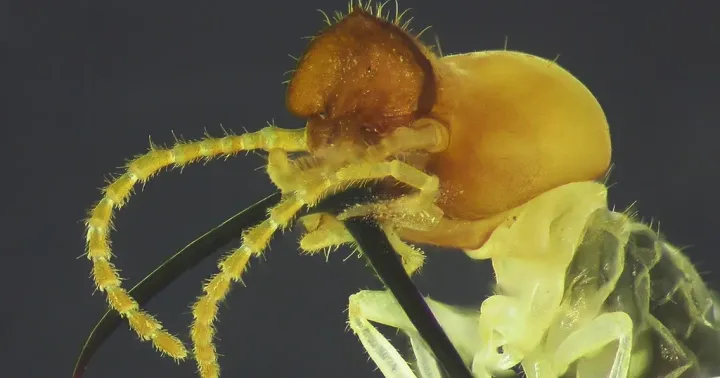
The soldier caste is easily identified by a vibrant yellow abdomen, which houses a specialized secretory gland. When threatened, they engage in autothysis, rupturing their body walls to release a sticky, yellow fluid that immobilizes intruders.
These insects construct elaborate nests composed of soil, saliva, and fecal matter. These mounds act as a protective fortress, maintaining the precise humidity and temperature levels necessary for colony survival.
The life cycle involves a nuptial flight where winged adults emerge from the nest to mate. After the flight, the pair sheds their wings and searches for a suitable location to establish a new colony foundation.
Workers are light-colored, soft-bodied insects with powerful mandibles designed for masticating wood and cellulose fibers. They are the primary individuals responsible for the structural damage observed in plants.
What it damages
Globitermes sulphureus is a significant agricultural pest in tropical and subtropical regions. It primarily impacts plantation crops such as rubber trees, oil palms, and various fruit-bearing species.
The damage is caused when termites feed on the root systems and the internal pith of stems. This subterranean and internal feeding habit disrupts the plant's vascular system, leading to wilting and death.
Beyond live plants, these termites aggressively target dead organic matter, including crop residues and wood, making them a destructive force in areas where mulching or traditional farming practices are used.
The damage often goes unnoticed for long periods because the termites operate internally or beneath protective soil tunnels. By the time visual symptoms appear, the internal structure of the plant is often already hollowed out.
Heavy infestations can lead to significant economic losses, as compromised trees lose their structural integrity and are prone to collapsing during moderate winds or heavy storms.
Signs of infestation
The most visible sign of an infestation is the appearance of earthen tubes, often called shelter tubes, constructed along the trunks of trees. These tunnels allow termites to navigate while staying hidden from light.
Plants affected by root-feeding termites often show sudden yellowing or wilting. This symptom occurs because the termites have effectively severed the plant's ability to transport water and nutrients from the soil.
A hollow sound when tapping the trunk or stem of a plant often indicates that termites have consumed the internal heartwood, leaving only the thin exterior bark or outer layer intact.
The presence of yellow staining on tree bark is a common indicator of defensive secretions from soldiers. Seeing this discoloration often suggests that the colony is actively defending its food source.
Finding small, white, soft-bodied insects when moving mulch or debris near the base of the plant is a critical sign that a localized colony of Globitermes sulphureus is present.
Control measures
Chemical control is often achieved through soil termiticides, which create a chemical barrier in the ground. This prevents foragers from reaching the root systems of the desired crops.
Baiting systems are highly effective for long-term management. These stations contain slow-acting insecticides that workers carry back to the nest, ensuring the destruction of the queen and the entire colony.
Cultural control involves thorough field sanitation. Removing old stumps, fallen logs, and accumulated woody debris minimizes the number of potential nesting sites and food sources available to the termites.
Integrating biological controls, such as using specific entomopathogenic fungi, can help reduce population densities in an environmentally friendly manner without relying solely on harsh chemical treatments.
- Regular monitoring using cellulose-based bait traps.
- Protective coating of tree bases with repellent substances.
- Mechanical destruction of visible mound structures.
Taxonomy
- Latin name
- Globitermes sulphureus
- Family
- Termitidae
- EPPO code
- GLBTSU
Discussion
No discussions yet — be the first.