
Globitermes
Globitermes
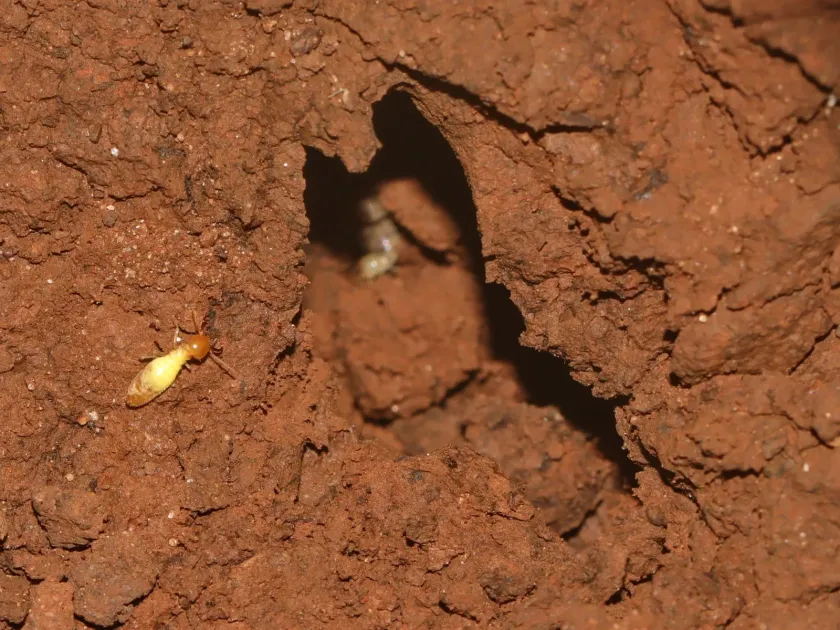
Description
How to identify
Globitermes is a genus of termites belonging to the Termitidae family. Externally, workers and soldiers have a body structure typical of higher termites. Soldiers of this genus possess a unique defense mechanism: when threatened, they can perform autothysis, rupturing their own bodies to release a sticky secretion that immobilizes predators.
Soldier heads are usually yellowish or brown, while worker bodies are light-colored and soft. Globitermes build massive above-ground mounds, often rising as domes or pillars, which serves as a vital diagnostic feature for locating their colonies in the field.
These termites are secretive, moving within closed tunnels constructed from a mixture of soil, feces, and wood fibers. Finding these «mud tubes» on tree trunks or plant stems is a reliable indicator of colony presence.
The colony structure is strictly divided into castes, with each type performing specific roles: reproduction, nest defense, or foraging. Their ability to rapidly recover population numbers makes them dangerous pests in tropical and subtropical regions.
Identification is often difficult because Globitermes prefer to work inside plant tissues, leaving the outer layer nearly intact until the internal structure of the wood or stem is completely destroyed.
What it damages
Globitermes pose a serious threat to various tree species, including fruit crops, cocoa and coffee plantations, and valuable timber trees. They feed on cellulose, gradually destroying the wood from the inside out.
Beyond living trees, these pests often damage deadwood, dry branches, and any wooden structures located near the infestation site, leading to significant structural damage. This compromises plant health and eventual viability.
In the agricultural sector, Globitermes can attack the root system of young seedlings, causing sudden wilting and stunted growth. Damaged tissues become entry points for secondary infections, including various fungal diseases.
Termites are capable of hollowing out the entire inside of a tree trunk, leaving only a thin shell of bark. This severely reduces the tree's mechanical strength, leading to windthrow or collapse under its own weight.
Economic damage includes not only the direct loss of plants but also significant expenditures on monitoring and sanitation programs in areas where colony presence is widespread.
When it appears
Globitermes activity persists throughout the year provided that climatic conditions remain warm and humid. Their primary life processes are closely linked to soil moisture levels.
Reproductive periods and the swarming of winged individuals (alates) often coincide with the onset of the rainy season. Mass flights of imagos to form new colonies occur under specific temperature and humidity thresholds.
During dry seasons, colonies move deeper into the soil to avoid desiccation, though they continue to feed on wood that retains residual moisture. Surface activity is notably reduced during these times.
The invasive potential increases during periods of intense plant growth, when tissues contain higher concentrations of nutrients that attract termites. Consistent plantation monitoring is required regardless of the season.
Seasonal shifts influence the vertical distribution of termites in the soil profile, which is a critical factor when planning the application of insecticides or other protective measures.
Signs of infestation
The main sign of infestation is the presence of clay-like tunnel galleries running along tree trunks. These paths allow termites to move from the nest to food sources while remaining protected from direct sunlight and predators.
Tapping on the trunk or stem of an infested plant produces a characteristic hollow sound, indicating internal voids created by termite feeding. Surface bark deformation may also be visible.
Premature yellowing and leaf drop on specific branches or the entire plant often point to root or trunk base damage by Globitermes. The plant loses its ability to effectively transport water and nutrients.
The presence of specific termite mounds near crops is a direct warning sign of danger. Immediate inspection of nearby trees for signs of activity is required.
Finding a large number of dead individuals or winged termites on the soil surface during their swarming season confirms the proximity of a colony and requires immediate professional intervention.
Control measures
Effective protection requires a comprehensive approach, combining agrotechnical, biological, and chemical methods to combat termite populations within a site.
Removing deadwood, stumps, and plant debris significantly lowers the site's attractiveness to Globitermes. Clearing the area removes the primary food sources for the colonies.
Applying insecticidal barriers around tree trunks or incorporating granular treatments into the soil surrounding the nest creates an exclusion zone. It is essential to use systemic products that are carried by worker termites throughout the colony.
Biological control can involve the use of fungal pathogens, such as Beauveria or Metarhizium species, which are capable of infecting termite colonies upon contact, causing death without harming the environment.
- Regular trunk inspections for mud tubes
- Mechanical destruction of nests where possible
- Use of slow-acting bait stations
- Application of biological control agents
Taxonomy
- Latin name
- Globitermes
- Family
- Termitidae
- EPPO code
- GLBTSP
Discussion
No discussions yet — be the first.