
Glaucias bug
Glaucias
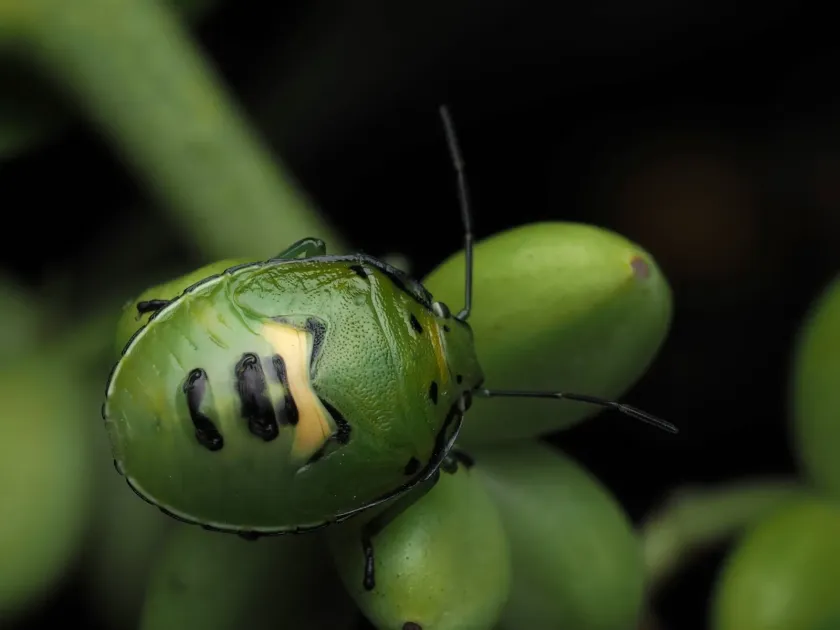
Description
How to identify
The Glaucias bug (genus Glaucias) belongs to the Pentatomidae family, commonly known as shield bugs or stink bugs, characterized by their distinct armor-like shape.
Adult insects possess a flattened, shield-like body which is typically bright green or yellow-green, providing an excellent camouflage against the foliage of host plants.
The head is small and triangular, featuring a specialized piercing-sucking proboscis that is folded beneath the body when the insect is at rest.
Development involves incomplete metamorphosis, where nymphs resemble smaller, wingless versions of adults, often showing more vivid patterns or colors.
Eggs are generally laid in organized, tight clusters on the underside of leaves, a common trait that assists in identification during field scouting.
What it damages
These bugs are notorious polyphagous pests, meaning they feed on a diverse range of agricultural, horticultural, and wild plant species throughout the growing season.
Primary host plants include various vegetables such as tomatoes, cucumbers, peppers, and beans, which suffer greatly from the sap-sucking activity of these insects.
Beyond vegetable crops, they frequently target fruit trees and berry bushes, where they damage buds, blossoms, and the developing fruit surface.
Feeding causes localized necrosis at the site of the puncture, and the introduction of salivary enzymes often leads to tissue decay or structural deformities in fruits.
Yield reduction is both quantitative, due to sap loss, and qualitative, as fruits become unmarketable and unattractive for commercial distribution.
When it appears
The seasonal activity of the Glaucias bug begins in early spring as temperatures rise, signaling the end of hibernation for the overwintering adults.
Generations typically overlap, meaning that throughout the peak summer months, one might find eggs, various nymphal instars, and adults simultaneously.
Warm and humid weather conditions significantly accelerate their life cycle, leading to rapid population spikes during the mid-summer development phase.
As the season approaches autumn and plant hosts begin to senesce, the bugs seek protected areas, such as leaf litter or dense weeds, to enter diapause.
Understanding these phenological shifts is crucial for timing monitoring and intervention strategies to minimize crop damage before populations peak.
Signs of infestation
Key symptoms of an infestation include the appearance of tiny chlorotic spots or white stippling on leaves, which represent the initial points of bug feeding.
Fruits often exhibit surface pitting, dimpling, and uneven growth patterns, commonly referred to as «cat-facing» in certain horticultural contexts.
Terminal shoots and young leaves may show signs of wilting or stunted growth, resulting from the bug's effective removal of essential plant juices.
Early flower abortion is another frequent indicator of significant pressure, as the bugs frequently feed on the delicate reproductive structures of the plant.
- Chlorotic stippling on leaves
- Surface pitting and deformation of fruits
- Wilting of terminal shoot growth
- Premature fruit and flower drop
- Visible egg clusters under leaves
Control measures
Integrated Pest Management (IPM) is the most effective approach, starting with rigorous weed control to eliminate alternative hosts and overwintering sites.
Cultural practices, such as maintaining healthy soil fertility and proper irrigation, help plants better withstand the stress caused by bug feeding activities.
Manual removal of egg masses and adults can be highly successful in smaller home gardens and during the initial stages of a localized infestation.
When chemical intervention is required, applying targeted insecticides at the early nymphal stage provides better results than targeting the more mobile adults.
Promoting local populations of natural enemies, such as parasitic wasps (Scelionidae), can play a vital role in suppressing bug numbers naturally.
Taxonomy
- Latin name
- Glaucias
- Order
- Hemiptera (bugs, aphids, leafhoppers)
- Family
- Pentatomidae
- EPPO code
- GLAUSP
Discussion
No discussions yet — be the first.