
Cereal fly (Geomyza venusta)
Geomyza venusta
Description
How to identify
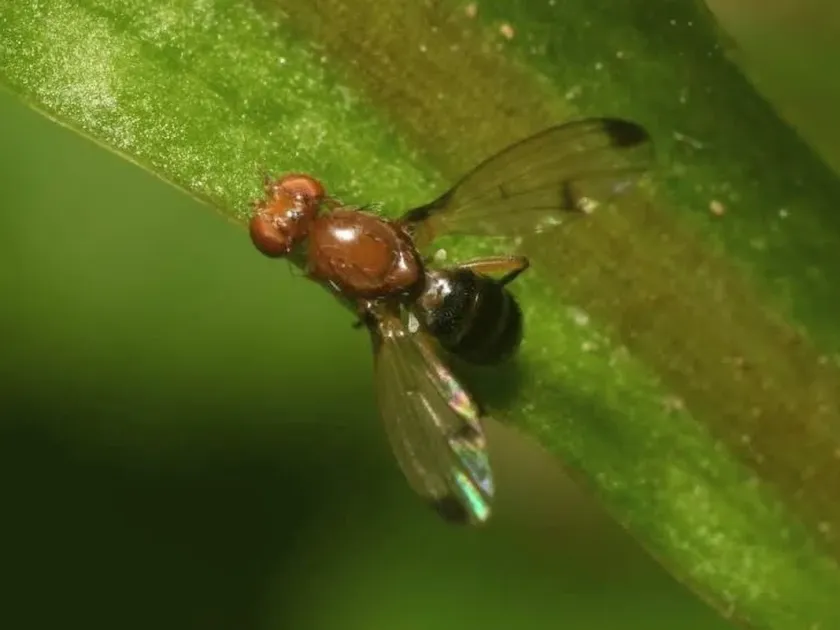
The cereal fly Geomyza venusta belongs to the order Diptera, family Geomyzidae. Adults are small, measuring approximately 3 to 4 mm in length, with a distinctive dark-brown to blackish coloration.
The wings of the adult fly are clear, typically featuring a dark spot or smoky pattern at the tips, which serves as a key diagnostic feature for species identification.
The larvae are about 5–6 mm long, legless, and white to yellowish in color, equipped with dark mouth hooks used for feeding inside plant tissues.
The life cycle involves complete metamorphosis, including egg, larva, pupa, and adult stages, with larvae being the primary stage responsible for crop damage.
These flies are adapted to various climatic conditions and often remain hidden within the dense vegetation of cereal crops during the growing season.
What it damages
The cereal fly primarily attacks winter and spring wheat, barley, rye, and oats, causing significant harm during the early growth stages of the plants.
Beyond cultivated crops, Geomyza venusta thrives on various wild grasses like Elymus repens (couch grass), which serves as a reservoir for the pest.
Larvae bore into the stems of young plants, feeding on the growing point or tissues near the tillering node, which disrupts the plant's nutrient transport.
This feeding activity causes the central leaf of the plant to turn yellow and wither, a condition often referred to as "white-heart" or "dead-heart."
Severe infestations lead to a reduction in stem density and overall yield loss, particularly when the main tillers are destroyed during the early development phase.
When it appears
Adult flies typically overwinter in sheltered areas, such as forest borders, field margins, or under plant debris, emerging in early spring as temperatures rise.
The timing of the adult flight is strongly correlated with temperature and humidity, coinciding with the seedling and tillering stages of winter cereals.
Females lay eggs at the base of stems or within leaf sheaths, and the incubation period is determined by environmental conditions at the time of laying.
Larvae develop inside the stem, eventually pupating either within the plant tissue or in the surface layer of the soil near the infested plant.
Depending on the region's climate, the pest may undergo one or two generations per year, with population surges occurring in wet and cool spring conditions.
Signs of infestation
The primary symptom of infestation is the yellowing and wilting of the central leaf, while the outer leaves remain green for an extended period.
Upon inspecting the stems, one can find the larvae or their excrement inside the feeding tunnels, often accompanied by signs of secondary rot.
Affected plants often appear stunted compared to healthy neighboring plants and may fail to tiller effectively, resulting in sparse crop stands.
If the main shoot is killed, the plant may try to compensate by producing new tillers, but these are often weaker and less productive than the original.
Monitoring using yellow sticky traps or sweep nets during the early morning hours can help detect the presence and population density of adult flies.
Control measures
Effective management begins with agronomic practices, including crop rotation and avoiding continuous cereal monocultures to disrupt the pest's cycle.
Sanitation of field margins to remove wild grasses and weeds, particularly Elymus repens, significantly reduces the pest's alternative food sources.
Optimizing sowing dates — early for spring crops and delayed for winter crops — can help plants reach a stage where they are less vulnerable during the peak fly activity.
Seed treatment with systemic insecticides is the most recommended preventative measure to protect young seedlings from early larval damage.
In cases of high infestation, targeted insecticide applications against adults, timed during the pre-oviposition period, can prevent further egg laying and damage.
Taxonomy
- Latin name
- Geomyza venusta
- Order
- Diptera (flies)
- Family
- Opomyzidae
- EPPO code
- GEOZVE
Discussion
No discussions yet — be the first.