
Cereal fly
Geomyza
Description
How to identify
The cereal fly (Geomyza) is a small dipteran insect belonging to the family Geomyzidae, recognized as a significant agricultural pest in many temperate regions.
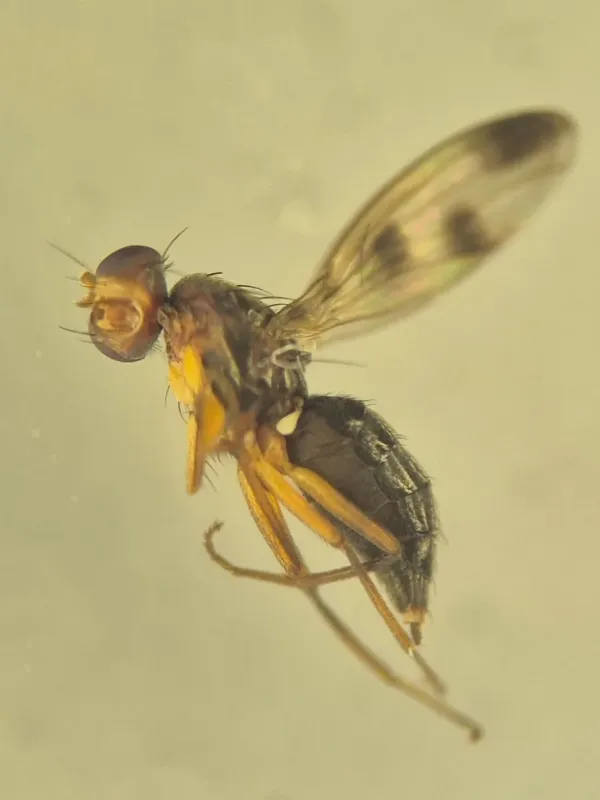
Adult flies are typically 2 to 3 millimeters long, characterized by a brownish or yellowish body and relatively long legs compared to their overall size.
One of the distinguishing features of the genus is the pattern on their wings, which often includes dark spots or infuscations that aid in accurate identification.
The larvae are legless, maggot-like creatures that grow up to 4 millimeters in length, possessing hardened mouth hooks designed for feeding on plant tissues.
Pupation occurs within a dark brown puparium, which is often found concealed inside the stems of host plants or within the soil surface near the root zone.
What it damages
The cereal fly primarily attacks members of the Poaceae family, including wheat, barley, rye, and oats, causing substantial yield losses in vulnerable fields.
Larvae damage the plants by boring into the central shoot, effectively killing the growing point and preventing the development of a healthy, productive ear.
Infestations are most detrimental during the early stages of plant growth, specifically the tillering and stem elongation phases of the cereal crop.
Plants affected by the pest often exhibit stunted growth and may produce excessive tillering as a stress response to the loss of the primary shoot.
- Death of the main tiller
- General stunting of the plant
- Reduced grain weight and quality
- Increased risk of secondary fungal infections
- Significant loss of field uniformity
When it appears
Adult flies emerge in early spring as temperatures rise, typically coinciding with the start of the vegetative growth of winter and spring cereal crops.
The life cycle is temperature-dependent, with egg-laying occurring shortly after emergence when young host plants are readily available for larval colonization.
Multiple generations can occur throughout the growing season, depending on the specific species and the prevailing climatic conditions of the region.
Monitoring for adult activity is crucial during the late spring months when the population density often peaks in open cereal fields.
The final generation of the season may utilize volunteer plants or late-maturing grasses to complete their development before entering diapause.
Signs of infestation
The most reliable sign of cereal fly infestation is the presence of 'yellow heart' leaves on young plants, where the central shoot turns yellow and dies.
A simple field diagnostic method involves pulling the central leaf; if it detaches easily and shows signs of chewing, it is highly indicative of larval feeding.
Upon splitting the stems of suspicious plants, one can usually observe internal tunnel damage and find the pale-colored larvae actively feeding.
Patches of stunted or deformed plants within the field are common symptoms of localized cereal fly activity that requires further agronomic inspection.
In mature crops, although harder to spot, empty heads or stunted stalks can sometimes be traced back to early-stage damage caused by the larvae.
Control measures
Integrated pest management strategies for the cereal fly focus heavily on cultural practices such as crop rotation and the destruction of grassy weeds.
Treating seeds with systemic insecticides is a highly effective preventative measure, providing essential protection for seedlings during the critical early growth stages.
Adjusting sowing dates to avoid the peak flight periods of the adult fly can significantly reduce the pressure of larval infestation in new crops.
Biological control agents, including various species of parasitic wasps, play a role in natural population suppression and should be encouraged in field margins.
In cases of severe infestation, targeted foliar application of insecticides during the tillering phase may be necessary based on economic injury thresholds.
Taxonomy
- Latin name
- Geomyza
- Order
- Diptera (flies)
- Family
- Opomyzidae
- EPPO code
- GEOZSP
Discussion
No discussions yet — be the first.