

Pest · Diptera (flies) · affects Fodder beet, Apple, Winter wheat
Especially harmful
Gall midges
Cecidomyiidae
Description
How to identify
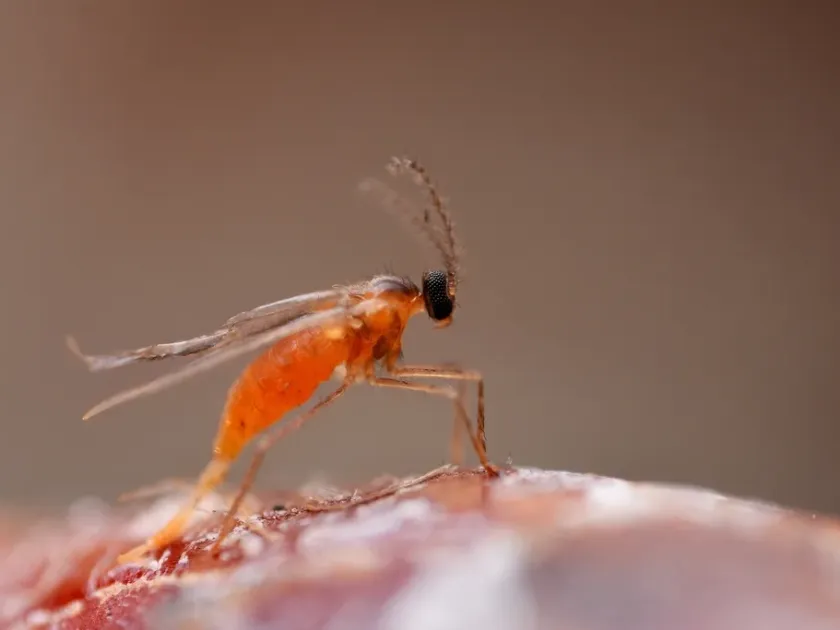
Gall midges (family Cecidomyiidae) are small flies belonging to the order Diptera. Adults are typically 1–5 mm long, with delicate bodies, long antennae, and hairy wings, resembling minute gnats.
Their life cycle includes egg, larval, pupal, and adult stages. The larvae are often legless and can be white, yellow, or orange, frequently developing hidden inside plant tissues, making them difficult to detect.
The family is characterized by high diversity and specific host associations. Many species induce the formation of galls — abnormal plant growths — which serve as both food and shelter for the developing larvae.
Gall midges exhibit high reproductive rates. Depending on environmental conditions, they can complete multiple generations in a single growing season, leading to rapid population outbreaks in susceptible crops.
Adults have short lifespans, focusing entirely on mating and oviposition. They often lay eggs in crevices, buds, or directly into plant tissues, where the next generation begins its feeding cycle.
What it damages
Gall midges are significant pests of various agricultural crops, including fodder beet, cabbage, and hemp. Their feeding habits cause severe metabolic disruptions in the host plants.
Other major crops affected include soybeans, winter barley, and alfalfa. In orchard environments, gall midges can cause substantial damage to apple trees by attacking developing buds and foliage.
Tobacco crops are also susceptible to infestations, which can lead to stunted growth and reduced leaf quality. The presence of larvae often promotes the entry of secondary pathogens into the plant.
The damage is primarily caused by larval feeding, which induces plant tissue to grow into a gall. This redirects the plant's resources away from normal growth and fruit development.
High infestation levels can result in significant yield losses, structural damage to stems, and, in severe cases, the complete loss of marketable parts of the crop.
Signs of infestation
The most distinctive sign of gall midge presence is the formation of galls — abnormal swellings on leaves, stems, flowers, or roots. These structures vary in shape and color depending on the midge species.
Infested plants often show signs of twisting, deformation, or stunted growth. On cereal crops, larval activity can lead to stem breakage and lodging, which complicates the harvesting process.
Inspecting affected buds or leaves often reveals the presence of small, brightly colored larvae. Their presence inside the tissue confirms a gall midge infestation rather than a nutrient deficiency.
Premature leaf drop or blossom failure is common in infested orchards. Damage to the growing points of shoots frequently leads to the proliferation of secondary, non-productive side shoots.
Adults may be seen during the early morning or evening hours near crops, often hovering in calm, humid conditions, indicating the onset of a new generation of the pest.
Control measures
Cultural control via strict crop rotation is a primary strategy. Rotating susceptible crops with non-host plants prevents the population from establishing itself in the soil.
Deep autumn plowing is an effective mechanical method, as it buries overwintering pupae and larvae, preventing them from emerging as adults in the following spring.
Chemical control involving systemic insecticides is necessary during peak flight periods or when larval counts exceed economic injury levels. Proper timing is crucial for effective results.
Managing weed populations around field margins is essential, as many gall midge species utilize wild host plants to survive between cropping seasons.
- Use of pest-resistant crop varieties to minimize infestation impact.
- Regular field scouting and use of sticky traps for monitoring midge activity.
- Prompt removal and destruction of crop residues post-harvest.
- Encouraging natural predators and parasitoids to keep midge populations in check.
In brief
23
Damages crops
Content graph
Damages crops · 23
Content graph
Connections · Gall midges
Most often together:
Marketplace
Products · 7


Biology
Taxonomy
- Latin name
- Cecidomyiidae
- Order
- Diptera (flies)
- Family
- Cecidomyiidae
- EPPO code
- 1CECIF
Community
Discussion
No discussions yet — be the first.