
Galendromus longipilus
Galendromus longipilus
Description
How to identify
Galendromus longipilus is a beneficial mite species belonging to the family Phytoseiidae, widely recognized for its predatory behavior in various ecosystems.
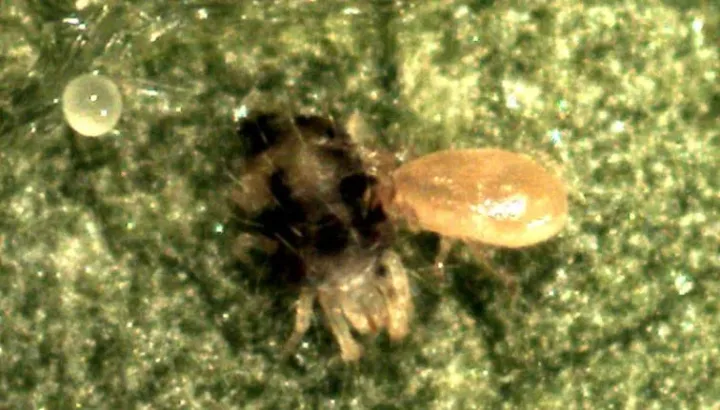
Adult mites are typically pear-shaped and range from colorless to light tan, depending on the pigments obtained from their prey during feeding.
The defining characteristic of this species, useful for field identification under a magnifying lens, is the length and arrangement of the dorsal setae on its body.
They exhibit high motility, rapidly moving across leaf surfaces and utilizing chemical cues to detect and pursue their prey in complex environments.
The life cycle encompasses several developmental stages, including egg, larva, protonymph, deutonymph, and adult, all thriving in optimal warm and humid conditions.
What it damages
Galendromus longipilus is strictly predatory and does not cause damage to plants. It is considered an essential component of integrated pest management programs.
This mite specializes in hunting various tetranychid species, including the two-spotted spider mite (Tetranychus urticae) and the European red mite.
By consuming both adult pests and their eggs, it prevents significant crop yield losses and maintains plant vigor throughout the growing season.
The mite does not pierce plant cells or feed on sap, ensuring that the host plants remain undamaged while pest numbers are kept below economic injury levels.
Its role as a natural regulator allows for a significant reduction in the reliance on synthetic chemicals, promoting sustainable agricultural practices.
When it appears
The seasonal activity of Galendromus longipilus begins in early spring, synchronized with the onset of pest mite emergence after overwintering.
They are most active during the summer months when high temperatures and humidity support rapid population growth and high predatory demand.
As autumn approaches, the population density declines, and the mites seek shelter in bark crevices or litter to undergo diapause during the winter months.
Their synchronization with host populations makes them highly effective at suppressing early-season pest outbreaks before they can escalate significantly.
Farmers can observe increased activity on leaves during the peak of the growing season when the prey density is sufficient to support a large population of predators.
Control measures
Since this mite is a beneficial organism, control measures are unnecessary. Instead, management efforts should focus on conservation and habitat protection.
Avoid the application of broad-spectrum pesticides that are toxic to phytoseiid mites, opting instead for selective acaricides or biological agents.
Maintaining diverse plant species and ecological refugia in or near orchards helps sustain the population of Galendromus longipilus throughout the year.
Regular scouting is recommended to monitor both pest and predator populations, allowing for informed decisions that prioritize biological control agents.
In cases of severe outbreaks where chemical intervention is unavoidable, consider the impact on natural enemies and utilize products with low residual toxicity.
Taxonomy
- Latin name
- Galendromus longipilus
- Order
- Mites
- Family
- Phytoseiidae
- EPPO code
- TYPLLN
Discussion
No discussions yet — be the first.