
Zamia scale
Furchadiaspis zamiae
Description
How to identify
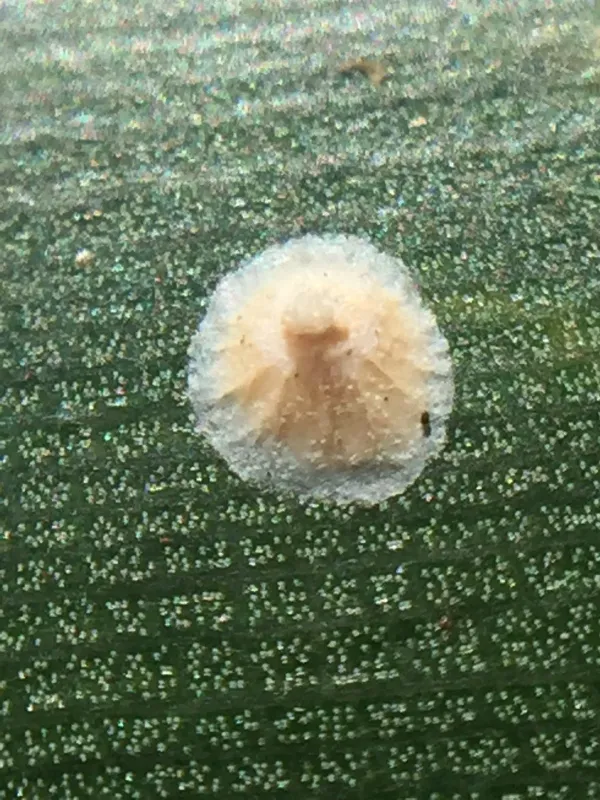
The Zamia scale, scientifically known as Furchadiaspis zamiae, is an armored scale insect belonging to the family Diaspididae.
Adult females are characterized by a flat, white, or off-white waxy test (scale) that provides effective protection against environmental hazards and pesticides.
The life cycle includes a sedentary female stage and a brief, winged male stage which is transient and primarily focused on the fertilization of females.
The primary dispersal stage is the crawler (first instar), which is small, mobile, and can easily be spread by air currents or human handling of plants.
Due to its cryptic nature and protective covering, this pest often goes unnoticed until the scale population has reached high density.
What it damages
The primary hosts for this species are members of the Cycadaceae family, particularly the genus Zamia, Cycas, and Dioon.
Infestations are frequently recorded on various species of palms and other tropical plants housed in greenhouses or protected conservatory environments.
The insect feeds by inserting its stylet into plant tissues, extracting sap, and potentially introducing toxins that affect the physiological health of the plant.
Feeding damage typically manifests on the undersides of leaves and along the rachis, causing chlorosis, reduced growth, and loss of vigor.
Heavy infestations can lead to severe aesthetic damage, making the plant unsuitable for display or commercial sale within the nursery industry.
Signs of infestation
Initial signs of infestation appear as small white specks on the foliage that may be mistaken for mineral deposits or dust particles.
As the scale colony expands, leaves begin to show yellowing spots and may eventually turn brown or shrivel as the internal sap pressure drops.
The presence of honeydew secreted by associated pests often encourages the growth of sooty mold, which appears as a black, velvety coating on the leaves.
Stunted growth or the failure of new leaf flushes to develop properly is a common indicator of a chronic, underlying scale infestation.
Examining the underside of the leaves and the base of the petiole often reveals clusters of white waxy scales indicating a established colony.
Control measures
Preventative measures include thorough inspection of all new cycads entering a collection to stop the introduction of Furchadiaspis zamiae.
For minor infestations, manual removal of scales using a soft brush or cloth dipped in a dilute soapy solution or isopropyl alcohol is recommended.
Systemic insecticides, particularly those containing imidacloprid or dinotefuran, are considered the most effective chemical control for heavy outbreaks.
- Application of systemic soil drenches to ensure uptake throughout the vascular system.
- Foliar sprays during the active crawler phase for immediate contact reduction.
- Regular pruning of severely infested leaves to lower the overall population pressure.
Integrated pest management suggests alternating between different chemical modes of action to prevent the development of resistance in scale populations.
Taxonomy
- Latin name
- Furchadiaspis zamiae
- Order
- Hemiptera (bugs, aphids, leafhoppers)
- Family
- Diaspididae
- EPPO code
- FURDZA
Discussion
No discussions yet — be the first.