
Cape scale
Furcaspis capensis
Description
How to identify
The Cape scale, scientifically known as Furcaspis capensis, is a member of the Diaspididae family within the order Hemiptera. This minute insect is a well-known pest that protects itself under a hardened wax-like shield, making it a challenging opponent for gardeners and agronomists alike.
Adult females of this species are sessile and lose their limbs during development, remaining permanently attached to their host plant. Their body is covered by a protective test (scale) composed of waxy secretions and exuviae, which acts as a formidable shield against environmental stress and predators.
While the females are immobile, males are winged and capable of flight. However, their lifespan is extremely brief, focused entirely on locating females for reproduction. Consequently, the presence of the pest is almost exclusively identified by the immobile, scale-covered females.
Identification is often difficult due to their small size (typically 1-2 mm) and their ability to blend into the color and texture of the plant's bark or leaves. A magnifying glass is almost always required to confirm the presence of this insect during the early stages of an infestation.
When inspected, the scale can be lifted with a needle or fine tool to reveal the soft, yellow-to-pinkish body of the female insect underneath. This structural characteristic is key to distinguishing Furcaspis capensis from other types of plant damage or pathogens.
What it damages
The Cape scale primarily targets tropical and subtropical plant species. Greenhouse crops, ornamental palms, and Ficus varieties are particularly susceptible to colonization by this pest, often suffering severe physiological stress as a result.
The damage is caused by the insect feeding on plant sap. Using specialized piercing-sucking mouthparts, the scale penetrates the plant epidermis to access nutrient-rich fluids, which drains the host plant of essential resources and disrupts its internal physiological processes.
As the scale feeds, it introduces enzymatic substances into the plant tissue. These enzymes often cause local chlorosis, yellowing, and necrotic spots. If left untreated, these areas expand, leading to significant leaf drop and a general decline in the plant's overall vitality.
In high-density infestations, the sheer number of scales can cause physical deformation of new growth, including stems and petioles. This stunts the plant's development and makes it look aesthetically unappealing, which is a major concern for commercial plant nurseries.
The debilitated host plant often becomes a secondary site for further infections. Sticky honeydew secreted by associated insects or the damage itself can encourage the growth of sooty mold, which blocks light and further impairs the plant's photosynthetic capacity.
When it appears
In protected environments like greenhouses or indoor spaces, the Cape scale can remain active throughout the year. With stable temperatures and controlled humidity, the insect continues to breed, creating overlapping generations that complicate control efforts.
In outdoor settings, the activity of Furcaspis capensis is dictated by seasonal climate shifts. Spring and summer, characterized by warm temperatures, mark the period of peak development and the emergence of the highly mobile crawler stage.
Crawlers (first-instar nymphs) are the only stage capable of dispersing significant distances. They move across the plant surface or are carried by wind to new leaves or neighboring plants, making this the most critical window for implementing control measures.
During the colder months, the pests often enter a state of reduced metabolic activity, overwintering as adults or older nymphs. They typically hide in crevices in the bark, leaf axils, or other sheltered parts of the plant, which offers them significant protection from environmental hazards.
The number of generations per year varies depending on local climate conditions. Higher temperatures typically accelerate the lifecycle, leading to a exponential increase in population size if the initial infestation is not managed correctly during the early growth stages.
Signs of infestation
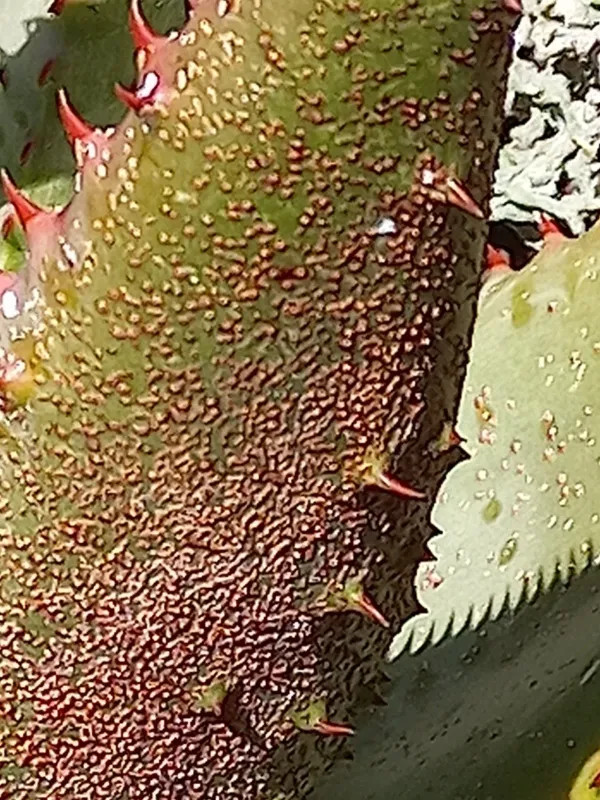
The most visible signs of a Cape scale infestation are the small, raised, brown-to-tan discs appearing along the veins of leaves, on stems, or on the surface of young shoots. These bumps are the protective scales of the insects.
- Yellow or pale spots on the leaves at the site of feeding.
- Development of sticky honeydew residues, which often attract ants and sooty mold.
- Visible wilting or curling of leaves and young, tender shoots.
- Premature yellowing and shedding of foliage, starting from the lower branches.
- Rough or bumpy texture on the bark surface where colonies have become established.
Control measures
Management of the Cape scale requires a multi-faceted approach. Because the protective wax shield is impervious to most contact insecticides, control strategies must be timed precisely to coincide with the crawler stage, which is the most vulnerable point in their lifecycle.
Mechanical removal is a helpful first step for small-scale infestations. Using a soft-bristled brush dipped in a solution of insecticidal soap or diluted alcohol can help physically dislodge the scales and weaken the colony's defensive structure.
For more severe cases, systemic insecticides are highly recommended. These products are absorbed by the plant and translocated into the sap, effectively poisoning the scale as it feeds. This ensures that even hidden pests are targeted, providing better long-term protection.
The application of horticultural oils or mineral oil-based sprays is effective at dissolving the waxy shield. By breaking down the protective barrier, these oils allow contact insecticides to penetrate and destroy the sessile adult females more efficiently.
Strict quarantine protocols for new plant material are essential to prevent the introduction of Cape scale into clean environments. Regular monitoring programs, coupled with timely applications of targeted insecticides during the spring, are the best practices for maintaining a healthy and pest-free plant collection.
Taxonomy
- Latin name
- Furcaspis capensis
- Order
- Hemiptera (bugs, aphids, leafhoppers)
- Family
- Diaspididae
- EPPO code
- FURCCA
Discussion
No discussions yet — be the first.