
Copse snail
Fruticicola fruticum
Description
How to identify
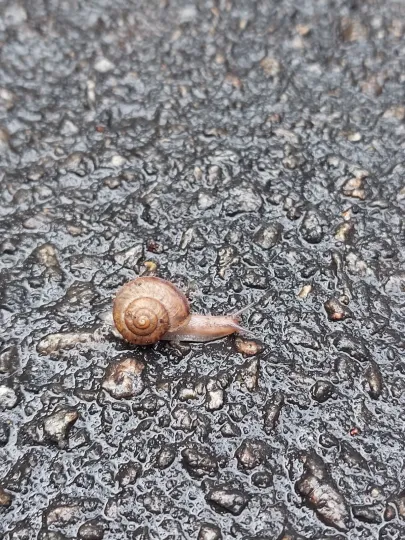
The copse snail (Fruticicola fruticum) is a land snail belonging to the family Bradybaenidae. It is characterized by a rounded, moderately convex shell, typically measuring between 15 and 25 mm in diameter.
The shell color ranges from pale yellow to brownish, frequently featuring a distinct dark spiral band along the periphery. The snail's soft body has a grayish-brown appearance, which helps it blend into damp, vegetated environments.
This species is highly dependent on moisture, often thriving in bushy areas, forest edges, parks, and dense gardens where vegetation provides shade and shelter from desiccation.
As hermaphrodites, these snails exhibit high reproductive capacity, allowing them to establish significant populations in favorable conditions, such as wet springs and mild summers.
Copse snails are primarily nocturnal or active during overcast and rainy weather. During the day, they remain hidden under organic debris, stones, or dense leaf litter.
What it damages
The copse snail is a generalist herbivore (polyphage) that attacks a wide variety of cultivated crops, often causing severe damage during the seedling and growth stages.
Vegetable crops, including cabbage, lettuce, cucumbers, and squashes, are particularly susceptible, as the snails feed on tender leaves, stems, and sometimes even the growing points.
Berry fruits, such as strawberries and raspberries, are also frequently targeted; the snails damage both the foliage and the fruit, rendering them unsuitable for harvest.
In ornamental horticulture, these mollusks can destroy young seedlings and annual flower beds, significantly affecting the aesthetic value of the garden landscape.
Beyond physical consumption, the snails leave trails of mucus across the plants, which can facilitate the spread of fungal pathogens and lead to secondary bacterial infections.
When it appears
Activity generally begins in early spring, as temperatures rise and soil moisture levels remain high, prompting snails to emerge from their dormant winter state.
The peak feeding and reproductive period occurs throughout the summer months (June and July), coinciding with the most vigorous growth phase of most garden vegetables.
Extended periods of rainfall during the summer lead to sustained activity, increasing the risk of significant damage to garden crops throughout the growing season.
As autumn approaches, activity may wane; the snails seek refuge in the soil or under deep leaf litter to hibernate during the colder winter months.
The timing of emergence in spring makes young, tender plants particularly vulnerable, necessitating preventive measures early in the season to protect the crop.
Signs of infestation
The most diagnostic sign of copse snail infestation is the presence of irregular, ragged holes in leaf blades, often referred to as "window-paning" or edge-eating.
Visible silvery or shiny trails on leaves, stems, or soil are clear indicators of snail activity; these are the dried remains of the mucus secreted for movement.
Regular monitoring during twilight or cloudy days often reveals the snails themselves, hiding near the base of the plant or underneath leaves.
Severe infestations are usually accompanied by a general wilting of the plant and the presence of dark-colored excrement near the base of the stems.
- Ragged holes in young foliage.
- Silver slime trails on paths and plants.
- Damaged fruit and developing buds.
- Sudden disappearance of seedlings or transplants.
Control measures
Effective cultural control involves sanitation: removing weed cover and trimming back dense vegetation around garden beds to reduce favorable microhabitats for the snails.
Physical barriers such as coarse sand, wood ashes, or lime placed around sensitive plants can deter snails, as these substances irritate their soft, sensitive tissues.
Trapping is a highly effective manual control method; containers filled with beer or a sugar-yeast mixture, buried flush with the soil, successfully attract and trap the snails.
Promoting biodiversity helps naturally manage populations by providing habitat for natural predators, such as hedgehogs, frogs, toads, and thrushes.
When infestation levels exceed acceptable thresholds, using molluscicides, specifically those containing iron phosphate, provides an effective and environmentally safer management option.
Taxonomy
- Latin name
- Fruticicola fruticum
- Order
- Molluscs
- Family
- Bradybaenidae
- EPPO code
- BRABFR
Discussion
No discussions yet — be the first.