
Bradybaena ravida
Bradybaena ravida
Description
How to identify
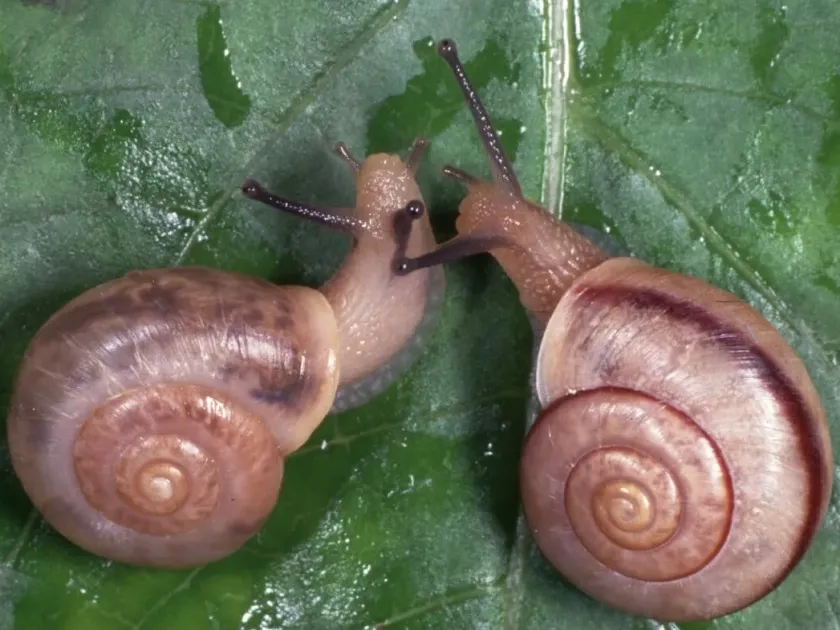
Bradybaena ravida is a species of land snail belonging to the family Bradybaenidae within the class Gastropoda. It is recognized by its medium-sized, somewhat convex, and globose shell, which typically features a yellowish-brown color with a distinct darker spiral band.
The adult snail generally measures between 15 and 20 mm. Its soft body is greyish-brown, and the snail is capable of retracting entirely into its shell to survive adverse environmental conditions like extreme heat or dryness.
The shell possesses a firm, calcareous structure that provides protection. A key diagnostic feature is the aperture of the shell, which often exhibits a thickened, reinforced edge.
As hermaphrodites, these snails possess a high reproductive potential. They deposit clusters of eggs in moist soil or under organic debris, ensuring population stability in favorable environments.
Juveniles are often overlooked due to their transparent and fragile shells, which gradually thicken and darken as the snail reaches maturity and settles in its habitat.
What it damages
This pest affects a wide range of agricultural and horticultural crops, including leafy vegetables, berries, and ornamental seedlings. It is particularly destructive to young plants with succulent tissues.
Snails feed on leaves, stems, flower buds, and low-hanging fruits, often skeletonizing foliage or creating large, irregular holes that severely compromise the plant's structural integrity.
In greenhouse settings, Bradybaena ravida can become a permanent issue, feeding on seedlings and container plants throughout the year due to the controlled, humid environment.
Feeding damage significantly slows down plant development and inhibits photosynthesis. In severe cases, the plant may fail to recover, leading to total loss of the crop.
The snails also serve as vectors for various plant pathogens. The sticky mucus they leave behind acts as a medium for bacterial and fungal growth on the damaged plant surfaces.
When it appears
The activity of Bradybaena ravida is strictly dependent on moisture levels. The pest is most active during spring and summer, particularly during rainy and overcast periods.
During the day, they retreat to humid, shaded microhabitats such as under rocks, boards, thick mulching, or within the dense canopy of weed-infested areas.
They emerge at night or during damp, cool conditions to feed aggressively. Nighttime observation is the most accurate way to assess the size of the local population.
They overwinter in a state of diapause, residing in the soil or protected under debris, becoming active again as soon as soil temperatures reach favorable levels in the spring.
Damage intensity peaks when plant growth phases coincide with high rainfall, making the young, succulent plant parts highly attractive to the snails.
Signs of infestation
The most noticeable signs of infestation are ragged, irregular holes in the leaves of host plants, often accompanied by the presence of dried, silvery mucus trails.
Careful inspection of the soil around the base of the plant often reveals the presence of live snails, discarded shells, or clusters of translucent, spherical eggs.
Affected plants may show signs of wilting or secondary infections, as the wounds created by the snail's radula provide easy entry points for opportunistic microorganisms.
Vegetable crops, such as lettuce or strawberries, may show direct feeding damage to the edible parts, making them unmarketable and susceptible to rot.
- Silvery slime trails on foliage.
- Irregular holes in leaf blades.
- Clusters of small white eggs in damp soil.
Control measures
Cultural control is the first line of defense. This includes removing debris, clearing weeds, and maintaining proper plant spacing to reduce the humidity and shelter available to the snails.
Physical barriers, such as crushed eggshells, diatomaceous earth, or copper tape, can be effective in preventing snails from reaching vulnerable plants in small garden beds.
Chemical control involving molluscicides, such as iron phosphate-based baits, provides a targeted way to reduce populations in heavily infested areas without harming pets.
Simple trapping methods, such as placing dampened cardboard or beer-baited containers, can be used to collect and manually remove individuals during the evening hours.
Encouraging natural predators, including hedgehogs, ground beetles, and toads, plays a vital role in maintaining a balanced ecosystem that helps suppress snail outbreaks.
Taxonomy
- Latin name
- Bradybaena ravida
- Order
- Molluscs
- Family
- Bradybaenidae
- EPPO code
- BRABRA
Discussion
No discussions yet — be the first.