
Acusta
Acusta
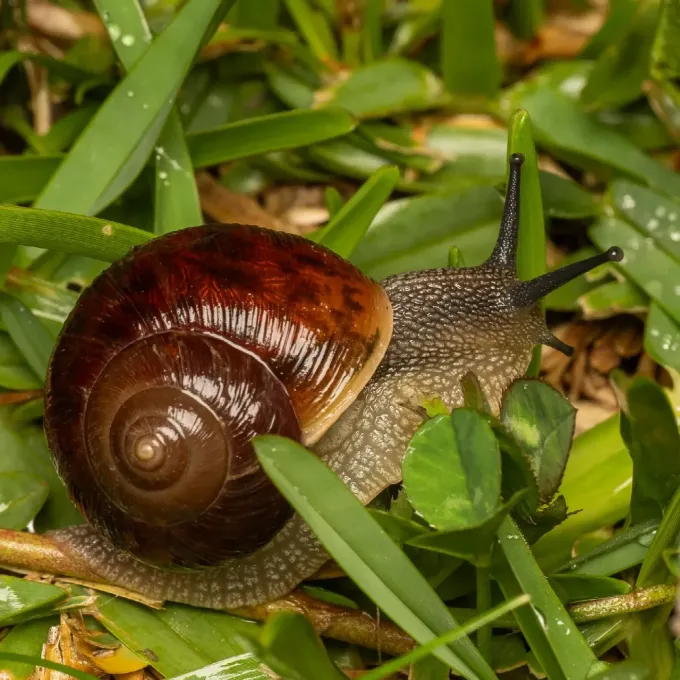
Description
How to identify
The genus Acusta belongs to the order Stylommatophora and the family Bradybaenidae. These are terrestrial air-breathing mollusks, characterized by a rounded-conical shell in shades of brown or yellow, often marked by a distinct spiral stripe.
Adult individuals typically grow between 20 and 30 mm. Their bodies are soft and covered in a thick layer of mucus, which facilitates movement and prevents dehydration during periods of moderate humidity.
Accurate identification can be challenging due to similarities with other land snails, but the presence of clear slime trails on surfaces is a reliable indicator of their activity in a given area.
They are hermaphroditic and lay their eggs in loose, moist soil or underneath plant debris, where the microclimate is suitable for successful embryonic development.
Being primarily nocturnal, these pests are most active during the night or in overcast, wet weather, making them difficult to spot during routine daytime inspections.
What it damages
Acusta is a polyphagous pest capable of causing significant damage to a wide range of horticultural crops, including vegetables, flowers, and various ornamental plants.
The pest feeds on both vegetative organs, such as leaves and stems, and reproductive parts like fruits and buds, directly reducing both the market value and total yield of the plants.
Damage is most severe in greenhouse environments, where consistent high humidity and lack of temperature fluctuations provide ideal conditions for rapid population growth.
In open fields, the impact is particularly noticeable during rainy seasons, when young seedlings become highly vulnerable to the intense feeding habits of these mollusks.
Besides direct tissue consumption, the slime left behind by the snails contaminates plant surfaces and creates an entry point for fungal and bacterial infections.
Signs of infestation
The most common sign of an Acusta infestation is the presence of large, irregular, or jagged holes in leaves, often referred to as "ragged leaf edges."
One of the most diagnostic signs is the presence of shiny, silvery dried mucus trails on leaves, stems, and the surrounding soil, marking the path of the mollusk.
During the day, individuals can often be found hiding in cool, dark, and humid locations, such as under decaying organic matter, loose soil, or dense foliage.
Fruits affected by feeding often show deep, crater-like cavities which, if not addressed, quickly succumb to secondary decay and rotting processes.
Stunted growth is another indirect sign; plants struggle to recover as the snails consistently consume new buds and fresh leaf tissue, depriving the plant of essential photosynthetic capacity.
Control measures
A successful management strategy integrates cultural, mechanical, and chemical approaches to suppress snail populations below the economic injury level.
- Regular soil cultivation and tilling to destroy egg clutches and dry out the surface layer.
- Removal of garden debris, weeds, and hiding spots to reduce refuge areas for the pests.
- Placement of mechanical traps, such as moist boards or bait containers, for manual collection and removal.
- Creation of physical barriers like gravel or lime around planting beds to deter movement.
- Use of molluscicides, such as metaldehyde-based pellets, applied sparingly in areas of high activity.
Strict adherence to pesticide application guidelines is essential to prevent the accumulation of residues in harvested crops and to minimize environmental impact.
Taxonomy
- Latin name
- Acusta
- Order
- Molluscs
- Family
- Bradybaenidae
- EPPO code
- ACUSSP
Discussion
No discussions yet — be the first.