
Bradybaena similaris
Bradybaena similaris
Description
How to identify
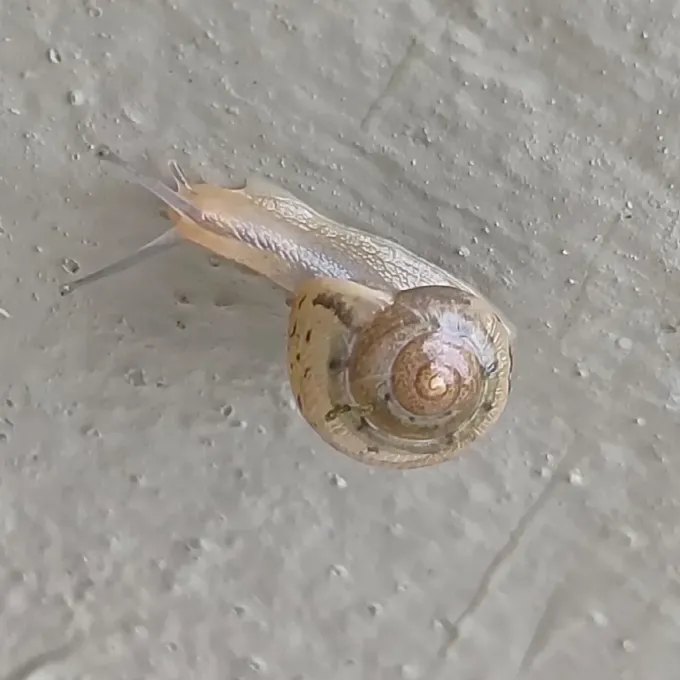
Bradybaena similaris, commonly known as the Asian tramp snail, belongs to the family Bradybaenidae (order Stylommatophora). It is a terrestrial mollusk featuring a rounded shell with a brownish hue and a characteristic dark spiral band.
The shell of an adult snail typically measures between 15 and 20 mm in diameter. The snail's body displays a grayish or light-brown color with a distinct granular skin texture.
This species is hermaphroditic, which allows the population to reproduce rapidly even when only a few individuals are present in a new area of infestation.
These mollusks are primarily nocturnal, requiring high air and soil humidity for optimal biological activity and movement.
During daylight hours, they seek refuge under plant debris, dense mulch, or shaded parts of vegetation where a moist microclimate is maintained.
What it damages
This pest is highly polyphagous and inflicts significant damage on a wide variety of agricultural crops, including vegetables, small fruits, and ornamental plants.
Young vegetable seedlings, garden flowers, and strawberry fruits close to the soil surface are particularly susceptible to severe infestations.
The snails actively consume plant tissues, leaving large, irregular holes in the leaves, which significantly reduces the photosynthetic capacity of the plant.
Damage to the growth points causes stunted development and plant deformation, potentially leading to total crop failure during early growth stages.
In addition to tissue consumption, snails deposit mucus trails on the plant surface, which often facilitates the spread of fungal and bacterial infections.
When it appears
The activity of this pest is highly dependent on environmental conditions, with peak damage occurring during warm, rainy spring and summer months.
As evening temperatures drop and dew forms, the snails emerge from their daytime shelters to feed aggressively on crops.
Optimal conditions for reproduction and feeding include temperatures ranging from +15 to +25 degrees Celsius and high soil moisture levels.
During dry and hot spells, these mollusks retreat deep into the soil or dense vegetation, remaining inactive until favorable, rainy weather returns.
The life cycle involves laying eggs in the upper soil layers, with new juveniles emerging within a few weeks to begin feeding independently.
Signs of infestation
The primary indication of a snail infestation is the presence of silvery, dried mucus trails on leaves, stems, and soil surfaces, particularly visible in the morning.
Visible symptoms include large holes in leaves, often appearing at the leaf margins or throughout the leaf blade, resembling bite marks.
The presence of live mollusks near the base of plants during early morning hours or irrigation is a direct confirmation of an ongoing infestation.
Under heavy population pressure, one can observe damaged fruit ovaries, which often begin to rot after being punctured by the snail's radula.
Infested plants appear weak, exhibit slowed growth rates, and produce lower-quality yields compared to healthy crops.
Control measures
Effective control measures include cultural practices such as regular soil cultivation, weed management, and the removal of plant debris that provides shelter.
Installing physical barriers, such as gravel borders, crushed eggshells, or wood ash around garden beds, can deter snails from reaching the plants.
Trapping techniques, such as placing containers filled with beer or fermented sugar solutions, are highly effective for reducing population numbers in smaller gardens.
Chemical control involves the use of molluscicides, typically containing metaldehyde, applied in areas where snails congregate, though these require careful handling.
- Manual hand-picking and destruction of snails during evening hours.
- Promoting good airflow around crops and avoiding excessive irrigation.
- Encouraging natural predators such as birds, hedgehogs, and ground beetles.
Taxonomy
- Latin name
- Bradybaena similaris
- Order
- Molluscs
- Family
- Bradybaenidae
- EPPO code
- BRABSI
Discussion
No discussions yet — be the first.