
Copse snail
Fruticicola
Description
How to identify
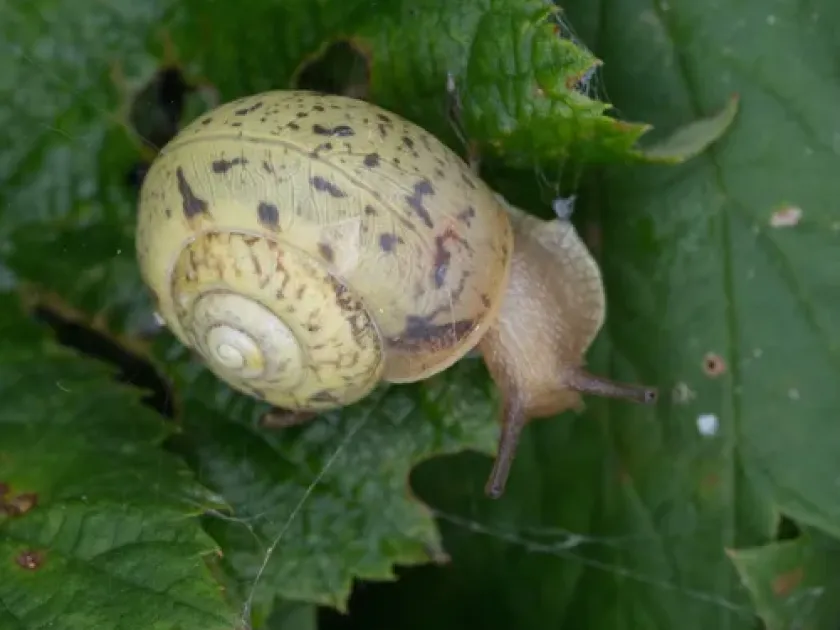
The copse snail Fruticicola fruticum belongs to the order Stylommatophora and the family Helicidae. Its shell is globular to conical in shape, measuring 18–22 mm in diameter, and typically displays a yellowish-brown or brownish hue, often with a distinct dark spiral band.
The soft body of the mollusk is greyish-brown and covered in mucus, which serves as protection against desiccation. The snail moves using its muscular foot and detects the environment through a pair of sensory tentacles.
Copse snails are typically found in moist environments, such as woodlands, hedgerows, gardens, and near rivers. They are primarily nocturnal or active during periods of high humidity, particularly following rain.
Their life cycle depends on moist habitats, where they deposit eggs in soil or under leaf litter. As hermaphrodites, they are capable of rapid population growth under suitable climate conditions, making them a significant agricultural threat.
Young snails exhibit rapid development, feeding on tender plant tissue shortly after hatching. They generally mature within a single season, continuing the lifecycle and maintaining high population density throughout the summer.
What it damages
This pest causes significant damage to a wide array of agricultural and ornamental plants. It particularly targets young seedlings, foliage with tender structures, and various berries, which are highly susceptible to consumption.
Feeding involves scraping away leaf tissue, resulting in irregular holes that impair photosynthesis. In severe infestations, seedlings may be entirely consumed or severely stunted, leading to significant crop yield loss.
The presence of mucus trails and fecal matter on plant parts reduces the aesthetic value and marketability of vegetables and fruits. This is especially problematic for low-growing crops like strawberries and leafy greens.
Open wounds left by the snails serve as entry points for pathogens, including bacteria and fungi, which cause rotting. This often results in post-harvest losses and reduced storage quality of the affected agricultural products.
- Skeletal damage to leaves and young stems.
- Destruction of young seedlings and new shoots.
- Reduction in product quality due to slime and feces.
- Increased incidence of fungal and bacterial rots.
Control measures
Cultural management is the primary defense, which includes removing debris and clearing weeds to eliminate shelter. Maintaining proper plant spacing helps to improve airflow and decrease surface humidity.
Physical barriers like coarse sand, wood ash, or crushed eggshells can be spread around valuable plants to irritate the snail's foot and prevent access to the garden beds.
Trapping is highly effective for localized control. Containers filled with beer or fermented liquids and placed flush with the soil surface serve as excellent lures to gather and remove snails manually.
Biological control methods include encouraging natural predators such as toads, hedgehogs, and predatory beetles in the garden. These animals play a significant role in keeping snail populations at a manageable level.
Chemical control using molluscicides, such as those containing iron phosphate, is an option for heavy infestations. These products should be applied judiciously according to the label to protect both the crop and the environment.
Taxonomy
- Latin name
- Fruticicola
- Order
- Molluscs
- Family
- Bradybaenidae
- EPPO code
- FRUTSP
Discussion
No discussions yet — be the first.