
Rice shield bug
Eysarcoris ventralis
Description
How to identify
The Rice shield bug, scientifically known as Eysarcoris ventralis, belongs to the family Pentatomidae, commonly referred to as stink bugs.
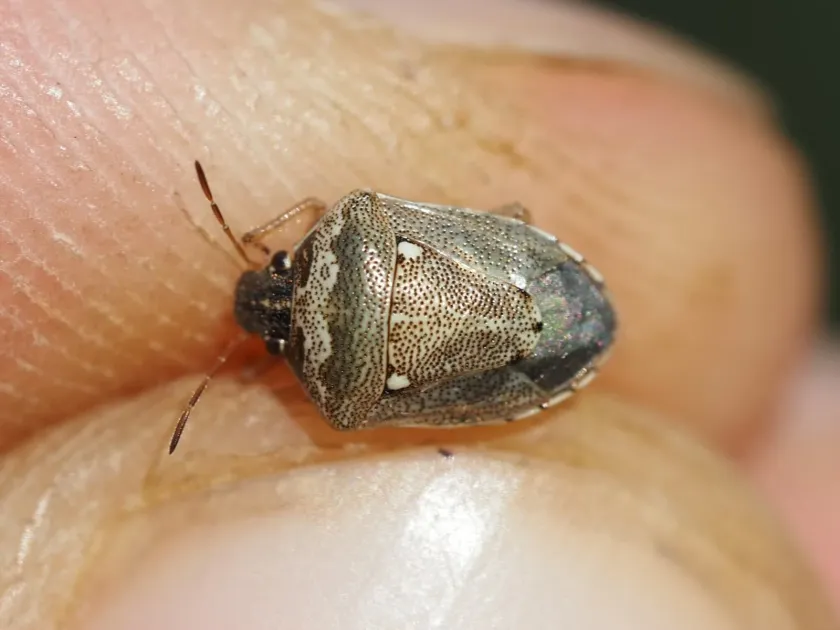
Adult bugs typically measure between 5 to 7 millimeters in length and possess a flattened, shield-shaped body characteristic of the species.
Their coloration is generally a mix of brown and yellowish tones, with the presence of distinct darker markings and a pale scutellum.
The nymphs go through several developmental stages, during which they gradually develop darker pigmentation and wing pads before reaching maturity.
Identification in the field is aided by observing the characteristic shape and the feeding behavior on the grain panicles of host plants.
What it damages
This insect is a known pest for cereal crops, with rice being the primary target for its feeding activity throughout the growing season.
Both adults and nymphs use their piercing-sucking mouthparts to extract sap from the developing grain and stem tissues.
This process results in the formation of discolored spots on the grains and leads to stunted growth or complete grain infertility.
Beyond rice, these bugs can sustain populations on various grasses and weed species, which act as alternative hosts in agricultural landscapes.
Heavy infestations lead to significant yield reduction and poorer grain quality, often making the harvest unsuitable for commercial processing.
When it appears
The species survives the winter in the adult stage, typically seeking shelter in leaf litter, agricultural debris, or near the soil surface.
Activity commences in the spring when temperatures rise sufficiently to allow the bugs to emerge and begin feeding on early vegetation.
Females lay eggs in clusters on the leaves or stems of host plants, beginning a new generation cycle that is influenced by local climate factors.
The duration of the life cycle varies depending on ambient temperatures, usually taking about 40 to 50 days to reach adulthood under optimal conditions.
Peak abundance on crops usually coincides with the flowering and grain-filling stages, when nutrient-rich sap is most available to the insects.
Signs of infestation
The primary visual indicator of infestation is the appearance of small, light-colored marks on leaves and stems caused by probing mouthparts.
Panicles affected by the bug often show signs of empty or shriveled grains, resulting in lower total weight and reduced quality of the crop yield.
Dark spots appearing on the surface of rice grains are a hallmark of the damage, which directly affects the milling and consumption standards.
Plants suffering from high insect pressure may exhibit general yellowing and premature drying of leaves, which limits the overall photosynthetic capacity.
Presence of the bugs themselves, often found clustered near the base of the stems or within the panicles, confirms an active infestation on the field.
Control measures
Sanitation practices, such as clearing surrounding vegetation and removing crop residue, are essential to minimize overwintering sites.
Effective crop management, including consistent weed control and balanced nutrient application, helps plants resist pest pressure better.
Chemical control using systemic insecticides is recommended only when population thresholds are exceeded, ensuring minimal impact on non-target species.
Integration of biological control agents, such as egg parasitoids, can help suppress the population naturally if allowed to thrive in the ecosystem.
Monitoring fields regularly during the critical grain-filling period is vital for early detection and timely application of necessary management interventions.
Taxonomy
- Latin name
- Eysarcoris ventralis
- Order
- Hemiptera (bugs, aphids, leafhoppers)
- Family
- Pentatomidae
- EPPO code
- EUSAVE
Discussion
No discussions yet — be the first.