
Eysarcoris inconspicuus
Eysarcoris inconspicuus
Description
How to identify
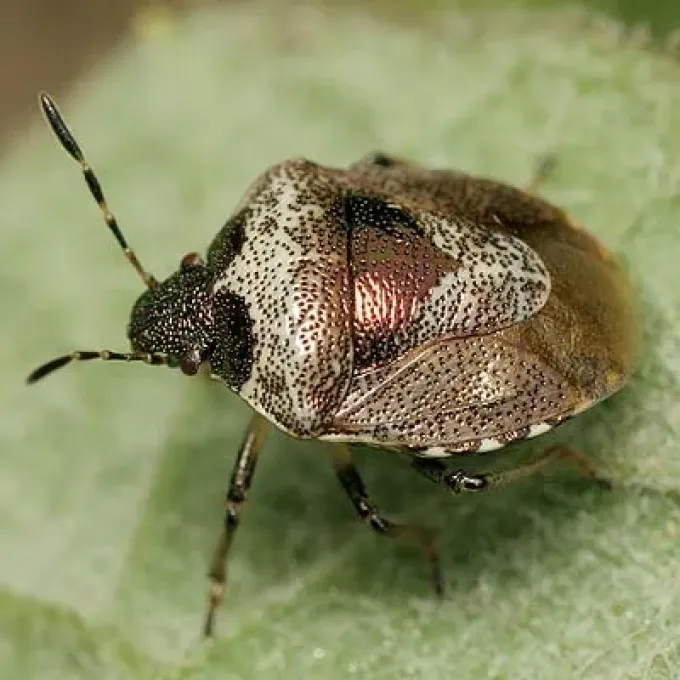
Eysarcoris inconspicuus, often referred to as the obscure bug or small shield bug, belongs to the Pentatomidae family. The adults typically measure between 4 and 6 millimeters in length and possess a dull, grayish-brown coloration with distinctive yellowish markings on the pronotum.
The body is broadly oval and slightly flattened, typical of shield bugs. The scutellum is relatively large, reaching the tip of the abdomen. The antennae consist of five segments, which serves as a key characteristic for field identification among similar species.
Females deposit eggs on the underside of host plant leaves in organized, small clusters. As the larvae develop through five instars, they gradually shift in color and morphology, eventually resembling the adults, though they lack fully developed wings until the final molt.
Overwintering occurs in the adult stage, typically within dense vegetation, plant debris, leaf litter, or the top layer of the soil. As temperatures rise in spring, they emerge to seek out suitable host plants for feeding and subsequent reproduction.
This species is highly adaptable and can complete multiple generations per season in favorable temperate or warm climates. This reproductive capacity allows them to quickly establish high population densities in agricultural fields during the growing season.
What it damages
This pest primarily attacks various cereal crops, including rice, wheat, and millet. It also frequently utilizes wild grass species as alternative hosts, which allows it to maintain populations even when primary crops are not available.
Both adults and nymphs cause damage by using their piercing-sucking mouthparts to feed on stems, leaves, and developing grains. This feeding activity disrupts the plant's nutrient transport system and causes physiological stress to the crop.
Feeding on grains during the milk stage often results in shriveled kernels, reduced grain weight, and poor quality. Additionally, the puncture marks created by the bug's proboscis can act as entry points for secondary fungal infections that further spoil the harvest.
In rice cultivation, Eysarcoris inconspicuus is particularly noted for causing dark spots on the grain, commonly known as "pecky rice." This reduces the market value and milling quality of the product, leading to significant economic losses for producers.
Large outbreaks can cause widespread damage across a field, especially in areas adjacent to uncultivated land where the bug resides. Weakened plants are also more susceptible to other abiotic stressors, further exacerbating the impact on yield.
Signs of infestation
Early signs of infestation include the presence of adult bugs on leaves and spikes during the cooler parts of the day, such as early morning or late evening. They are sensitive to movement and often drop to the ground when disturbed.
Visible damage is characterized by chlorotic spotting on leaves, followed by general yellowing and wilting of affected plant tissues. Heavily infested plants may show stunted growth and irregular development of heads or spikes.
On grain kernels, one may observe small, dark, necrotized spots resulting from the saliva injected by the bug during feeding. These spots are indicative of sustained feeding pressure that has already compromised the internal development of the grain.
Scouting with a standard sweep net is a reliable way to detect the presence of nymphs before significant damage occurs. Finding nymphs in groups on the underside of leaves or within the canopy is a clear indicator of a burgeoning infestation.
Observations of egg masses on the foliage are critical indicators for timing management actions. These masses are usually laid in neat rows, providing a clear visual cue for upcoming nymph emergence and the necessity of immediate intervention.
Control measures
Cultural control is the first line of defense, focusing on the rigorous removal of wild grasses and weeds from field margins and surrounding areas. By eliminating these secondary hosts, the initial population density can be significantly suppressed.
Adopting proper crop rotation, practicing post-harvest field sanitation, and performing deep plowing to destroy overwintering sites are effective methods to limit population growth. These strategies reduce the need for chemical inputs throughout the season.
When the economic threshold of damage is exceeded, the application of insecticides is required. Pyrethroids or organophosphates are commonly used, with treatments timed to target younger, more vulnerable nymphal instars.
- Deploying pheromone-based monitoring traps to accurately track population surges.
- Encouraging the presence of natural enemies, such as egg parasitoids, to exert biological control.
- Using botanical or microbial insecticides in integrated pest management (IPM) programs.
It is imperative to adhere to product label instructions and pre-harvest intervals to ensure safety for both the crop and the environment. Integrated programs that combine cultural and chemical approaches yield the most consistent results.
Taxonomy
- Latin name
- Eysarcoris inconspicuus
- Order
- Hemiptera (bugs, aphids, leafhoppers)
- Family
- Pentatomidae
- EPPO code
- EUSAIN
Discussion
No discussions yet — be the first.