
Euthystira
Euthystira
Description
How to identify
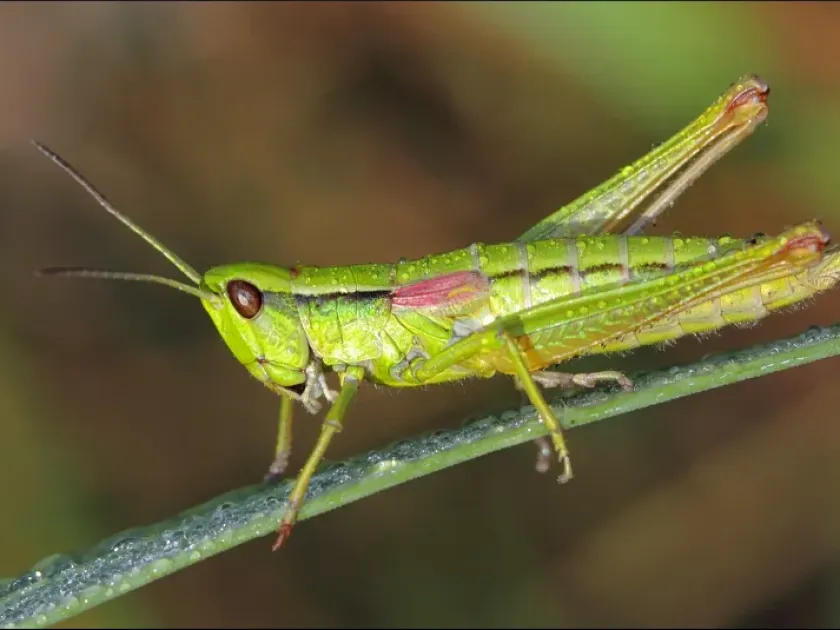
Euthystira is a genus of short-horned grasshoppers belonging to the family Acrididae. The most prominent species in this group is Euthystira brachyptera.
Adult insects have a moderately slender body, typically colored in shades of green or brownish tones, providing effective camouflage against vegetation.
Many species exhibit brachyptery, meaning their wings are reduced or short, which restricts their migration ability but makes them highly agile at jumping.
Sexual dimorphism is clearly observable: females are significantly larger and more robust than males, which aids in identification during field surveys.
Nymphs resemble smaller versions of the adults but lack wings; they undergo several molting stages, progressively increasing in size as they mature.
What it damages
This pest is a generalist phytophage, feeding primarily on the aerial parts of grasses. They pose a significant threat to various cereal crops in agricultural settings.
The primary damage involves the consumption of young leaves and stems, which reduces the plant's photosynthetic capacity and hinders overall growth.
Beyond cultivated crops, Euthystira frequently damages natural pastures and meadows by consuming succulent forage, thereby reducing the quality of available feed.
During outbreak years, these grasshoppers can cause severe economic losses by consuming not only foliage but also generative parts, such as grain heads.
Damage is often localized in patches, starting from field edges and spreading inward as the population density increases during the growing season.
When it appears
The life cycle of Euthystira is strictly seasonal. They overwinter in the egg stage, with eggs typically buried in the soil or protected by plant debris.
Nymph hatching occurs in the spring, coinciding with the tillering phase of cereal crops, which renders young plants particularly vulnerable to grazing.
Nymphs feed actively for several weeks, progressing through five instars and rapidly increasing their biomass while causing ongoing damage to crops.
Adults emerge by mid-summer, representing the peak of the population and the period of highest intensity regarding crop consumption and potential damage.
In autumn, adults mate and females deposit their eggs in soil or substrate, completing the life cycle before the arrival of winter frost.
Signs of infestation
The first sign of an infestation is the presence of irregular holes and ragged edges on leaves, commonly described as a notched or consumed leaf appearance.
Visual identification is straightforward; when walking through a field, grasshoppers will jump away, which is a clear indicator of their presence.
Yellowing or thinning of specific crop patches often indicates areas where these pests have aggregated to feed intensely on the vegetation.
Small fecal pellets found on leaves and at the base of stalks are another distinct sign indicating active feeding sites within the crop canopy.
Advanced signs include damage to grain spikes, where the insects have gnawed on the husks or developing kernels, signaling a severe infestation level.
Control measures
Effective management begins with agrotechnical practices, such as deep autumn plowing, which physically destroys the egg pods overwintering in the soil.
Controlling weed growth along field margins is crucial, as these areas serve as primary breeding grounds and shelters for the grasshopper population.
When infestation levels exceed the economic threshold, application of approved contact-stomach insecticides is necessary to suppress the population.
Biological control, including the protection of natural predators like birds and predatory insects, plays a vital role in regulating population numbers.
Regular field scouting throughout the growing season is essential for the early detection of localized outbreaks, allowing for targeted and timely control measures.
Taxonomy
- Latin name
- Euthystira
- Order
- Orthoptera (locusts)
- Family
- Acrididae
- EPPO code
- EUTSSP
Discussion
No discussions yet — be the first.