
Florida predatory stink bug
Euthyrhynchus
Description
How to identify
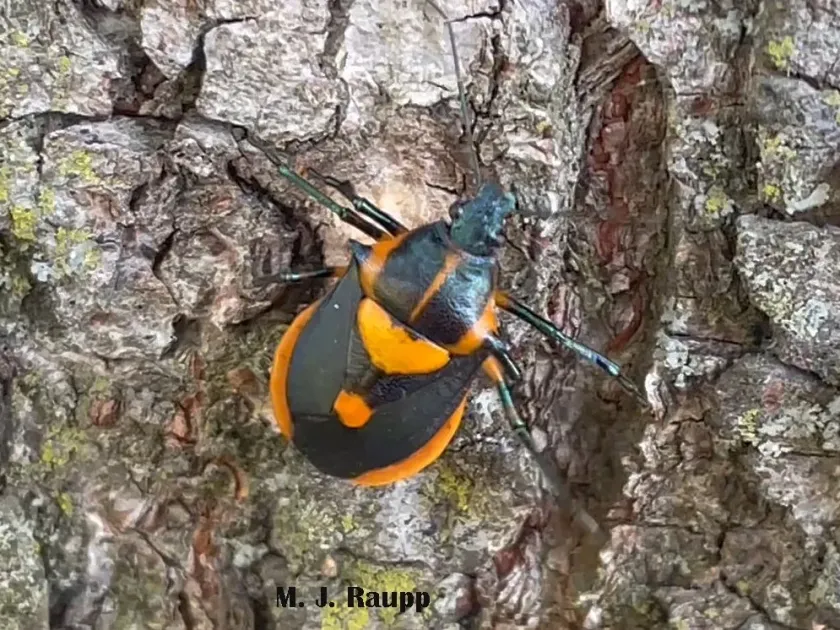
The Euthyrhynchus floridanus, commonly known as the Florida predatory stink bug, belongs to the Pentatomidae family. Unlike many stink bugs, this species is a predator.
Adults typically measure between 12 and 15 mm in length. Their coloration ranges from reddish-brown to olive, accented with striking yellow or orange spots on the body.
The nymphs undergo several developmental stages, changing color as they grow until they reach their adult form. They possess the characteristic shield shape typical of the family.
The mouthparts are adapted into a sharp, piercing beak designed to penetrate the exoskeleton of their prey and inject digestive enzymes.
This species is highly mobile and thrives in warm climates, actively hunting for prey across various plant surfaces and tree canopies.
What it damages
It is important to emphasize that Euthyrhynchus floridanus is not a plant pest; it does not consume plant tissues. It is an insectivore.
Its primary diet consists of various garden pests, including caterpillars, beetle larvae, and other smaller insects found in agricultural fields.
The presence of this bug in a garden or field is often a biological indicator of the presence of a prey population, which the bug effectively keeps in check.
While they might occasionally probe plant tissues when prey is severely limited, they do not cause economic damage to agricultural crops.
Agronomists classify them as beneficial biological control agents that contribute to the natural suppression of destructive insect species.
When it appears
The activity of these bugs is heavily dependent on ambient temperature, with peak activity occurring during the spring and summer months.
Adults spend the winter in diapause, hiding in protected environments like leaf litter, tree bark crevices, or under organic debris on the ground.
The lifecycle begins with females laying clusters of eggs on the underside of leaves, providing some protection from predators and environmental extremes.
The number of generations per year is influenced by regional climate conditions, with warmer areas supporting multiple cycles of development.
As spring approaches, the bugs emerge and immediately begin hunting, aligning their lifecycle with the rise of primary agricultural pest populations.
Signs of infestation
Signs of their presence include the observation of tightly packed egg clusters, which resemble small barrels, typically located on leaves.
Seeing various nymphal stages on the same plant is a clear indication that a stable population is established and actively hunting in the area.
A key indicator of their hunting activity is the presence of hollowed-out insect shells left behind after the predator has consumed the victim's internal fluids.
Adult bugs are easily spotted during the day as they patrol plants, making them recognizable through simple visual scouting of the crop canopy.
The absence of typical herbivore damage symptoms, such as skeletonized leaves or necrotic spots, confirms the beneficial nature of these insects.
Control measures
Generally, no control measures are required for Euthyrhynchus floridanus as they are considered beneficial insects rather than agricultural pests.
If their population levels become a nuisance, manual collection in the early morning hours is the most effective and eco-friendly removal strategy.
Avoiding broad-spectrum insecticides is crucial to protecting these natural allies, as these chemicals often harm beneficial predators more than the pests themselves.
Sanitation practices, such as removing excess debris, can limit their overwintering sites, naturally regulating their numbers without the use of toxins.
Effective Integrated Pest Management (IPM) strategies prioritize the monitoring of these predators to ensure that natural balance is maintained in the field.
Taxonomy
- Latin name
- Euthyrhynchus
- Order
- Hemiptera (bugs, aphids, leafhoppers)
- Family
- Pentatomidae
- EPPO code
- EUTHSP
Discussion
No discussions yet — be the first.