
Euseius gallicus
Euseius gallicus
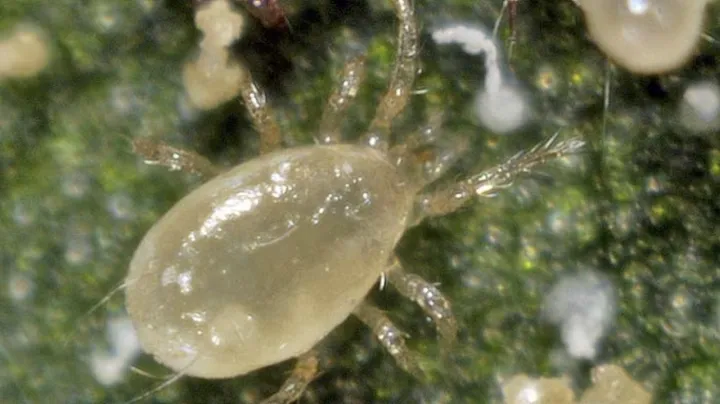
Description
How to identify
Euseius gallicus is a species of predatory mite belonging to the Phytoseiidae family, widely recognized for its efficacy in greenhouse pest management.
The adults are small, oval-shaped, and range in color from translucent white to pale brown, depending on their recent dietary intake of prey or plant fluids.
These mites are highly mobile, possessing four pairs of legs that allow them to traverse leaf surfaces rapidly to locate food sources.
The life cycle progresses through several stages: egg, larva, two nymphal stages, and the adult stage, with development rates highly temperature-dependent.
Identification often requires microscopic examination of the dorsal shield or other morphological features to distinguish it from related phytoseiid species.
What it damages
Although acting as a predator, Euseius gallicus provides significant service by controlling populations of spider mites and various thrips on vegetable crops.
The primary crops affected by the pest-predator dynamics involve greenhouse-grown tomatoes, cucumbers, and peppers where biological control is implemented.
Beyond greenhouse environments, these mites are observed on vineyards and berry plantations, contributing to the reduction of mite infestations.
Under specific conditions of prey scarcity, the mite may supplement its diet with pollen or plant juices, though this rarely causes significant crop damage.
The agricultural value of the mite is overwhelmingly positive, as it serves as a natural regulator of harmful phytophagous pests in intensive horticulture.
When it appears
The seasonal activity of Euseius gallicus is strongly correlated with ambient temperature and humidity levels within the growing environment.
Peak performance in terms of predation and reproduction occurs within the temperature range of 20°C to 30°C, typical for summer crop production.
During colder months or in unheated facilities, the mites may enter diapause or significantly slow their life cycles to survive unfavorable conditions.
The mites are most active when temperatures rise in late spring, allowing their populations to grow in sync with the rising activity of pest species.
Their prevalence in crops typically increases through the summer, ensuring continuous pressure on developing pest populations.
Signs of infestation
Detecting Euseius gallicus typically requires close inspection of the leaf undersides, often assisted by a hand lens to see the moving mites.
Signs of effective control include the stabilization or decrease of spider mite colonies, characterized by a lack of new webbing or leaf stippling.
Evidence of feeding includes empty egg shells of target pests left behind on the leaf surfaces, indicating successful predation.
Healthy plants under effective Euseius protection remain free from the typical chlorosis and necrotic spots associated with spider mite damage.
Microscopic frass or excrement particles may be visible along the primary leaf veins where the predatory mites are congregating and hunting.
Control measures
Management strategies for crops populated by these mites focus on preserving the predator population to sustain biological control efforts.
Broad-spectrum insecticides must be avoided, as they are toxic to beneficial phytoseiid mites and will disrupt natural pest regulation.
In cases where chemical intervention is required, only selective, low-toxicity products should be applied to minimize the impact on the mite colony.
Maintaining high relative humidity within greenhouse environments is essential to ensure the longevity and reproductive success of the predator.
- Avoid the use of non-selective pesticides near active populations.
- Incorporate supplemental food sources like pollen to stabilize mite numbers.
- Monitor pest population thresholds before implementing any chemical control.
Taxonomy
- Latin name
- Euseius gallicus
- Order
- Mites
- Family
- Phytoseiidae
- EPPO code
- EUSIGA
Discussion
No discussions yet — be the first.