
Euseius citrifolius
Euseius citrifolius
Description
How to identify
Euseius citrifolius is a member of the Phytoseiidae family within the order Parasitiformes. While many phytoseiids are known as beneficial predators, this specific species has complex interactions with its host plants.
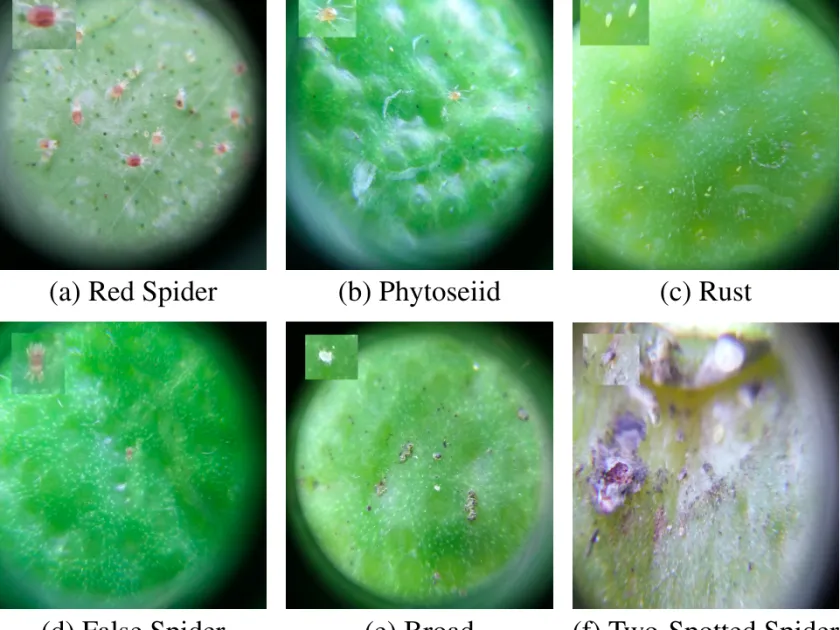
Adult mites are microscopic with an oval-shaped body and four pairs of legs. Accurate identification requires microscopic analysis of morphological features, such as the dorsal shield pattern.
The life cycle encompasses egg, larva, protonymph, deutonymph, and adult stages. Development is highly sensitive to environmental factors, primarily temperature and humidity levels.
This species displays behavioral plasticity, often feeding on a diverse range of food sources including plant tissues, pollen, and smaller arthropods depending on availability.
Effective management begins with correct identification in the field, supported by periodic microscopic checks to distinguish it from strictly predatory species.
What it damages
This mite primarily infests citrus crops, impacting various varieties of oranges and lemons. It shows a preference for young, actively growing plant tissues.
Damage is characterized by the extraction of sap from the leaf epidermis, which leads to cell death, chlorosis, and reduced photosynthetic capacity of the foliage.
High population densities can cause significant plant stress, resulting in stunted shoot growth and deformation of young leaves, which is detrimental to tree vigor.
In addition to direct foliage damage, mite feeding can create entry points for secondary pathogens, potentially increasing the incidence of fungal and bacterial infections.
Economic impact is primarily observed through reduced fruit yield and lower quality of cosmetic appearance on the citrus skin, affecting market value.
When it appears
Population activity is closely linked to the growing season of citrus trees. Peaks in population density typically occur during spring and early summer when new flushes are produced.
Warm and dry climatic conditions are highly conducive to rapid reproduction. During these periods, monitoring must be more frequent to detect early colonization.
Activity diminishes as environmental conditions become unfavorable or when food resources become scarce. Mites may survive in sheltered areas on the tree during colder periods.
Orchard managers should initiate monitoring programs as soon as bud break occurs. Early detection is the cornerstone of a successful control strategy.
Tracking historical weather data helps in predicting potential outbreak windows, allowing for more precise timing of protective measures.
Signs of infestation
Early symptoms of infestation include the appearance of small, irregular spots on the leaves, often resulting in yellowing or a bronzed appearance of the tissue.
Using a hand lens, a scout can observe the movement of adult mites on the underside of the leaves, often near the veins or leaf stalks.
Severe infestations lead to premature leaf drop, which significantly impacts the metabolic reserves of the tree during critical developmental phases.
Consistent observation of the canopy allows for the identification of initial clusters before the infestation becomes widespread throughout the orchard.
Control measures
Control measures rely on the application of selective acaricides that target the pest while minimizing negative impacts on beneficial insects and predatory mites.
Rotational use of chemicals from different IRAC groups is essential to delay the development of pesticide resistance in the mite population.
Cultural practices, such as proper pruning, improve air circulation and light penetration throughout the canopy, creating a less hospitable microclimate for mites.
Maintaining tree vigor through proper irrigation and balanced fertilization programs helps the trees better tolerate and recover from mite feeding damage.
Biological control, including the conservation of native predatory mites or release of augmentative biocontrol agents, serves as a sustainable management strategy.
Taxonomy
- Latin name
- Euseius citrifolius
- Order
- Mites
- Family
- Phytoseiidae
- EPPO code
- EUSICI
Discussion
No discussions yet — be the first.