
Brown stink bug
Euschistus variolarius
Description
How to identify
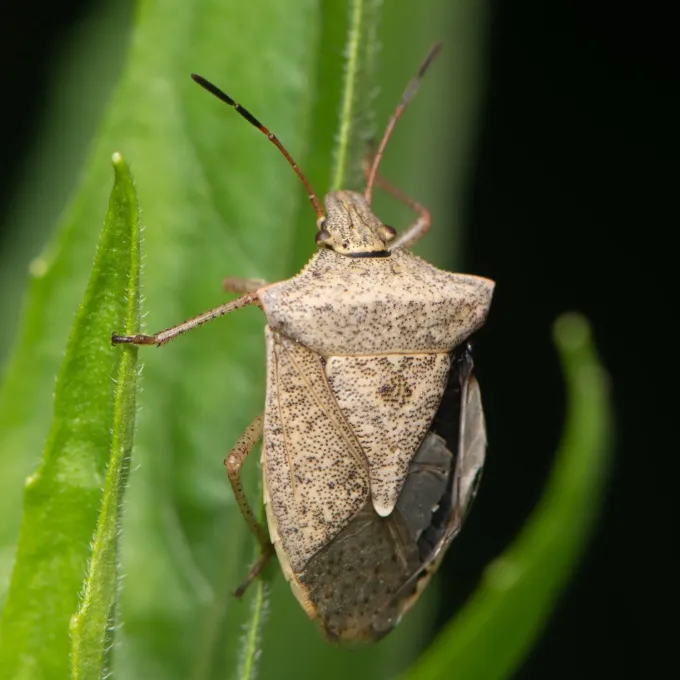
The brown stink bug, Euschistus variolarius, belongs to the family Pentatomidae within the order Hemiptera. Adult specimens exhibit the characteristic shield-like body shape and measure approximately 11 to 13 millimeters in length.
Their coloration ranges from light brown to yellowish-tan, featuring numerous small dark spots distributed across the cuticle. The lateral edges of the pronotum are distinctly serrated, serving as a reliable identification feature for this species.
Eggs are barrel-shaped and typically deposited in clusters on the undersides of leaves. Early-instar nymphs appear rounded and may differ in color from adults, gradually developing the familiar "shield" appearance after several molting stages.
Overwintering occurs exclusively in the adult stage, with insects seeking shelter under leaf litter, in plant debris, or within tree bark crevices. As temperatures rise in spring, they emerge from diapause to begin their feeding cycle.
The biological success of this species is linked to its ability to exploit a diverse range of host plants, making it a significant polyphagous pest. Its adaptability allows for rapid population growth under favorable environmental conditions.
What it damages
Equipped with a piercing-sucking mouthpart, the pest feeds by puncturing stems, leaves, and reproductive organs. During feeding, it injects saliva containing enzymes that cause localized tissue necrosis in the host plant.
Primary host crops include corn, soybeans, beans, tomatoes, peppers, and various berry shrubs. The pest is also commonly observed residing on common weed species belonging to the Chenopodiaceae and Polygonaceae families.
The most severe damage occurs during the reproductive development phase. Punctures in developing corn kernels or soybean pods lead to deformation, discoloration, and a significant reduction in the quality of the harvested yield.
In cases of heavy infestation, stink bugs can destroy a substantial portion of vegetable crops by inducing blossom drop and facilitating secondary infections that enter through the damaged tissues.
Beyond physical injury, the saliva of the bug often serves as a vector for various plant pathogens, including fungi and bacteria, which exploit the feeding wounds to colonize the plant.
When it appears
Activity begins in early spring when air temperatures consistently exceed 12-15 degrees Celsius. The first generation typically thrives on early-season weeds or wild perennial grasses before moving to crops.
During mid-summer, coinciding with the active growth stages of major crops, adults migrate into fields of corn and soybeans. This is the period when the pest population density typically reaches its peak.
The complete life cycle, from egg to adult, takes approximately 4 to 6 weeks. This temporal span allows for one or two generations per season, depending on the specific climatic characteristics of the region.
As summer draws to a close, adults of the new generation feed intensively to build lipid reserves for the upcoming winter. This late-season feeding activity often results in the final wave of crop damage before hibernation.
With the onset of autumn frosts, the bugs enter a state of dormancy, migrating to sheltered locations. Tracking these movements is crucial for population monitoring and forecasting potential risks for the following growing season.
Signs of infestation
Early symptoms of infestation include the appearance of small, light, or brown spots on leaves and stems, which progressively expand into necrotic patches. Foliage may exhibit premature yellowing and curling.
Young fruits and pods display visible puncture marks, often surrounded by discolored or deformed tissue. Internally, affected pods may appear hollow or show dehydrated, spongy patches.
Direct sightings of the insects on the underside of leaves or within corn husks confirm their presence. Furthermore, these bugs emit a strong, pungent odor when disturbed, which serves as a notable sensory indicator.
The accumulation of frass, appearing as tiny dark specks on the surface of damaged plant organs, serves as a secondary indicator of sustained, high-density colonization.
- Abscission of immature buds and pods.
- Twisting and poor development of seed kernels.
- Stunted growth and overall lack of vigor in infested plants.
Control measures
Cultural control strategies include diligent weed management around field perimeters to eliminate early-season refugia. Deep autumn plowing is recommended to destroy overwintering sites within the soil and plant debris.
Chemical control remains the most effective intervention when populations exceed economic thresholds. Applications of contact or systemic insecticides, such as pyrethroids or organophosphates, are standard practices.
Spraying should be conducted during early morning or evening hours when insect activity is reduced. It is essential to rotate chemical modes of action to mitigate the risk of resistance development within the population.
Biological control methods involve the conservation of natural enemies, such as parasitic wasps that target stink bug eggs. Maintaining healthy populations of beneficial insects within the agroecosystem can naturally suppress pest numbers.
Utilizing pheromone-based monitoring traps allows for the early detection of migration patterns, enabling growers to apply targeted control measures before widespread economic damage occurs.
Taxonomy
- Latin name
- Euschistus variolarius
- Order
- Hemiptera (bugs, aphids, leafhoppers)
- Family
- Pentatomidae
- EPPO code
- EUSCVA
Discussion
No discussions yet — be the first.