
Brown-spotted stink bug
Euschistus tristigmus
Description
How to identify
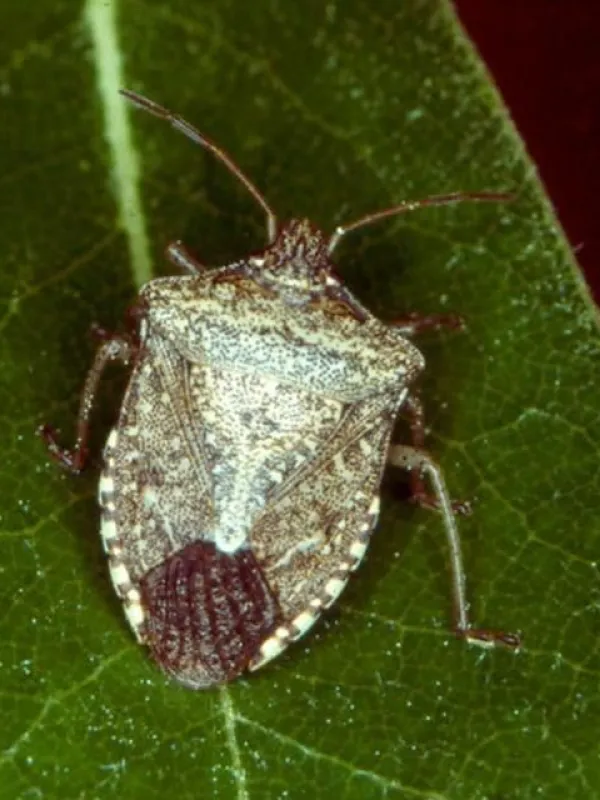
The brown-spotted stink bug, scientifically known as Euschistus tristigmus, is a member of the Pentatomidae family. These insects are easily recognized by their distinct shield-shaped body, typically measuring between 10 and 12 millimeters in length.
Their coloration ranges from yellowish-brown to dark brown, marked by numerous small, dark punctures across their dorsal surface. A key identification feature is the presence of sharp, angular projections on the shoulders of the pronotum.
Females lay their eggs in neat, organized rows on the underside of host plant leaves. These eggs are barrel-shaped and light in color, blending in well with the leaf surface, which provides camouflage against potential predators.
Nymphs undergo five distinct developmental stages (instars) before reaching maturity. Throughout these stages, they gradually increase in size and change their coloration, progressively resembling the adult form of the insect.
Like all pentatomids, this species features a specialized piercing-sucking proboscis. This anatomical structure is perfectly adapted for penetrating plant tissues to feed on cell sap, which is the primary driver of their pest activity.
What it damages
Euschistus tristigmus is a polyphagous pest capable of attacking a wide variety of crops, including soybeans, corn, tomatoes, beans, and various fruit trees. They primarily target reproductive structures, such as developing seeds and fruits.
During feeding, the stink bug injects salivary enzymes into the plant tissues to pre-digest the cell contents. This process causes significant localized tissue damage, leading to cell death and the formation of necrotic spots.
In soybean fields, these pests pierce the developing pods, which results in shriveled, deformed, or undersized seeds. This not only reduces the total yield but also compromises the overall quality and market value of the harvest.
When feeding on tomatoes, the bugs cause hard, corky spots beneath the skin, rendering the fruit unappealing and susceptible to secondary infections from fungi and bacteria. This can lead to rapid fruit rot.
Severe infestations can lead to flower abortion and the premature dropping of fruit. The damage often goes unnoticed until harvest time, when the physical deformation of the produce becomes highly apparent.
When it appears
The life cycle of the brown-spotted stink bug is highly dependent on ambient temperatures. Overwintering adults emerge from their dormant state in early spring as soon as conditions become favorable.
The reproductive period spans the entire growing season. Depending on the local climate, Euschistus tristigmus may complete one or two generations annually, allowing populations to build up during the summer months.
Their activity peaks during the mid-summer period, coinciding with the flowering and fruiting stages of most major crops. This is the critical window for monitoring and implementing necessary protective measures.
As autumn approaches, adults feed intensively to store energy for the coming winter. During this time, they migrate from maturing crops toward sheltered areas such as woodland edges, hedgerows, and dense debris.
When temperatures consistently drop, they enter a state of diapause. They remain in protected sites, such as leaf litter or thick vegetative cover, until the return of spring warmth triggers their emergence.
Signs of infestation
Initial signs of infestation include chlorotic (yellowish) spots on leaves and stems resulting from the initial probing by the bugs. These spots are the first visible evidence of their feeding activity.
Visible damage to fruits and pods is another key indicator. Small, indented punctures on the surface of soybean pods or tomato skins are indicative of stink bug presence and require closer inspection.
The discovery of egg masses on the undersides of leaves is a definitive sign of active reproduction. Scout fields regularly during the early stages of fruit development to detect these clusters before hatching.
Adult bugs are often elusive; they may drop to the ground or fly away when disturbed. Using a sweep net is the most effective way to quantify their population density in a given field area.
Plant growth retardation and the premature wilting of flowers or young fruit are symptoms of high-density populations. If you observe significant thinning of the crop stand, it may be due to heavy pest pressure.
Control measures
An integrated pest management (IPM) approach is recommended to control Euschistus tristigmus. Cultural practices, such as maintaining weed-free field borders, help eliminate alternative hosts for the bugs.
Proper tillage and the removal of crop residues are essential for destroying overwintering sites. By reducing the availability of protective cover, farmers can significantly lower the survival rate of the population.
Biological control relies on the presence of natural enemies, including egg parasitoids and generalist predators. Preserving these beneficial insects is crucial for long-term sustainable management of stink bug populations.
Chemical control should be considered as a last resort, implemented only when scouting confirms that pest numbers have exceeded the economic injury threshold. Use selective insecticides to minimize impact on non-target species.
Always adhere to local label requirements regarding pesticide application rates and pre-harvest intervals. Rotating chemical classes is also recommended to prevent the development of insecticide resistance.
Taxonomy
- Latin name
- Euschistus tristigmus
- Order
- Hemiptera (bugs, aphids, leafhoppers)
- Family
- Pentatomidae
- EPPO code
- EUSCTR
Discussion
No discussions yet — be the first.