
Brown stink bug
Euschistus servus
Description
How to identify
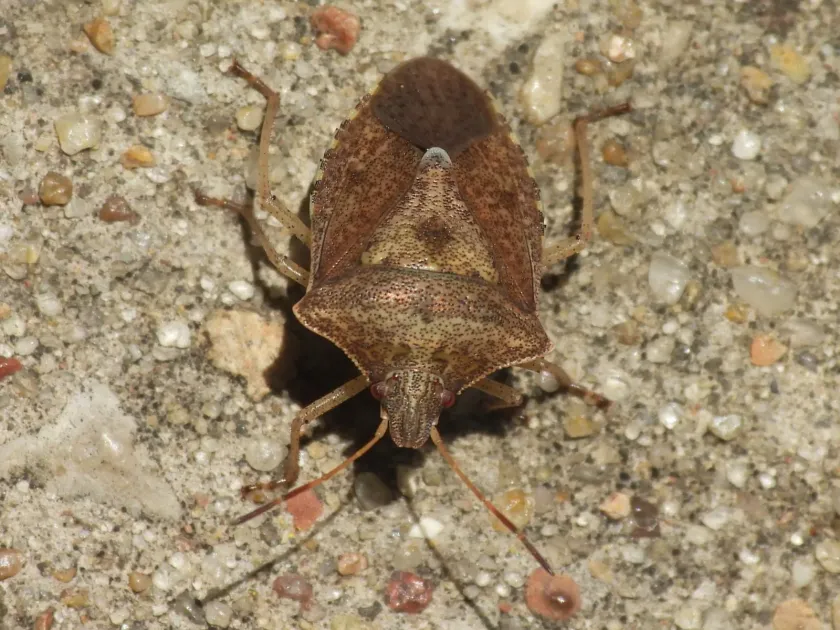
The brown stink bug Euschistus servus belongs to the order Hemiptera and the family Pentatomidae. Adult bugs are characterized by their shield-shaped bodies, typically ranging from 12 to 15 mm in length. Their coloration is predominantly brownish-yellow, often speckled with small black dots.
The head features a piercing-sucking mouthpart, scientifically known as a rostrum, which allows the insect to penetrate plant tissues and extract sap. Nymphs pass through five distinct developmental stages, resembling smaller, wingless versions of the adults.
What it damages
This species is a generalist herbivore and poses a significant threat to various agricultural crops. It is notably recognized as a major pest of soybeans, corn, cotton, tomatoes, and various legumes.
Damage is caused by the insect feeding on developing seeds and fruits. By injecting enzymes into the plant tissue to liquefy it, the bug causes malformation, reduced yield, and a decrease in the nutritional value of the harvested product.
When it appears
The life cycle of Euschistus servus involves egg, nymphal, and adult stages. Adults typically overwinter in leaf litter, dense weeds, or protected areas near fields, emerging in early spring as temperatures rise.
Throughout the growing season, multiple generations can occur depending on the regional climate. The populations typically peak during the mid-to-late summer months, coinciding with the critical reproductive stages of the host crops.
Signs of infestation
The first indicator of infestation is the presence of small necrotic spots or discolorations on foliage and fruit. Feeding on pods or kernels results in stunted development, shriveling, or the formation of hollow areas inside the seeds.
In corn, feeding on the developing ears often leads to poor kernel filling and increased vulnerability to secondary fungal infections. Heavily infested plants may show premature wilting or flower drop.
Control measures
Effective management requires an integrated approach that focuses on reducing populations before they cause economic loss. Early detection through field scouting is essential for minimizing pesticide use.
- Removal of wild host weeds near field edges to reduce overwintering sites.
- Utilization of pheromone traps to monitor population spikes.
- Application of selective insecticides when infestation reaches the economic threshold.
- Encouraging populations of natural predators such as parasitic wasps and predatory beetles.
Taxonomy
- Latin name
- Euschistus servus
- Order
- Hemiptera (bugs, aphids, leafhoppers)
- Family
- Pentatomidae
- EPPO code
- EUSCSE
Discussion
No discussions yet — be the first.