
Brown stink bug
Euschistus euschistoides
Description
How to identify
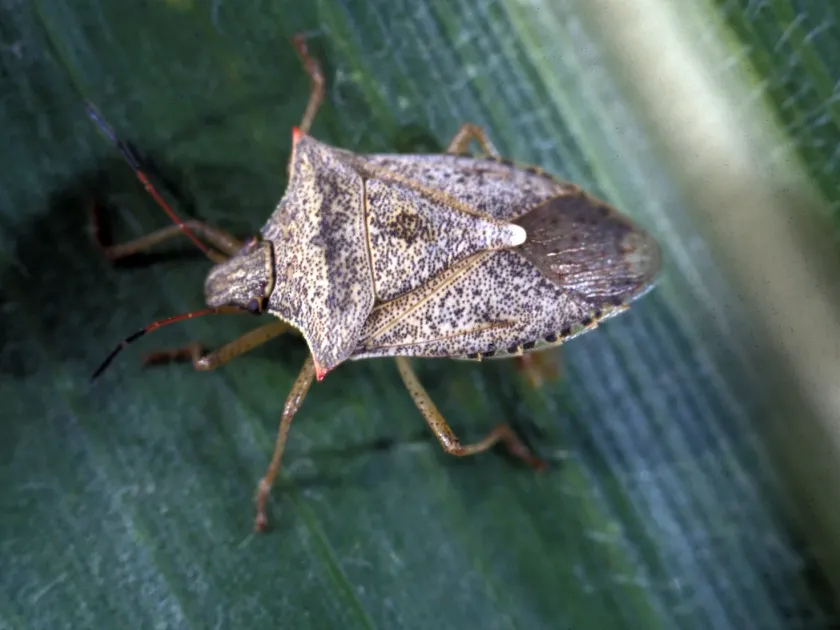
The brown stink bug (Euschistus euschistoides) is a member of the Pentatomidae family, commonly known as stink bugs, characterized by their shield-shaped body structure.
Adult insects typically measure about 12 to 15 mm in length and feature a dull brown or grayish color, which provides effective camouflage against bark and plant foliage.
A key identification feature of this species is the slightly pointed or angular appearance of the shoulders (pronotum). The edges of the abdomen, known as the connexivum, often display a pattern of alternating dark and light spots.
Nymphs go through five distinct developmental stages. While they resemble adults in shape, they lack fully developed wings and often exhibit a more mottled or lighter coloration.
Like many species in this family, the brown stink bug possesses scent glands that release a pungent odor when the insect is disturbed, serving as a defensive mechanism.
What it damages
This species is a generalist feeder that attacks a diverse range of crops, including corn, soybeans, wheat, and a variety of vegetable crops such as tomatoes and beans.
In orchards, these pests feed on developing fruits by piercing the skin with their proboscis, causing sunken, corky areas that significantly reduce fruit quality and shelf life.
The most severe damage occurs on field crops; in soybeans, they feed directly on the developing seeds within the pods, leading to shriveled or aborted seeds.
Corn crops are also highly susceptible, especially during the milk and dough stages of grain development, where feeding results in malformed or missing kernels.
Beyond physical damage, the introduction of digestive enzymes during feeding leads to necrotic tissue and may create entry points for secondary fungal and bacterial infections.
When it appears
The life cycle begins as adults emerge from overwintering sites, such as leaf litter, brush piles, or tree bark, as soon as spring temperatures begin to rise consistently.
Activity peaks during the mid-to-late summer, coinciding with the reproductive phase and the development of major agricultural crops which provide abundant food.
Depending on the climatic zone, the brown stink bug may complete one or two generations per year, with the final generation seeking overwintering shelter as days grow shorter.
Temperature plays a crucial role in population dynamics; warmer springs generally accelerate the development of nymphs and increase the overall number of successful generations.
In the autumn, populations migrate away from crops to find suitable areas for winter dormancy, often congregating on the edges of forests or near buildings.
Signs of infestation
Visual identification of an infestation includes the presence of small, yellowish or brown puncture marks on fruit surfaces, often surrounded by a localized depression or dimple.
Leaves of affected plants may exhibit small, chlorotic spots or necrotic lesions, indicating areas where the insect has disrupted the vascular tissues to feed on sap.
In soybeans and legumes, the presence of flat or empty pods is a telltale sign of heavy stink bug activity, even if the insects themselves are not currently visible.
Scouting for egg clusters is another diagnostic method; eggs are usually laid in neat, side-by-side rows on the undersides of leaves during the active summer months.
The observation of nymphs of various sizes feeding on stalks or pods is the most definitive sign that the population is currently establishing itself within the crop canopy.
Control measures
Effective management begins with strict weed control along field borders and fence rows, as these areas often serve as critical spring habitats for the pest.
Post-harvest agricultural practices, such as disking or plowing under crop residues, help reduce the number of overwintering sites for the adult population.
Biological control, including the encouragement of native egg parasitoids like Telenomus species, can play a significant role in suppressing stink bug numbers naturally.
If economic thresholds are exceeded, chemical control with labeled pyrethroids or organophosphates may be necessary, provided that application timing aligns with the presence of susceptible nymphal stages.
Regular field scouting and the use of pheromone-baited traps or sweep netting are essential to monitor population fluctuations and ensure timely interventions when pressure is high.
Taxonomy
- Latin name
- Euschistus euschistoides
- Order
- Hemiptera (bugs, aphids, leafhoppers)
- Family
- Pentatomidae
- EPPO code
- EUSCEU
Discussion
No discussions yet — be the first.