
Consperse stink bug
Euschistus conspersus
Description
How to identify
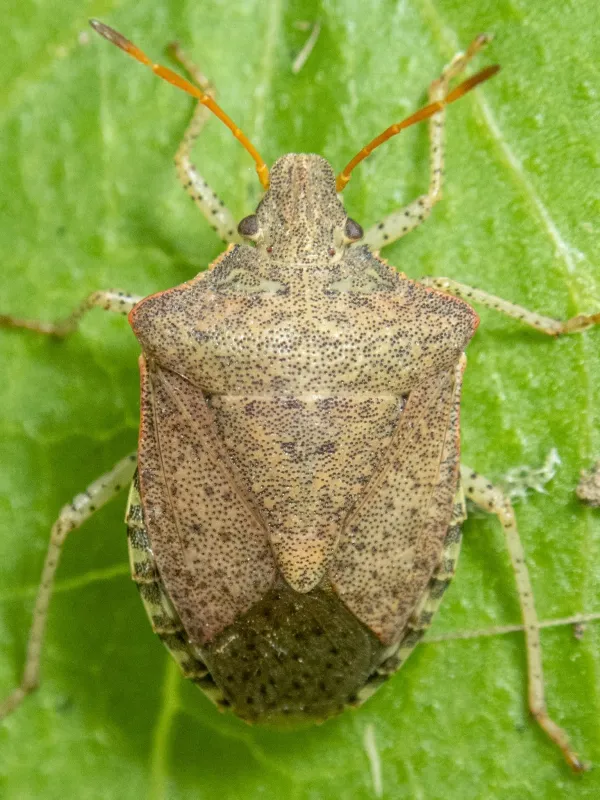
The consperse stink bug (Euschistus conspersus) is a member of the Pentatomidae family. Adult insects are shield-shaped, typically yellowish-brown or grayish-brown in color, covered with numerous tiny dark dots scattered across the dorsal surface.
A distinctive feature of this species is the sharp, forward-projecting angles on the shoulders of the pronotum. Adults generally reach a length of 10 to 12 millimeters.
The eggs are barrel-shaped and are usually deposited in small clusters on the underside of leaves. Nymphs pass through five developmental stages, progressively increasing in size and changing their appearance to match the adults.
These bugs overwinter as adults, finding shelter in crop debris, leaf litter, or the upper soil layer, where they remain until warmer spring temperatures trigger their emergence.
Activity begins once temperatures rise sufficiently, prompting the bugs to move from hibernation sites to weeds and eventually to crop fields for feeding and reproduction.
What it damages
This pest is a generalist feeder that causes significant damage to numerous agricultural crops. Tomatoes, peppers, beans, and various fruit and berry species are particularly susceptible to their feeding habits.
Both adults and nymphs contribute to the damage. Using their piercing-sucking mouthparts, they puncture plant tissues to extract sap from developing shoots, leaves, and maturing fruits.
The most severe damage occurs when they feed on ripening fruit. Punctures often lead to necrotic spots and hardened, deformed areas within the fruit, rendering it unmarketable and reducing its overall quality.
During heavy infestations, the consperse stink bug can cause substantial yield losses, particularly under drought conditions when plants are already stressed.
In addition to physical damage, the puncture wounds provide entry points for secondary infections, such as various types of fruit rot and bacterial diseases.
When it appears
The first appearance of the pest is typically observed in the spring, immediately following the winter dormancy period. Activity is highly dependent on ambient temperatures, with mass migration occurring once temperatures exceed 15 degrees Celsius.
Multiple generations can occur throughout the summer, with reproduction rates increasing significantly during hot, dry weather. Peak feeding activity usually takes place in the latter half of the summer.
As autumn approaches, shorter day lengths and cooler nights signal the bugs to begin seeking overwintering sites, moving from crop areas to field edges or nearby windbreaks.
Monitoring should commence during the flowering phase of the crop, as this is when the population begins to establish itself and move towards developing fruit.
The most critical window for intervention is during the fruit-set stage, where even a small number of bugs can cause significant economic damage to the harvest.
Signs of infestation
The primary symptom of infestation is the presence of small, light-colored punctures on fruits. Over time, these may develop into dark necrotic pits or small sunken areas.
Visual inspection of the foliage and stems can reveal the bugs themselves; when disturbed, they may emit a foul-smelling chemical defensive secretion typical of most stink bugs.
- Empty egg clusters found on the underside of leaf surfaces.
- Stunted, deformed growth or wilting of young terminal shoots.
- Mottled or corky areas on the skin of tomatoes and bell peppers.
- Reduced overall vigor and growth rates due to nutrient loss.
Shaking infested plants will often cause nymphs to dislodge and hide in leaf axils or on the underside of leaves, making them difficult to spot without careful inspection.
Heavily infested fruit loses its firmness and may develop soft patches around the puncture sites, sometimes resulting in premature fruit drop.
Control measures
Effective management begins with sound cultural practices. Regular removal of weeds from field borders and between rows eliminates key breeding grounds and food sources for the bugs.
Deep plowing in the autumn and thorough incorporation of crop residues help to destroy wintering habitats, significantly reducing the survival rate of the overwintering population.
Chemical control involving insecticides from the pyrethroid or organophosphate groups can be effective, but applications must be timed carefully to avoid residue issues near harvest.
Biological control methods involve promoting natural enemies, such as parasitic wasps and predatory bugs, which target eggs and reduce overall population pressure.
Pheromone traps are highly effective for monitoring insect activity and can also be used as part of a trapping strategy to lower local population densities within the field.
Taxonomy
- Latin name
- Euschistus conspersus
- Order
- Hemiptera (bugs, aphids, leafhoppers)
- Family
- Pentatomidae
- EPPO code
- EUSCCO
Discussion
No discussions yet — be the first.