
Brown stink bug
Euschistus
Description
How to identify
The genus Euschistus belongs to the family Pentatomidae, commonly known as stink bugs, characterized by their shield-like body shape.
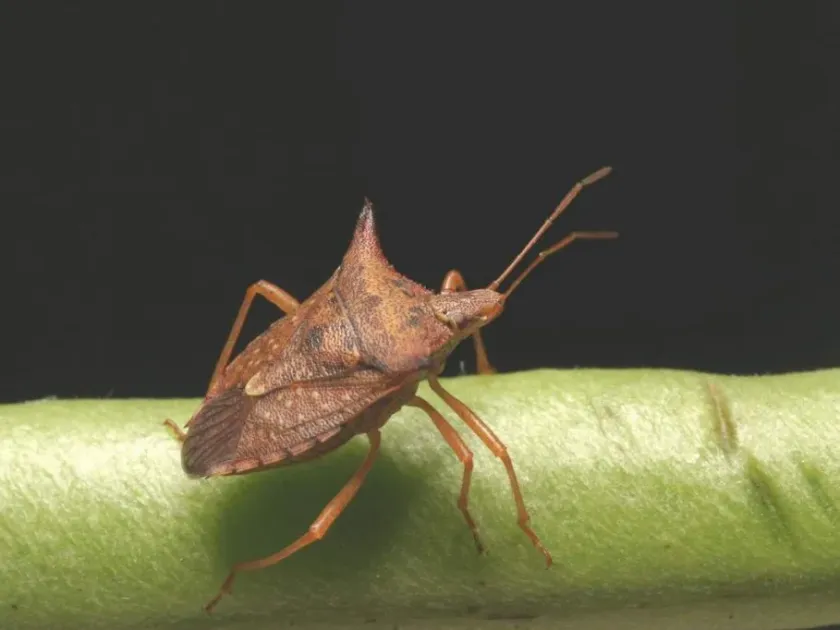
Adults typically exhibit shades of brown and tan, which serve as excellent camouflage against soil, dried leaves, and plant stems in the field.
These insects are equipped with specialized piercing-sucking mouthparts, allowing them to penetrate plant tissues and extract vital sap and nutrients.
The morphological structure includes prominent lateral angles on the pronotum, which are key diagnostic features for identifying specific species within the genus.
Measuring between 10 to 15 mm in length, adult stink bugs are highly mobile and can easily disperse throughout fields during the growing season.
What it damages
Euschistus species are major polyphagous pests that cause substantial economic damage to a wide range of agricultural crops worldwide.
They feed on various field crops such as corn, soybeans, cotton, and legumes, often targeting both vegetative and reproductive parts of the plants.
By feeding on developing seeds and pods, they cause shriveled grain, aborted seeds, and severe yield reductions in affected crops like soybeans.
The feeding process involves injecting digestive enzymes into the plant tissue, which causes localized necrosis, plant stunting, and malformation.
Wounds created by the bugs' mouthparts serve as infection sites for secondary pathogens, including bacteria and fungi, further damaging the crop quality.
When it appears
The lifecycle consists of egg, five nymphal instars, and adult stages, with multiple generations often developing during a single growing season.
Adults overwinter in protected areas like fence rows, leaf litter, or crop residues, emerging as temperatures rise in the spring to begin feeding.
The most active period for these pests coincides with the flowering and seed-set stages of host crops, which are the most vulnerable phases for the plants.
Females deposit eggs on the undersides of leaves, and the emerging nymphs begin feeding immediately on the foliage and developing plant parts.
As day length shortens and temperatures decline in the autumn, adults move toward sheltered areas to initiate their overwintering process.
Signs of infestation
In corn, symptoms of infestation include distorted ears, white-spotted grains, and localized necrosis on leaves where feeding has occurred.
Soybean fields often show signs like aborted pods, flat or shriveled seeds inside pods, and yellow stippling on the leaves during peak feeding times.
General signs include the presence of adult insects or nymphs on stems and leaves, often visible during the cooler parts of the day.
Widespread wilting of younger plants and premature senescence of fruit or seed structures indicate significant pest pressure within the field.
Farmers may also notice a characteristic odor when large numbers of these insects are disturbed, which is a common defense mechanism for the genus.
Control measures
Integrated Pest Management (IPM) is crucial, starting with sanitation practices like removing alternative weed hosts and crop residues where they overwinter.
Chemical control via approved insecticides is the primary method for management, typically applied when populations exceed defined economic thresholds.
Monitoring using pheromone-baited traps allows for early detection of adult migration into the fields, facilitating timely decision-making.
Biological control methods, such as encouraging native predators and parasitoids, can help suppress populations and reduce the reliance on synthetic chemicals.
Crop rotation and selecting planting dates that avoid peak pest activity periods are effective strategies to minimize the overall impact of Euschistus.
Taxonomy
- Latin name
- Euschistus
- Order
- Hemiptera (bugs, aphids, leafhoppers)
- Family
- Pentatomidae
- EPPO code
- EUSCSP
Discussion
No discussions yet — be the first.