
Hottentot bug
Eurygaster hottentota
Description
How to identify
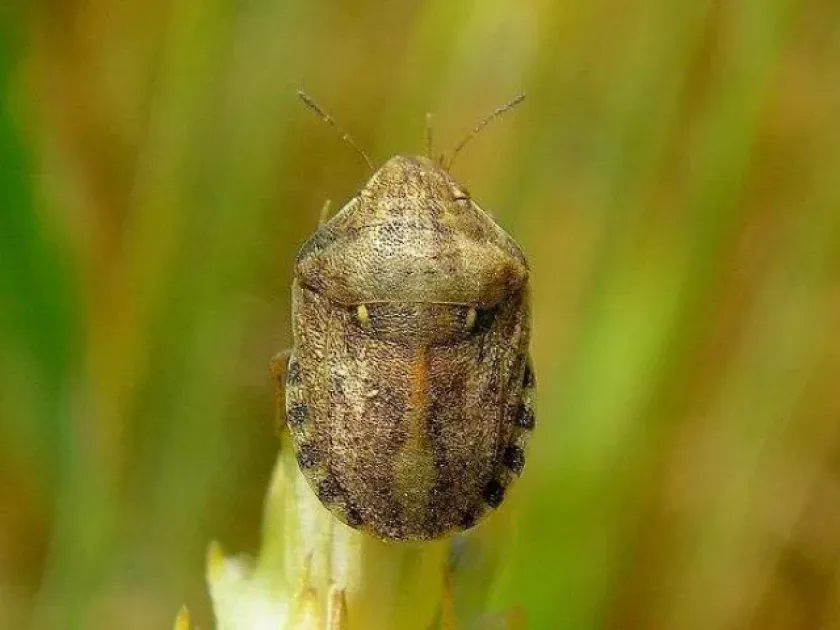
Eurygaster hottentota is a species of shield bug belonging to the family Scutelleridae within the order Hemiptera. Adult bugs typically measure 10–12 mm in length and possess a distinct shield-like body shape.
The coloration of this species varies from light yellowish to dark brown or black, providing effective camouflage against soil and stubble backgrounds. Identification often requires close examination of the head and pronotum structures.
The life cycle involves incomplete metamorphosis, meaning the nymphs resemble miniature, wingless versions of the adults. These bugs usually produce one generation per year, depending on regional climatic conditions.
Eggs are barrel-shaped and typically deposited in organized clusters on the underside of cereal leaves. The nymphal development stage consists of five distinct instars, each increasing in size before reaching maturity.
Adults overwinter in protected areas such as forest litter, field margins, or under fallen leaves. As temperatures rise in spring, they migrate to host crops to feed and initiate the reproduction cycle.
What it damages
This bug is a specialized phytophage that primarily targets cereal crops including wheat, barley, rye, and oats. Both nymphs and adults contribute to crop damage by extracting plant sap through their piercing-sucking mouthparts.
During the early vegetative stages, the bugs pierce the stems of young plants. This feeding activity causes the central leaf to wither and die, which can lead to stunted growth or the total loss of the stem's productivity.
The most significant economic damage occurs when the pest feeds on developing grains. During this process, the bug injects digestive enzymes into the kernel, which break down the gluten proteins.
The damaged grains become shriveled, light in weight, and lose their germination capacity. Even a small percentage of infested kernels in a harvest can drastically reduce the baking quality of the flour.
Heavy infestations can lead to substantial yield reductions, making the grain unsuitable for standard milling and baking processes, thereby causing significant financial losses for farmers.
Signs of infestation
The primary sign of an infestation is the visual presence of the bugs on plants during field scouting. They are most active during warm, sunny periods and can be collected using sweep nets.
Yellowing and subsequent wilting of the central leaf in young cereal plants is a classic symptom of stem feeding. Careful inspection of these stems often reveals small dark spots left by the bug's stylets.
Signs on the grain head include discolored spots on the glumes. Upon closer examination of the kernels, one may observe small indentations or deformities caused by the feeding enzymes.
When assessing grain samples, damage manifests as shriveled or mottled kernels. Advanced laboratory analysis can confirm the presence of pest-induced proteolytic enzymes that indicate the grain quality has been compromised.
Clusters of eggs on the underside of leaves serve as a clear warning sign. Early detection of these clusters allows for targeted intervention before the eggs hatch and nymphs begin active feeding.
Control measures
Cultural control methods such as crop rotation and early harvesting are essential to minimize exposure to the pest. Maintaining clean fields by removing weeds helps eliminate alternative food sources for the bugs.
Deep plowing after harvest is a highly effective mechanical method. By burying the overwintering adults or their habitats, farmers can significantly reduce the population size for the following season.
Chemical control involving systemic or contact insecticides is recommended when the pest population density exceeds the economic threshold. Treatments should be timed specifically for the young nymphal stages.
Biological control plays a vital role in sustainable management. Protecting natural enemies, such as egg parasitoids (Telenomus species), helps maintain the pest population at manageable levels without heavy chemical reliance.
Integrated Pest Management (IPM) requires regular monitoring of fields to determine the optimal timing for interventions. By combining cultural, biological, and chemical strategies, growers can effectively protect their grain yields.
Taxonomy
- Latin name
- Eurygaster hottentota
- Order
- Hemiptera (bugs, aphids, leafhoppers)
- Family
- Scutelleridae
- EPPO code
- EURYHO
Discussion
No discussions yet — be the first.