
Sunn pest
Eurygaster
Description
How to identify
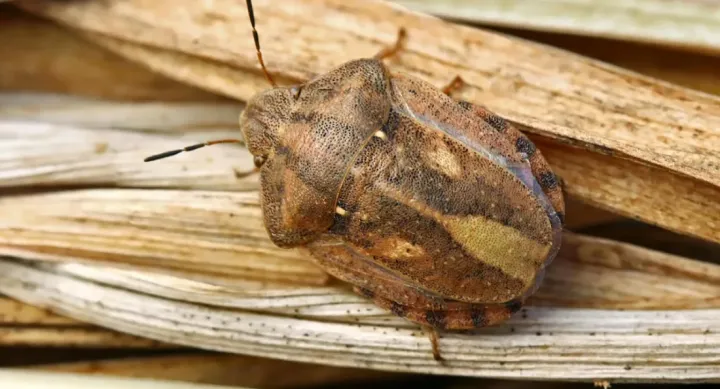
The Sunn pest (Eurygaster integriceps) belongs to the order Hemiptera and the Scutelleridae family. It is a shield-shaped insect typically measuring 10–13 mm in length, with coloration ranging from light grey to dark brown.
The life cycle encompasses eggs, five larval stages (instars), and adults. They overwinter in leaf litter or forest belts, emerging in spring once temperatures reach 12–14 degrees Celsius, after which they migrate to cereal fields.
Females deposit eggs on the underside of cereal leaves. Embryonic development usually takes between 6 to 15 days, highly dependent on prevailing weather conditions, especially temperature and humidity.
Larvae of the first and second instars remain clustered together, while older larvae disperse across the field to feed. Migration between wintering sites and feeding sites is a critical phase of their annual cycle.
A full generation cycle takes approximately 40 to 50 days. Environmental factors such as heat and low rainfall are major drivers that can lead to population explosions in major grain-producing regions.
What it damages
Sunn pest primarily attacks small grain cereals, particularly soft and hard wheat, but also barley and rye. The damage occurs during different physiological growth stages of the crops.
Adults cause severe damage in spring by puncturing the stems of young plants, leading to the necrosis of the central leaf and stunted growth. This condition is known as whitehead or deadhead formation.
Larvae feed on developing grain during the milk and dough stages. By puncturing the grain, they inject enzymes that break down proteins and gluten, which ruins the baking quality of the flour.
Even moderate infestations can render a harvest unfit for bread-making due to the loss of elastic properties in the dough. This makes the Sunn pest one of the most economically damaging cereal pests globally.
The loss in quality is often more significant than the quantitative yield loss, as grain damaged by these insects is severely downgraded at storage and processing facilities.
Signs of infestation
Initial symptoms include the wilting and drying of the central leaf on young shoots. Careful inspection of the stem base usually reveals tiny dark puncture marks left by the insect's rostrum.
During grain filling, visual evidence is found in small dark spots on the surface of the grains. These kernels often appear shriveled and possess a dull, wrinkled appearance compared to healthy grains.
The presence of the insects themselves, particularly in the morning and evening hours, is a primary indicator. They tend to hide within the spikes or at the base of the plant during hot daytime periods.
Baking tests are the definitive way to confirm damage, showing a lack of dough stability. The degradation of gluten proteins is a chemical sign that an infestation has occurred.
Field scouting using sweep nets is the standard method for detection. Regular monitoring helps farmers determine the density of the population and the necessity for further intervention.
Control measures
Agronomic strategies include early sowing of spring crops and harvesting winter cereals as early as possible to reduce the duration of the insect's feeding period.
Biological control leverages natural enemies such as the egg parasitoid Trissolcus grandis. Preserving these beneficial insects is vital for an ecologically sustainable pest management strategy.
Chemical control remains the most effective immediate remedy during outbreaks. Targeted applications of pyrethroids or organophosphates are typically used during the larval stage to minimize damage.
Rotation of chemical classes is essential to manage the risk of developing resistance in pest populations. Applications are timed according to economic threshold levels established for each specific region.
An integrated approach, combining mechanical practices, natural enemy conservation, and judicious pesticide use, is the best path toward long-term management of the Sunn pest.
Taxonomy
- Latin name
- Eurygaster
- Order
- Hemiptera (bugs, aphids, leafhoppers)
- Family
- Scutelleridae
- EPPO code
- EURYSP
Discussion
No discussions yet — be the first.