
Red-legged cabbage bug
Eurydema ventralis
Description
How to identify
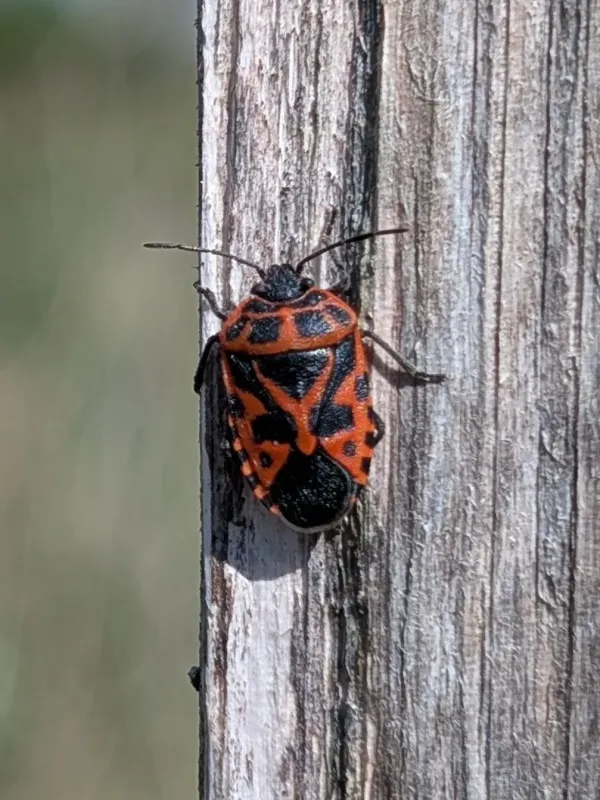
The red-legged cabbage bug, scientifically known as Eurydema ventralis, is a member of the Pentatomidae family (stink bugs). It is characterized by its vivid, shield-shaped body marked with striking red and black patterns, and distinctive reddish-brown legs.
Adult bugs typically measure between 7 and 10 mm. Their eggs are usually laid in double rows on the underside of leaves, showcasing a remarkable level of maternal organization that allows for the synchronization of larval emergence on the host plant.
What it damages
This pest is a major threat to crops belonging to the Brassicaceae family. It is particularly notorious for its ability to devastate vegetable gardens and large-scale agricultural fields alike during the vegetative growth phase.
Common hosts include various types of cabbage, radish, turnip, rapeseed, and mustard. The bugs possess piercing-sucking mouthparts specifically adapted to extract vital fluids from the plant tissues, leading to rapid deterioration of the crop's health.
When it appears
The insect overwinters as an adult in leaf litter, debris, and perennial grasses. As spring temperatures rise, the bugs emerge and seek out suitable host plants to feed on, mate, and begin their life cycle for the upcoming season.
The life cycle involves several nymphal stages, during which the young bugs resemble smaller versions of the adults. The development duration is highly dependent on ambient temperature and humidity, with faster development occurring during warm, dry summer months.
Signs of infestation
Feeding symptoms are a direct result of the bug's saliva, which contains enzymes that break down plant tissues. This causes visible damage to the leaves and stunted growth in the most affected areas of the plant.
- Small white or yellowish spots at the site of feeding punctures.
- Necrotic lesions appearing on leaves as the tissue dies.
- Curling and wilting of young leaves due to sap loss.
- General growth inhibition and reduced yields in brassica crops.
Control measures
Integrated pest management strategies are essential for controlling Eurydema ventralis. Cultural practices, such as removing weeds from the Brassicaceae family and practicing proper crop rotation, help reduce the overwintering population density.
Chemical control involving selective insecticides is recommended when pest pressure exceeds the economic threshold. Always ensure that the chosen chemicals are approved for use on specific edible crops and follow the safety instructions provided by the manufacturer.
Taxonomy
- Latin name
- Eurydema ventralis
- Order
- Hemiptera (bugs, aphids, leafhoppers)
- Family
- Pentatomidae
- EPPO code
- EURDVE
Discussion
No discussions yet — be the first.