
Eurydema spectabilis
Eurydema spectabilis
Description
How to identify
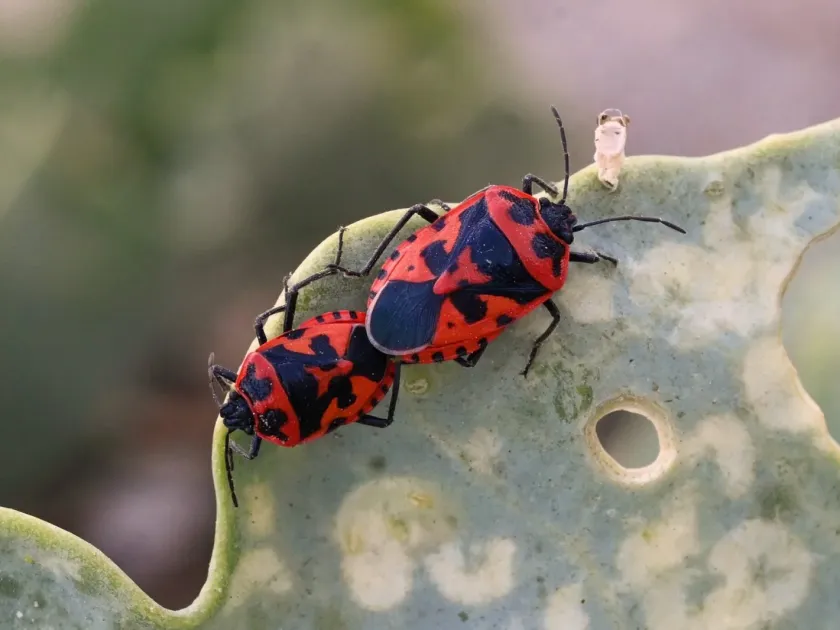
Eurydema spectabilis is a member of the Pentatomidae family within the order Hemiptera. This shield bug is easily recognizable by its bold, warning coloration, which serves as a defensive mechanism against predators in its natural habitat.
The adult insect typically has an oval-shaped, flattened body ranging from 7 to 10 millimeters in length. Its distinct pattern, usually consisting of red or white markings on a dark background, is a reliable diagnostic feature for field identification.
Eggs of this species are barrel-shaped and are laid in neat, organized rows on the underside of host plant leaves. This specific laying pattern is a key indicator for scouts monitoring for the early stages of an infestation.
The nymphs go through several developmental instars, gradually increasing in size. While they resemble smaller versions of the adults, they lack fully developed wings, limiting their mobility during the early stages of their life cycle.
Professional identification requires careful examination of the lower canopy and leaf undersides during the early morning hours, when the insects are most active. Proper identification is crucial for selecting the appropriate management strategy.
What it damages
This shield bug primarily targets plants within the Brassicaceae family, posing a significant risk to cabbage, broccoli, canola, mustard, and radishes. Both wild and cultivated crucifers serve as hosts for the pest.
The insects feed by inserting their specialized mouthparts into plant tissues and injecting enzymes. These enzymes facilitate the extraction of plant sap but also cause localized tissue death and necrosis around the feeding site.
Signs of damage include pale or white spots on the leaves, which eventually coalesce. As the infestation progresses, leaves become deformed, wilted, and brittle, severely hindering the plant's photosynthetic capacity.
Young plants are particularly vulnerable, and heavy feeding can lead to stunted growth or total plant failure. In cabbage production, if the apical meristem is damaged, the plant may fail to form a marketable head, resulting in total crop loss.
Furthermore, the physical damage opens pathways for secondary infections by pathogens, such as bacteria and fungi. This secondary infection can cause rotting and significantly reduce the quality and storage life of the produce.
When it appears
Eurydema spectabilis survives the winter as an adult, seeking shelter in soil debris, leaf litter, or dense vegetation along field edges. Activity resumes in early spring as temperatures rise above a specific threshold.
The insects first colonize wild cruciferous weeds before migrating to agricultural fields as crops develop. The timing of this migration is heavily influenced by regional climatic conditions and the phenology of the available host plants.
The breeding cycle is continuous during the warmer months, with multiple generations possible depending on the climate. High humidity and warmth act as catalysts for rapid population growth, making mid-summer a critical period for monitoring.
Peak populations are often observed when cruciferous vegetables are in their most active growth phase. Managing the population before it reaches these peak numbers is essential for effective long-term control.
As autumn approaches and temperatures drop, the bugs enter a state of diapause. They begin to retreat to their overwintering sites, where they remain until the cycle begins again the following year.
Signs of infestation
Early warning signs of an infestation include the appearance of small, bleached spots on the foliage. Over time, these spots expand, leading to chlorosis and the structural degradation of the affected leaves.
- Presence of adult shield bugs with vivid patterns on the plants.
- Small, white or translucent puncture marks on leaf surfaces.
- Leaf curling, distortion, and yellowing of the tissue.
- Stunted development of central plant buds.
- Clusters of barrel-shaped eggs on the underside of leaves.
Infested plants often display signs of general stress and reduced vigor. In flowering crops, feeding on the developing buds or pods can cause flower abortion and reduced seed yield, which is particularly detrimental in canola production.
In cases of severe infestation, the bugs congregate in large numbers on the stems and leaves, making the damage highly visible from a distance. Early detection by agricultural scouts is vital for timely intervention.
Regular field scouting using these visual markers allows for a more focused and less expensive application of control measures. Early intervention prevents the localized spots from turning into field-wide outbreaks.
Control measures
Integrated Pest Management (IPM) is the most effective approach for controlling Eurydema spectabilis. This includes cultural practices such as the removal of host weeds to eliminate early-season food sources.
Deep plowing after the harvest is highly effective at disrupting the overwintering cycle of the bugs. Crop rotation is also a recommended practice, as it reduces the probability of high populations building up in the same location over consecutive seasons.
Chemical control should be implemented only when the pest population exceeds the economic threshold. Utilizing broad-spectrum or selective insecticides must be done in accordance with safety labels to minimize impact on beneficial pollinators.
Biological control options include the use of egg parasitoids or biopesticides based on entomopathogenic fungi. These methods provide a more sustainable alternative to chemical applications in organic or integrated farming systems.
Constant vigilance and monitoring remain the cornerstones of successful shield bug management. By tracking population trends throughout the season, farmers can make informed decisions about when to apply treatments for maximum efficacy.
Taxonomy
- Latin name
- Eurydema spectabilis
- Order
- Hemiptera (bugs, aphids, leafhoppers)
- Family
- Pentatomidae
- EPPO code
- EURDSC
Discussion
No discussions yet — be the first.