
Painted bug
Eurydema pulchrum
Description
How to identify
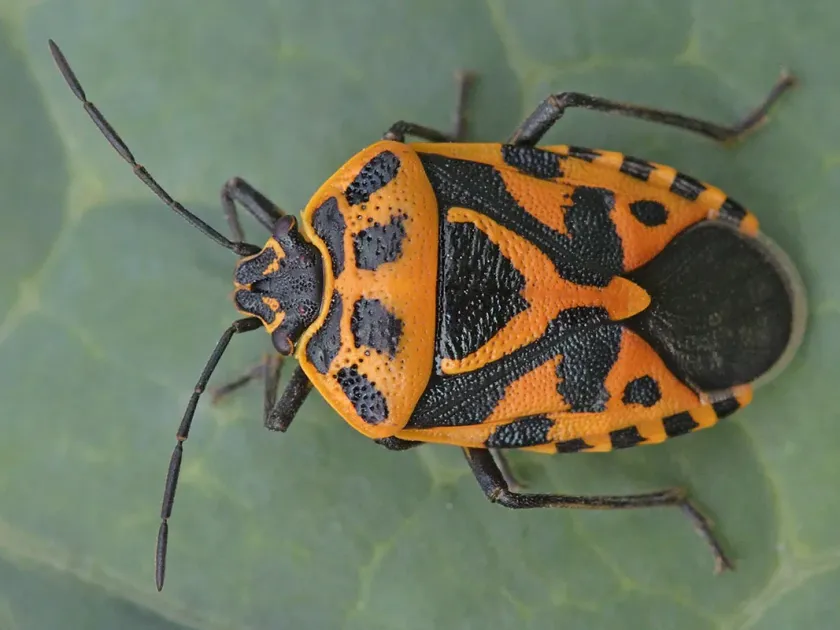
The painted bug (Eurydema pulchrum) is a member of the Pentatomidae family, commonly known as shield bugs. The insect is easily identified by its vibrant color pattern, consisting of black spots on a red, yellow, or white background, which acts as an aposematic warning signal.
Adult bugs typically measure between 7 and 9 mm in length. Their bodies are flattened and broad, featuring a well-developed scutellum. A key diagnostic feature of this species is the five-segmented antennae.
They overwinter as adults (imago) among crop residues, leaf litter, or within the top layer of soil. As soon as temperatures rise in the spring, they emerge and begin feeding on wild cruciferous weeds before migrating to agricultural crops.
The life cycle includes the egg stage, five nymphal instars, and the adult stage. Females lay their eggs in characteristic clusters, usually arranged in two rows of 6–12 eggs, typically on the underside of host plant leaves.
Nymphs resemble smaller, wingless versions of the adults with a simplified color pattern. Depending on regional climatic conditions, the pest can complete one or two generations per growing season.
What it damages
This species is a specialist pest of cruciferous crops. It causes the most significant damage to various types of cabbage, radish, turnip, rutabaga, rapeseed, and their seed crops.
Both adults and nymphs damage plants by using their piercing-sucking mouthparts to penetrate the leaves and stems. During feeding, they inject toxic saliva into the plant tissues, which causes cellular necrosis.
Initial damage appears as small white spots that eventually turn brown and create holes as the tissue dies. Heavy infestations cause leaves to yellow, curl, and wither, severely impacting the quality and market value of the produce.
Seedlings and young plants are particularly vulnerable; damage to the growing point can often lead to the total death of the plant or result in stunted, deformed growth that prevents proper head formation.
In seed-producing fields, the bugs extract fluids from young seed pods and flowers, causing flower abortion and a significant reduction in total seed yield and quality.
Signs of infestation
The first sign of an infestation is the appearance of small, pale spots with yellowish margins on the foliage of cruciferous plants, which gradually merge as the feeding intensity increases.
Due to their conspicuous coloration, the bugs can be easily detected in the early morning or late afternoon when they are present on the undersides of leaves or on the stalks.
Stunted plant growth, wilting during the hottest parts of the day, and the presence of egg clusters on the undersides of leaves are strong indicators that the population is actively colonizing the field.
Malformed young shoots and visible puncture marks on pods or fruits provide further evidence of feeding activity, which often leads to structural deformation of the plant tissues.
A foul, pungent odor, which the insects release from specialized glands when threatened, often serves as a secondary sign of a high population density within the crop canopy.
Control measures
Effective management begins with strict field sanitation, specifically the removal of wild cruciferous weeds (like shepherd's purse or wild radish) from crop fields and margins to limit the pest's alternate food sources.
Deep autumn plowing and the thorough incorporation of crop residues into the soil are critical cultural practices that help destroy overwintering populations and reduce initial pest pressure for the following season.
Optimizing planting dates to ensure crops reach a stage of development that is less susceptible to early infestation can significantly decrease the need for chemical intervention.
When population thresholds are exceeded, the use of registered systemic or contact insecticides is recommended, ensuring that all label instructions regarding application rates and pre-harvest intervals are followed.
In small-scale or organic operations, manual collection of the bugs during the cool morning hours and the use of biological control agents, such as entomopathogenic fungi, can be effective in suppressing the population.
Taxonomy
- Latin name
- Eurydema pulchrum
- Order
- Hemiptera (bugs, aphids, leafhoppers)
- Family
- Pentatomidae
- EPPO code
- EURDPU
Discussion
No discussions yet — be the first.