
Samarkand bug
Eurydema maracandicum
Description
How to identify
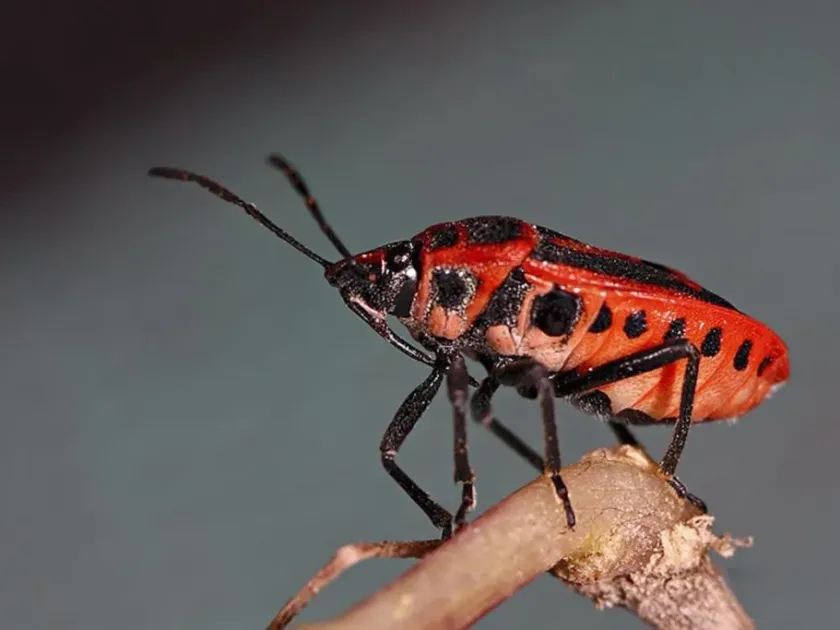
The Samarkand bug (Eurydema maracandicum) is a member of the shield bug family (Pentatomidae). This insect is known for its bright, warning coloration, typically consisting of black patterns on a red or yellow background on the scutellum.
Adult bugs typically measure between 6 and 9 millimeters in length. Their bodies are oval and slightly flattened. They possess a small head with antennae that are sensitive to chemical and mechanical stimuli in their environment.
Nymphs look similar to adults but are smaller and lack fully developed wings. They undergo several molts as they grow, and their coloration often intensifies as they reach the final stages of development before becoming adults.
This species is well-adapted to the arid and warm climates of its native range. They prefer open fields where cruciferous plants are readily available, which serve as their primary food source.
The life cycle involves egg-laying, with females depositing clusters of eggs on the undersides of leaves. Nymphs emerge and begin feeding on plant sap almost immediately, progressing through several instars.
What it damages
The bug primarily affects cruciferous crops, including cabbage, radish, turnips, and rapeseed. They are also frequently found on wild cruciferous weeds, which act as a reservoir for the population during the early season.
Feeding occurs when the bug uses its proboscis to pierce the epidermis of leaves and stems. As it feeds on the plant sap, it injects saliva containing enzymes that cause localized tissue death.
Initial damage appears as light-colored spots that eventually turn yellow and necrotic. The plant loses turgidity, growth becomes severely stunted, and the overall quality of the harvest is significantly reduced.
Young seedlings are particularly vulnerable and can be completely destroyed during a heavy infestation. The damage to seed stalks can also negatively impact the reproductive success of the plant.
These insects exhibit high plasticity, allowing them to rapidly move between wild and cultivated hosts depending on the availability of nutrients and environmental conditions.
When it appears
Adults overwinter in plant debris, under leaf litter, or in the top layer of the soil. They emerge in the spring once temperatures have consistently remained above the threshold for activity.
Initially, the bugs focus on wild cruciferous weeds. This is the best time for early detection and manual or mechanical control before they migrate to valuable commercial crops.
Several generations can occur throughout the growing season, depending on the heat accumulation in the region. Peak activity is typically recorded during the hottest summer months.
As autumn approaches and temperatures drop, the bugs begin to search for suitable overwintering sites. They often choose sheltered spots that protect them from freezing temperatures and high humidity.
Regular monitoring throughout the growing season is essential because the bug's population can surge rapidly if favorable conditions are met, necessitating immediate intervention.
Signs of infestation
The most common sign of infestation is the presence of pale, speckled spots on the leaves. These spots gradually expand, causing the leaf tissue to wither and dry out prematurely.
Plant development issues, such as stunted height and deformed leaves, are strong indicators that the bugs are actively feeding on the crop. Heavily infested plants may look withered even when soil moisture is adequate.
Visual confirmation of adults is usually straightforward due to their contrasting colors. They move quickly across the foliage when approached, often dropping from the plant as a defensive tactic.
In large concentrations, the insects may emit a distinct, unpleasant odor. This smell is a characteristic defensive chemical released by shield bugs when they are disturbed or threatened.
Puncture marks on leaves that later develop into holes are a classic sign of feeding damage, which may also facilitate the entry of opportunistic fungal and bacterial plant diseases.
Control measures
Effective control starts with sanitation, specifically the removal of cruciferous weeds near fields. Deep plowing of crop residues in the autumn significantly reduces the number of successful overwintering adults.
Chemical control using insecticides may be necessary if the economic threshold is exceeded. Applications should be performed during the coolest parts of the day, such as early morning or late evening, for maximum efficiency.
Crop rotation is a vital strategy, as it disrupts the availability of hosts for the bugs. Encouraging natural enemies, such as parasitic wasps or predatory insects, can help maintain population balance naturally.
Using balanced fertilization can help crops grow faster and withstand limited feeding pressure, reducing the overall impact on the final yield.
- Use of trap crops to attract bugs away from the main field.
- Regular field scouting using yellow sticky traps for population monitoring.
- Removal of weeds that serve as early-season host plants.
Taxonomy
- Latin name
- Eurydema maracandicum
- Order
- Hemiptera (bugs, aphids, leafhoppers)
- Family
- Pentatomidae
- EPPO code
- EURDMA
Discussion
No discussions yet — be the first.