
Eurydema festivum
Eurydema festivum
Description
How to identify
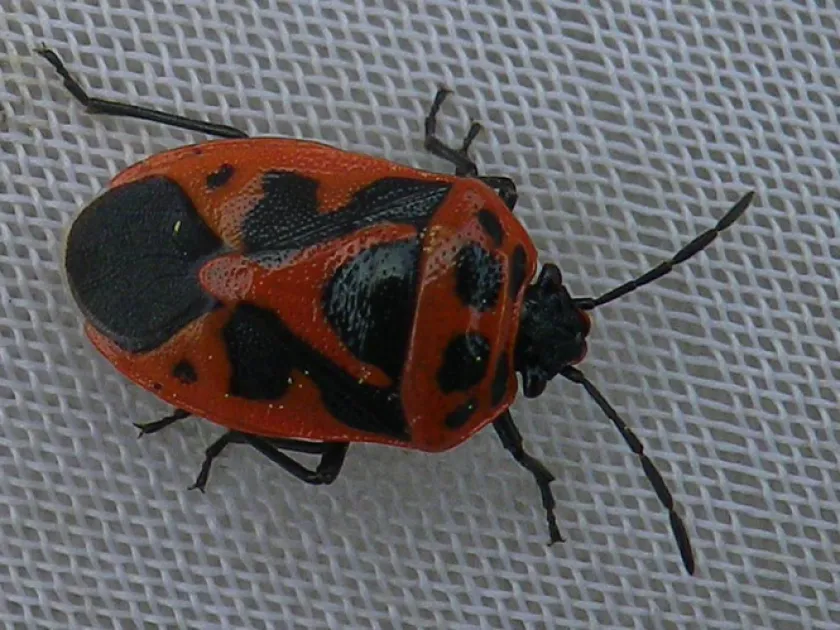
Eurydema festivum, commonly known as the ornate shield bug, belongs to the Pentatomidae family. The adult insect is distinguished by its vivid warning coloration, featuring a dark base with bright red, yellow, or white markings in a geometric pattern.
The adult body is oval-shaped and measures approximately 6 to 8 millimeters in length. The nymphs look similar to adults but are smaller, lack fully developed wings, and have a lighter, less contrasted color palette until they mature.
The life cycle encompasses four stages: egg, nymph (five instars), and adult. Females lay eggs in distinctive clusters on the underside of host plant leaves, arranging them in tidy, parallel rows.
These bugs overwinter as adults, finding shelter in leaf litter, soil, or dense dry vegetation. They emerge in the spring once the ambient temperature consistently exceeds 10°C, starting their feeding activity.
In warmer climates, the species can complete two generations per season. The developmental speed is highly dependent on humidity and local temperatures, allowing for rapid population growth during the crop season.
What it damages
This species primarily targets plants within the Brassicaceae (cruciferous) family. Key crops susceptible to infestation include cabbage, radish, mustard, rapeseed, and various wild weeds that serve as alternative hosts.
The bug uses a piercing-sucking mouthpart to puncture plant tissue and extract sap. The insect's saliva contains enzymes that break down cells, leading to localized necrosis at the feeding site.
Infestations are most detrimental during the early seedling stages, as feeding causes significant stunted growth, severe leaf deformation, and a weakened overall plant vitality that hampers development.
During massive outbreaks, these bugs can severely impact rapeseed crops by targeting the developing pods. This leads to poor seed set, reduced oil quality, and substantial losses in agricultural productivity.
Furthermore, feeding sites often act as entry points for secondary infections, such as bacterial or fungal pathogens, which can exacerbate the damage initiated by the bug's mechanical feeding.
Signs of infestation
The primary symptom of an infestation is the appearance of numerous white or pale yellow spots on the foliage. These are the direct results of sap extraction, which eventually turn necrotic and cause leaves to dry out.
A careful inspection during early morning or evening hours usually reveals groups of the insects congregating on the undersides of leaves, on flowering stalks, or along the main veins where sap flow is highest.
Young plants often show signs of severe stress, including curled leaves, overall yellowing, and rapid wilting, which can lead to the death of the seedlings if the infestation is not checked promptly.
In rapeseed fields, infested plants exhibit withered buds and flowers. The developing pods appear shriveled or deformed, and their internal contents are often partially or fully consumed by the bugs.
Other signs include the presence of small, dark fecal spots on the plant surface and a distinct, pungent odor that is characteristic of many shield bugs when they are disturbed or feeding in large groups.
Control measures
Effective management begins with strict field hygiene, particularly the removal of cruciferous weeds like shepherd's purse or field mustard, which act as primary breeding grounds for the pest.
Deep plowing of the soil after harvest is highly recommended, as it destroys the bugs' overwintering sites, significantly reducing the starting population density for the following spring season.
Adjusting the planting dates allows crops to reach a more robust developmental stage, making them less susceptible to the devastating effects of early-season infestation and helping them outgrow the pressure.
If population counts exceed economic damage thresholds, the application of systemic or contact insecticides is necessary. Choose products that are approved for use on vegetable crops to ensure safety.
Regular field monitoring using visual scouting or yellow sticky traps is essential for timely decision-making, allowing farmers to apply treatments only when necessary and optimize resource use.
Taxonomy
- Latin name
- Eurydema festivum
- Order
- Hemiptera (bugs, aphids, leafhoppers)
- Family
- Pentatomidae
- EPPO code
- EURDFD
Discussion
No discussions yet — be the first.