
Currant mining moth
Euhyponomeutoides ribesiella
Description
How to identify
The Currant mining moth (Euhyponomeutoides ribesiella) is a member of the Yponomeutidae family, known for causing significant damage to currant and gooseberry plantations across many regions.
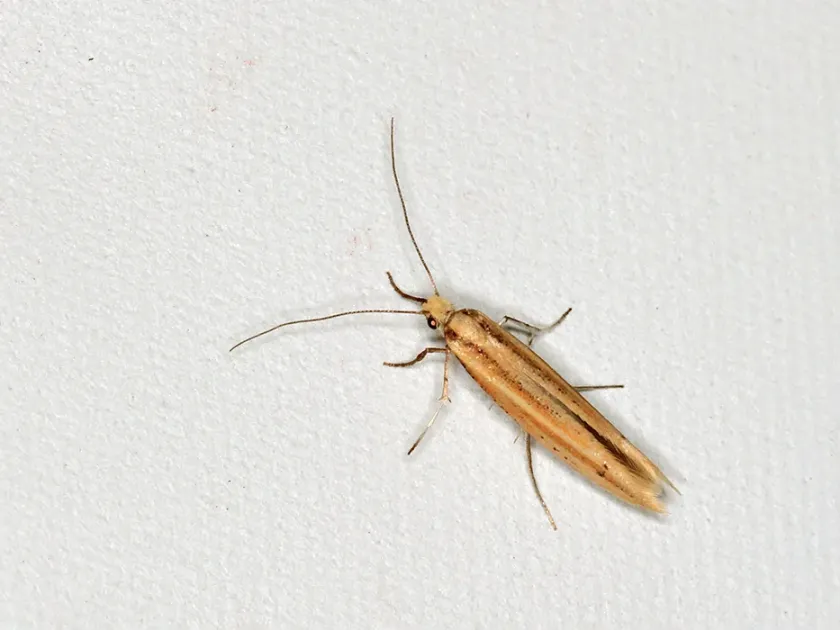
Adult moths are small with a wingspan of approximately 15-18 mm. Their coloration is typically greyish-brown with darker spots, making them well-camouflaged against bark and dry leaves.
The life cycle undergoes complete metamorphosis, including egg, larva (caterpillar), pupa, and adult stages. Each stage is adapted to specific environmental conditions to ensure species survival.
Larvae possess chewing mouthparts designed to easily penetrate both tender buds and tougher leaf tissue, which is the primary source of their nutrition during the growing season.
Overwintering occurs at the larval stage within dense cocoons hidden in bark crevices or plant debris, providing excellent protection against harsh winter temperatures.
What it damages
The primary hosts for this pest are species of the Ribes genus, particularly red, white, and black currants, as well as gooseberries, which suffer greatly from larval feeding.
Early spring damage is the most critical: larvae hollow out developing buds, preventing leaf and flower development and directly reducing potential berry yields.
As the season progresses, larvae feed on the foliage, skeletonizing the leaves and leaving only the veins behind, which severely impairs the plant's ability to photosynthesize.
Heavy infestations lead to significant defoliation, which weakens the entire bush, reduces winter hardiness, and makes the plant susceptible to secondary fungal infections.
Yield quality suffers significantly; berries on infested bushes often develop poorly, remain smaller, and lack the necessary sugar content compared to healthy plants.
When it appears
The activity begins in early spring as the buds start to swell. Larvae emerge from hibernation and immediately begin seeking food within the nearest plant tissues.
The period of larval activity is prolonged, spanning from initial bud burst through late spring, coinciding with the rapid growth of the currant bush.
Adult moth emergence typically occurs in early summer, during which time mating and egg-laying on the leaves take place to prepare for the next generation.
By mid-to-late summer, the new generation of larvae is already established, continuing to feed and eventually preparing for the upcoming winter dormancy.
Environmental factors, particularly temperature and humidity, strongly influence the timing and speed of the moth's development throughout the growing season.
Signs of infestation
The first sign of infestation is the appearance of hollow, dried-out buds in early spring that fail to open or produce shoots despite favorable weather.
Webbed nests appearing between leaves and around shoot tips indicate the presence of colonies, as larvae use silk to create protective shelters.
Small black fecal pellets found within webbed leaf clusters are a clear diagnostic indicator that larvae are actively feeding in the vicinity.
Leaves showing irregular brown patches or entirely skeletonized sections suggest that the mining activity has progressed beyond the initial stages.
- Dried, unbloomed buds.
- Silk webbing between branches and leaves.
- Skeletonized foliage with dark larval excrement.
Control measures
Preventative cultural practices, such as pruning away old bark and removing dead branches where larvae overwinter, are highly effective in reducing pest pressure.
Application of contact or systemic insecticides during the bud burst stage can significantly lower the population of larvae before they cause widespread damage.
Biological control agents, such as microbial pesticides, offer an environmentally friendly alternative for managing the moth while minimizing the impact on beneficial garden insects.
Manual removal of webbed leaf clusters is a practical and efficient strategy for home gardens to stop the spread of the moth at the early stage of infestation.
Maintaining healthy garden hygiene, including the removal of leaf litter from under bushes in late autumn, helps disrupt the life cycle of the pupating larvae.
Taxonomy
- Latin name
- Euhyponomeutoides ribesiella
- Order
- Lepidoptera (butterflies)
- Family
- Yponomeutidae
- EPPO code
- EUHYRI
Discussion
No discussions yet — be the first.