
Eugaurax floridensis
Eugaurax floridensis
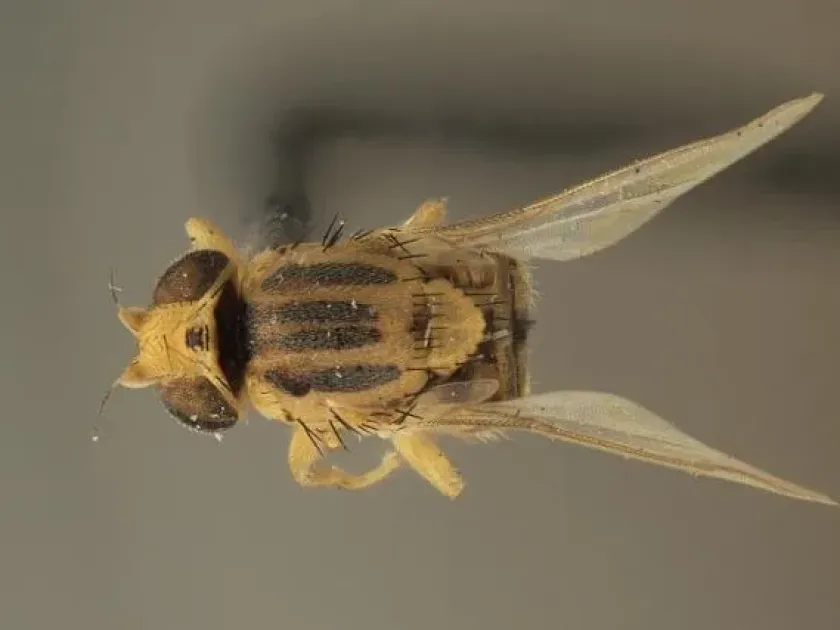
Description
How to identify
Eugaurax floridensis is a species belonging to the family Chloropidae (frit flies and allies) within the order Diptera. This insect is recognized as a pest that impacts the development of various grass species.
Adult flies are relatively small, characterized by typical morphological features of the Chloropidae family, often requiring professional entomological identification due to the similarity with other related species.
The larval stage is the primary cause of plant damage. These larvae are small, legless, and typically found inhabiting the stems or reproductive tissues of their host plants.
The life cycle encompasses four distinct stages: egg, larva, pupa, and adult, with development timeframes heavily influenced by ambient temperature and host plant availability.
Due to the cryptic nature of the larvae, monitoring usually focuses on finding infested stalks or using specific traps to capture adult flies during their emergence periods.
What it damages
The primary hosts of Eugaurax floridensis are various cereal crops, including wheat, barley, and rye, which are essential components of global agricultural production.
The pest also utilizes wild grasses as alternative hosts, which play a crucial role in maintaining local populations of the insect when main crops are not available.
Damage occurs when larvae feed on the internal tissues of the stem or the developing spike, which disrupts the normal translocation of water and nutrients within the plant.
Severe infestations can lead to stunted growth, reduced plant vigor, and, in some cases, the total death of the primary tiller or the complete loss of the grain head.
Beyond direct feeding damage, the presence of larvae often facilitates the entry of secondary pathogens, such as bacteria and fungi, causing further degradation of the crop.
When it appears
The seasonal occurrence of Eugaurax floridensis is closely synchronized with the growth stages of its host plants during the spring and summer months.
Adult emergence typically begins as weather conditions warm up, marking the start of the breeding season where females seek out suitable host plants for oviposition.
The critical vulnerability period for crops usually occurs during the early vegetative stages and through the boot stage, when the plants are most susceptible to larval penetration.
Depending on the region, the insect may produce multiple generations in a single year, with the final generation often overwintering as pupae in stubble or soil.
Monitoring efforts should be intensified during periods of peak adult activity to ensure that control measures are applied before significant egg-laying occurs.
Signs of infestation
Initial signs of infestation often include uneven crop height or patchy areas of stunted, yellowing plants that appear visibly weaker than the surrounding healthy growth.
A classic diagnostic sign is "whitehead" or aborted heads, where the spike becomes bleached and fails to fill with grain because the stem has been compromised.
Upon closer inspection, farmers may find structural deformities in the stalks, such as bending or twisting, caused by internal feeding and tissue destruction.
Exposing the interior of the stem often reveals larval tunnels, frass, or the presence of pupae, which are definitive indicators of the pest's impact on the plant.
Reduced grain yield and poor quality are the ultimate indicators of a severe infestation that may not have been fully captured by early visual inspection.
Control measures
Management of Eugaurax floridensis relies on an integrated approach, combining cultural practices with chemical interventions when necessary to manage population thresholds.
Good agricultural practices, such as crop rotation and the destruction of grassy weeds, are fundamental for minimizing the population density in agricultural fields.
Effective stubble management, including deep plowing, helps destroy the overwintering stages of the insect, significantly reducing the pressure for the following season.
Chemical control involving systemic insecticides is often used to protect crops during the peak adult flight period to prevent widespread egg deposition.
- Regular monitoring of crop fields for signs of larval infestation.
- Selection of resilient or resistant crop varieties when available.
- Use of yellow sticky traps to track adult emergence and population dynamics.
- Timely harvesting to remove crop residue and reduce overwintering habitat.
Taxonomy
- Latin name
- Eugaurax floridensis
- Order
- Diptera (flies)
- Family
- Chloropidae
- EPPO code
- EUGXFL
Discussion
No discussions yet — be the first.