
Eugaurax
Eugaurax
Description
How to identify
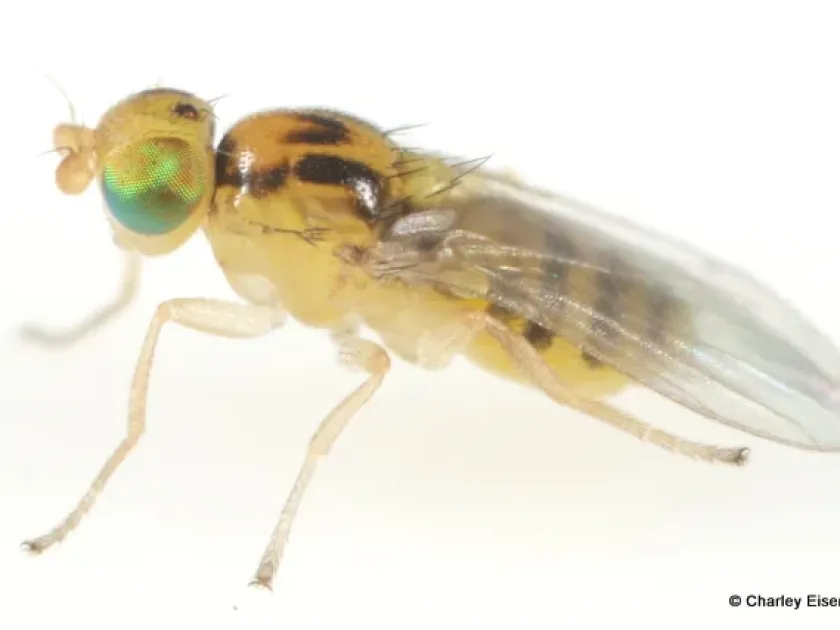
Eugaurax is a genus of small flies within the family Chloropidae (grass flies or frit flies). Adult insects are typically microscopic, characterized by a dark, shiny, or yellowish body structure common to the family.
Their biology is inextricably linked to the host plants, where their life cycle unfolds. The insects undergo complete metamorphosis, with the larval stage living inside the plant tissues.
The larvae are small, legless, and elongated, often pale or yellowish in color. This morphology allows them to navigate and feed within the stems or developing grain structures of grasses.
As part of the Diptera order, these flies are often found in agroecosystems. Their population levels can fluctuate based on environmental factors and the availability of suitable host plants.
The life cycle includes stages from eggs laid near the plant to the larval stage inside the stem, pupation, and the emergence of adults, with overwintering occurring primarily in the larval stage.
What it damages
Eugaurax primarily targets cereal crops, including wheat, barley, and oats. They may also utilize various wild grasses as secondary hosts throughout the growing season.
The damage is caused by larvae that bore into stems or feed on the developing kernels, disrupting the flow of nutrients and causing significant physical stress to the plant.
Feeding activities can lead to reduced grain weight and overall yield losses, as the plants fail to fill their heads properly due to the impaired internal vascular structure.
Larval feeding creates entry points for secondary pathogens, including fungi and bacteria, which may exacerbate the damage and lead to plant decay.
During periods of drought or nutrient stress, the impact of these pests is amplified, as the damaged plants possess less physiological resilience to recover from the injury.
Signs of infestation
One of the earliest indicators is the yellowing and wilting of the central leaf during the tillering stage, which is often mistakenly attributed to drought or nitrogen deficiency.
A classic sign is white-head formation, where the ear turns white and fails to produce healthy grains, resulting in empty or underdeveloped spikelets at harvest time.
Careful examination of the stem via dissection often reveals internal tunnels and tracks carved by the larvae, indicating their presence within the vegetative structure.
Evidence of damage can also include stunted plant growth, twisted or deformed stems, and the presence of larval waste within the damaged plant sections.
Field observation often reveals clusters of damaged plants, as the flies tend to lay eggs in specific areas, causing localized patches of low-vigor growth across the field.
Control measures
The primary control strategy involves strict crop rotation, which breaks the pest's cycle by limiting access to suitable host plants during their susceptible growth phases.
Deep plowing of stubble immediately after harvest is essential, as this helps bury and destroy larvae and pupae that remain in plant residues or the soil surface.
- Choosing early-maturing varieties to ensure plants outpace the critical windows of fly infestation.
- Optimizing sowing dates to avoid the peak egg-laying activity of the adult flies.
- Managing field borders by removing wild grass hosts that harbor pest populations between crop seasons.
When infestation levels exceed economic thresholds, the application of systemic or contact insecticides is recommended to protect the crop during vulnerable stages.
Using yellow sticky traps for monitoring fly activity allows agronomists to predict the peak flight times and implement precise interventions before widespread damage occurs.
Taxonomy
- Latin name
- Eugaurax
- Order
- Diptera (flies)
- Family
- Chloropidae
- EPPO code
- EUGXSP
Discussion
No discussions yet — be the first.